CM Yogi hears citizens at Janata Darshan in Gorakhnath Math
Synopsis
Chief Minister Yogi Adityanath held a Janata Darshan at the Gorakhnath Math complex in Gorakhpur on 3 June 2026, hearing grievances from residents across districts and directing officials to deliver swift, effective resolutions, the Chief Minister's Office of Uttar Pradesh said.
Key Takeaways
CM Yogi Adityanath held a Janata Darshan at Gorakhnath Math , Gorakhpur on 3 June 2026 .
Petitioners from multiple districts of Uttar Pradesh placed grievances directly before the Chief Minister.
Officials were directed to ensure quality, swift and effective resolution of every issue raised.
The CMO framed the exercise as the 'strong identity of sensitive governance'.
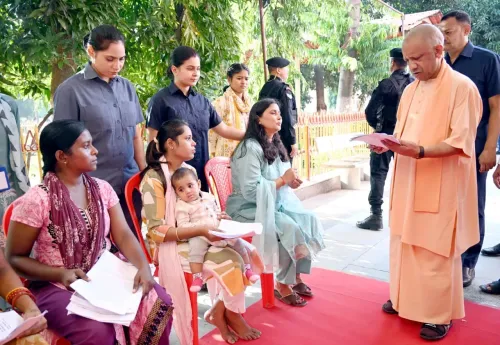
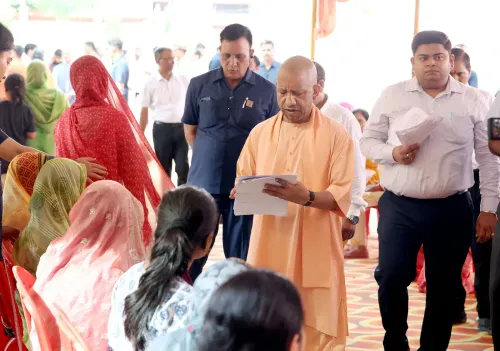
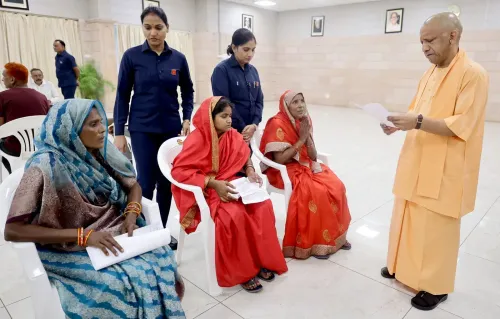
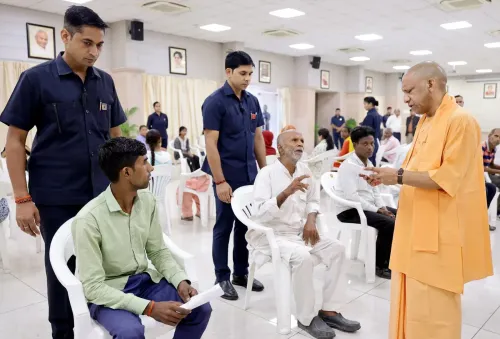
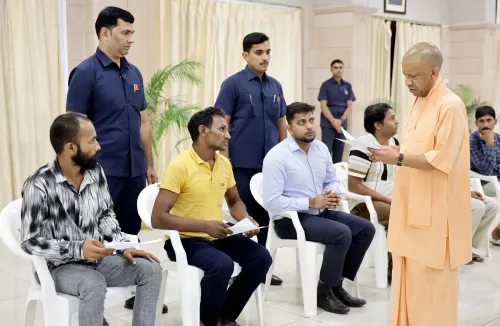
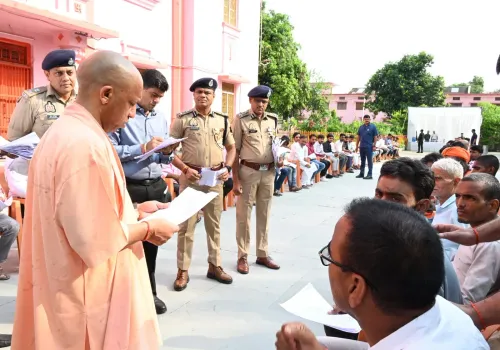
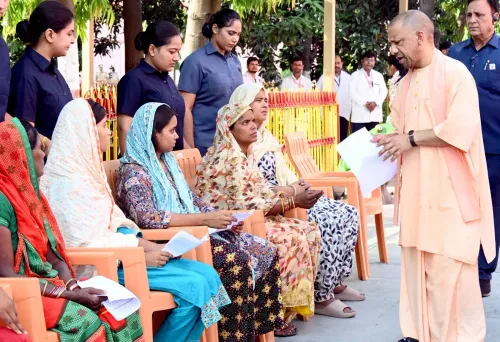
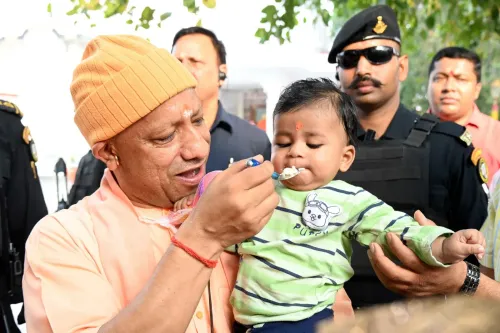
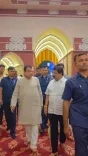
Four photographs from the venue were shared with the hashtag #JantaDarshanUP .
Janata Darshan has run as a direct citizen-access format since 2017 , in Gorakhpur and Lucknow.
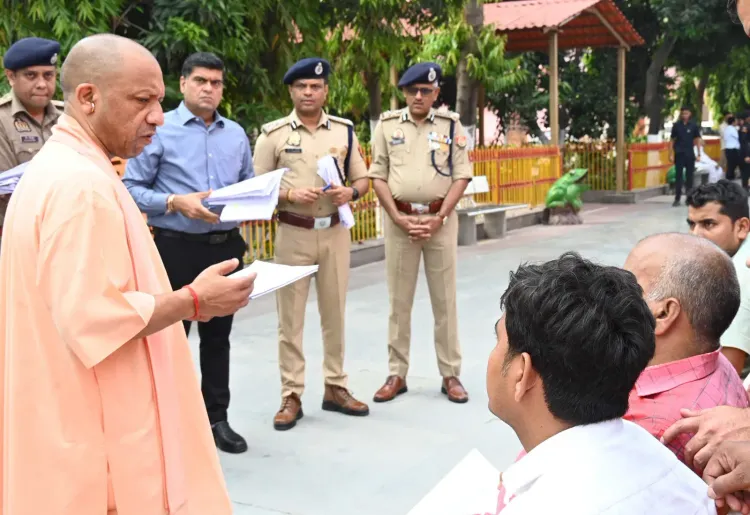
The Chief Minister's Office of Uttar Pradesh announced on Wednesday, 3 June 2026 that Chief Minister Yogi Adityanath held a Janata Darshan (public audience) at the Gorakhnath Math complex in Gorakhpur, where he personally heard grievances from residents arriving from multiple districts. The post said the Chief Minister directed concerned officials to ensure 'quality, swift and effective resolution' of every issue raised, framing the exercise as the 'strong identity of sensitive governance'.
In its message, the CMO described the engagement as embodying the principle of 'samvedansheel shaasan ki sashakt pehchaan, aamjan ki har samasya ka tvarit samadhan' (the strong identity of sensitive governance is the swift redressal of every problem of the common citizen). The post was accompanied by four photographs from the venue and carried the hashtag #JantaDarshanUP.
Context
The Gorakhnath Math is a historic Hindu monastery in Gorakhpur that Yogi Adityanath heads as Mahant, and it has consistently doubled up as a working venue whenever he travels to his home constituency. Holding Janata Darshan inside the temple premises allows residents from eastern Uttar Pradesh to walk in with petitions ranging from land disputes and police complaints to medical aid and pension-related issues.
The Chief Minister's interaction follows the now-familiar choreography of such sessions: petitioners hand over written applications, the CM speaks individually with several of them, and officers from the relevant departments are summoned for on-the-spot instructions.
Policy backdrop
Janata Darshan was instituted by Yogi Adityanath shortly after he assumed office as Chief Minister in March 2017, as a recurring platform for direct citizen access. Over the years it has been held both in Lucknow, at the Chief Minister's official residence, and in Gorakhpur at the Math, depending on his travel schedule. The forum sits alongside the state's digital grievance infrastructure, including the Integrated Grievance Redressal System (IGRS) and the CM Helpline, and is positioned by the government as an apex layer for cases that have not been resolved at the district level.
Similar direct-access models exist in several other Indian states, where chief ministers periodically open their doors to walk-in petitioners. In Uttar Pradesh, the practice has been retained across both terms of the current government as a marker of administrative accessibility.
Stakeholders and impact
The most immediate beneficiaries are common citizens who travel, often long distances, to place their petitions before the Chief Minister. For district magistrates, superintendents of police, and departmental officers, a Janata Darshan reference typically triggers a time-bound action-taken report back to the CMO.
The post emphasised that the Chief Minister instructed officials to deliver solutions that are 'gunvattapurn, tvarit aur prabhavi' (quality, swift and effective), language that signals follow-up monitoring rather than ceremonial acknowledgement. The four images released by the CMO showed the CM in conversation with petitioners inside the Math.
What's next
The next set of Janata Darshan sessions, whether in Gorakhpur or at the CM's residence in Lucknow, will be watched for the volume of petitions received and the disposal pattern that follows. Any subsequent disclosures by the state government on grievance disposal rates, or visible action on cases flagged on 3 June, will indicate how the directives translate on the ground.
For the government, the continued use of the format reinforces a public message of administrative reachability; for petitioners, the test remains whether the on-the-spot instructions move their files forward in the days after the cameras leave.
Point of View
Blending the Chief Minister's spiritual base at Gorakhnath Math with the machinery of grievance redressal. By repeating the format almost a decade into his tenure, Yogi Adityanath is reinforcing a message of accessibility at a time when state administrations across India are increasingly routing complaints through digital portals. The political value lies less in any single case resolved than in the optics of a CM personally hearing petitions. The real test, as ever, is the follow-through on the directives once the session ends.
NationPress
18 Oct 2026
Frequently Asked Questions
What is Janata Darshan in Uttar Pradesh?
Janata Darshan is a public-hearing format in which the Chief Minister of Uttar Pradesh personally meets citizens to receive their grievances. It has been held periodically since 2017, both at the CM's residence in Lucknow and at the Gorakhnath Math in Gorakhpur.
Where did CM Yogi hold Janata Darshan on 3 June 2026?
CM Yogi Adityanath held the Janata Darshan at the Gorakhnath Math complex in Gorakhpur on 3 June 2026, where he heard grievances from residents who had travelled from various districts of Uttar Pradesh.
What did CM Yogi direct officials to do at the Janata Darshan?
The Chief Minister directed concerned officials to ensure quality, swift and effective resolution of every grievance raised by the citizens present at the session.
Why is Gorakhnath Math important to CM Yogi Adityanath?
Gorakhnath Math is the historic Hindu monastery in Gorakhpur of which Yogi Adityanath is the head priest (Mahant). It frequently serves as his working base during visits to his home region and as a venue for official public interactions.
How can citizens approach Janata Darshan in Uttar Pradesh?
Citizens typically arrive in person at the announced Janata Darshan venue, usually the CM's residence in Lucknow or the Gorakhnath Math in Gorakhpur, with a written application detailing their grievance, which is then taken up by officials on the Chief Minister's instructions.