Yogi Adityanath: Braj to be developed like Ayodhya and Kashi
Synopsis
On Janmashtami, Yogi Adityanath stood at Shri Krishna Janmabhoomi and pledged to remake Braj in the image of Ayodhya — the BJP's most visible governance symbol. With no timeline or budget announced yet, the declaration is as much a political signal as a development commitment, arriving in a region that carries enormous electoral and religious weight.
Key Takeaways
UP CM Yogi Adityanath announced on 4 September that Braj Bhoomi will be developed on the lines of Ayodhya and Kashi .
A grand complex is planned in Mathura and Vrindavan , mirroring infrastructure built at Ayodhya and Kashi.
Ayodhya now receives approximately one lakh daily visitors, rising to five lakh–50 lakh during major festivals, cited as the benchmark.
Adityanath directed authorities to ensure facilities for pilgrims at Barsana , Nandgaon , Govardhan , and Mathura-Vrindavan .
No specific budget or timeline for the Braj complex was announced at the event.
The Chief Minister invoked the Bhagavad Gita and linked religious development to Viksit Bharat and economic empowerment of artisans and youth.
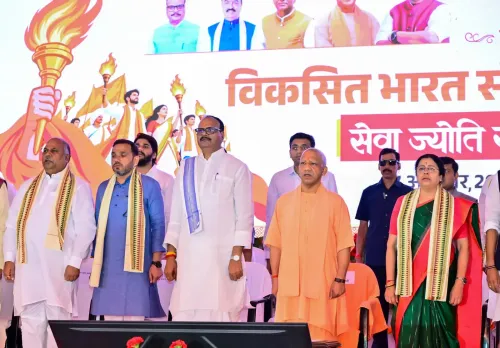
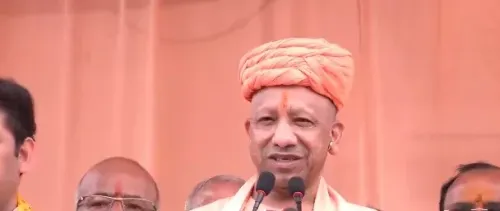
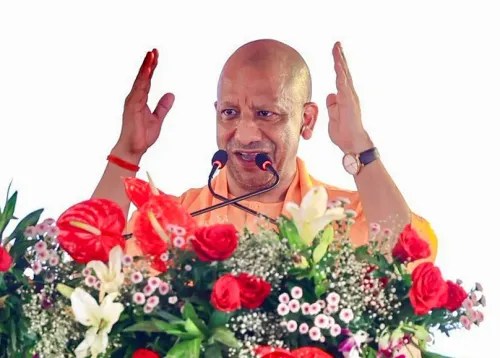
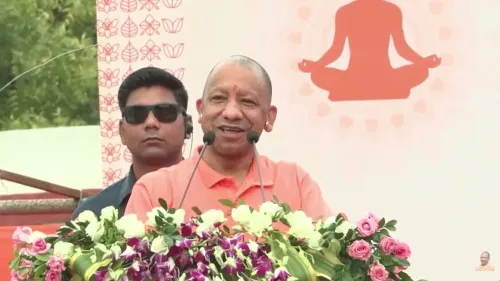
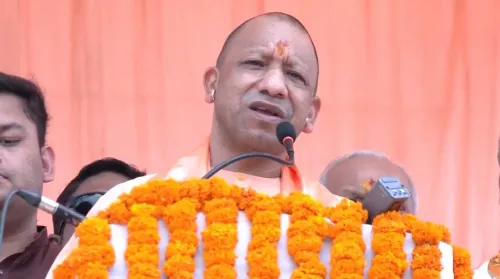
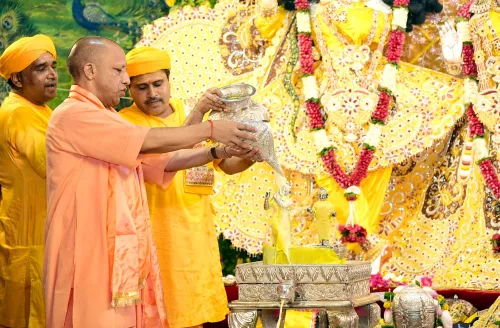
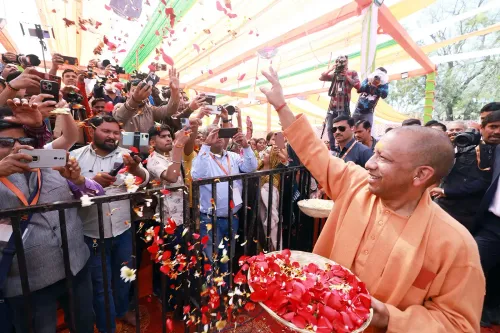
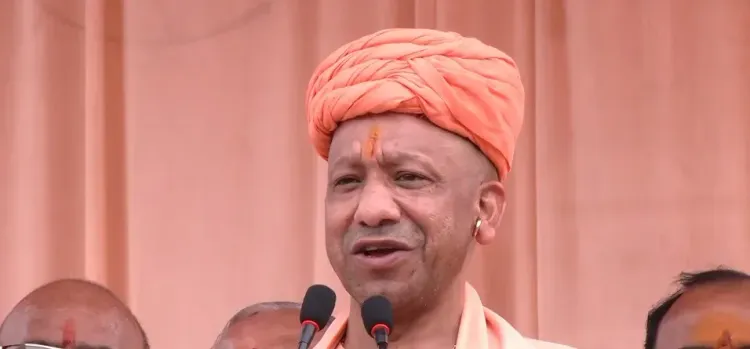
Uttar Pradesh Chief Minister Yogi Adityanath on Friday, 4 September announced that Braj Bhoomi — encompassing Mathura and Vrindavan — will be developed along the lines of Ayodhya and Kashi, with a grand complex planned to honour the region's deep spiritual and cultural legacy. The announcement came as he addressed devotees at the Shri Krishna Janmabhoomi temple complex after offering prayers on the occasion of Shri Krishna Janmashtami.
What the Government Has Promised
Adityanath said the Bharatiya Janata Party (BJP)-led 'double-engine government' would spare no effort in ensuring comprehensive development of Braj. 'After the grand development of Ayodhya and Kashi, Braj Bhoomi will now also be developed in accordance with the sentiments of the people,' he said, adding that a complex comparable to those built in Ayodhya and Kashi would be constructed here.
He directed authorities to ensure that pilgrims visiting Barsana, Nandgaon, Govardhan, and Mathura-Vrindavan receive all necessary facilities. 'No devotee should face any difficulty. Their faith should not be hurt,' he said.
Ayodhya Cited as the Template
The Chief Minister pointed to Ayodhya's transformation as the model Braj would follow. He recalled that the temple town once lacked adequate roads, electricity, and water supply, with devotees reportedly returning in distress at the disorder they encountered. Today, he said, approximately one lakh devotees visit Ayodhya Dham every day, rising to between five lakh and 50 lakh during major festivals such as Ram Navami, the month of Kartik, the Sawan Jhula Mela, and Deepotsav.
He cited the construction of an international airport named after Maharishi Valmiki, four-lane roads from all directions, a doubled railway line, and named thoroughfares such as Bhaktipath and Rampath as evidence of the scale of change.
Sharp Criticism of Previous Governments
Adityanath did not spare his political predecessors, alleging that earlier administrations were reluctant to visit Shri Krishna Janmabhoomi out of concern for their electoral support base. 'Previous governments were afraid to visit Shri Krishna Janmabhoomi because they were concerned about their vote bank,' he said.
He went further, asserting that followers of historical figures Babar and Aurangzeb were 'once again working to spread poison in society' and attempting to embolden 'anti-social and anti-national elements'. He said such efforts sought to undermine the security of women, the future of youth, and the livelihoods of farmers, artisans, and handicraft workers. The BJP government, he asserted, would not allow these attempts to succeed.
Spiritual and Economic Significance
Adityanath framed religious festivals not merely as expressions of faith but as economic drivers for the state. He said celebrations such as Janmotsav, Rangotsav, Brajraj Utsav, and Vaishnav Kumbh created opportunities across sections of society — from artisans to entrepreneurs — and that the development of Braj was already building confidence among youth, women, and handicraft workers.
Invoking the Bhagavad Gita, he quoted the verse 'Karmanyevadhikaraste Ma Phaleshu Kadachana', urging citizens to perform their duties honestly, and expressed confidence that such commitment would accelerate India's journey toward becoming a Viksit Bharat and Uttar Pradesh a Viksit Uttar Pradesh.
What Comes Next
No specific timeline or financial outlay for the Braj development complex was announced on the occasion. The state government is expected to detail project plans in the coming months. With Braj already drawing large numbers of pilgrims — lakhs arrived in Mathura-Vrindavan from Thursday for Janmashtami — the infrastructure push, if executed at the scale of Ayodhya, could significantly reshape the region's religious tourism landscape.
Point of View
With Ayodhya as the proof of concept. The Ayodhya parallel is politically potent but demands scrutiny — that project had years of central and state funding, a Supreme Court verdict as a catalyst, and a specific temple consecration as a deadline. Braj has no equivalent forcing function yet, and no budget figure was placed on the table. The sharper political messaging — the references to Babar, Aurangzeb, and vote-bank politics — signals that the Braj announcement is as much about electoral consolidation ahead of future contests as it is about urban development. Whether infrastructure follows the rhetoric, as it did in Ayodhya, or stalls at the announcement stage, as many religious-circuit projects have, will be the real measure of this commitment.
NationPress
19 Oct 2026
Frequently Asked Questions
What did Yogi Adityanath announce for Braj Bhoomi?
Chief Minister Yogi Adityanath announced on 4 September that Braj Bhoomi — covering Mathura and Vrindavan — will be developed on the lines of Ayodhya and Kashi, with a grand complex planned in the region. The announcement was made at the Shri Krishna Janmabhoomi temple complex on Janmashtami.
What is the Ayodhya model that Braj development will follow?
Ayodhya's redevelopment included an international airport named after Maharishi Valmiki, four-lane road connectivity from all directions, a doubled railway line, and dedicated pilgrimage routes such as Bhaktipath and Rampath. The city now draws approximately one lakh daily visitors, rising to 50 lakh during peak festivals.
Has a budget or timeline been announced for the Braj complex?
No specific financial outlay or completion timeline was announced at the Janmashtami event. The state government is expected to detail project plans in the coming months.
Which areas of Braj will benefit from the development push?
Adityanath specifically directed authorities to ensure facilities for pilgrims at Barsana, Nandgaon, Govardhan, and Mathura-Vrindavan. The broader Braj region encompasses these key pilgrimage sites.
Why did Yogi Adityanath criticise previous governments at the event?
Adityanath alleged that earlier state governments avoided visiting Shri Krishna Janmabhoomi out of concern for their electoral support base. He contrasted this with the BJP government's stated commitment to Hindu religious sites, framing the Braj development pledge as a departure from past political reluctance.