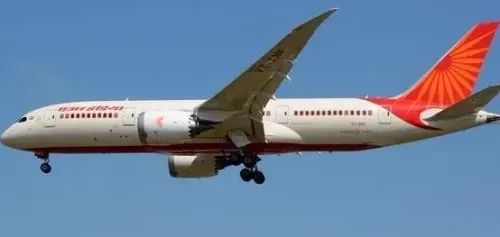
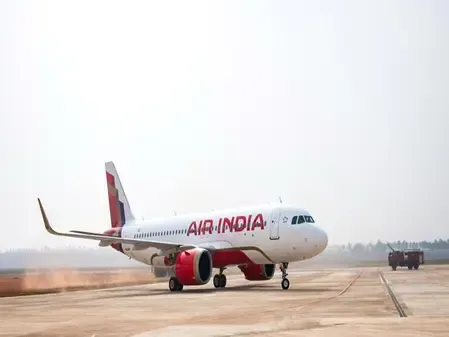
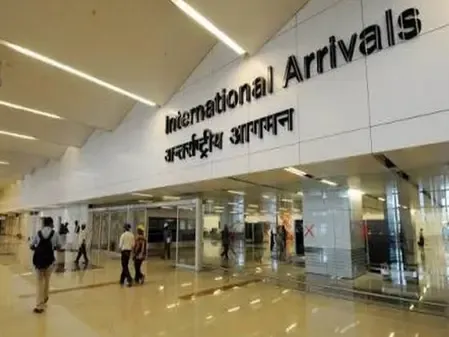
Air India suspends 100 daily flights for 3 months from June amid fuel crisis
Synopsis
Air India's suspension of 100 daily flights for three months is the starkest admission yet that fuel-price volatility tied to Middle East tensions has become unsustainable for long-haul carriers. With group losses exceeding ₹22,000 crore and the airline already in deep restructuring under Tata ownership, this is less a temporary measure and more a signal that the airline's route footprint may not return to pre-crisis levels.
Key Takeaways
Air India will suspend approximately 100 daily international flights for three months starting June .
Routes affected include Chicago , Newark , Singapore , Shanghai , San Francisco , Paris , and Toronto .
Air India Group projected losses exceed ₹22,000 crore for FY26 .
The airline has terminated over 1,000 employees in three years for policy violations.
CEO Campbell Wilson indicated further cuts if fuel prices remain elevated.
Air India will suspend several international flights for three months starting June, citing surging jet fuel costs triggered by geopolitical tensions in the Middle East. The suspension affects roughly 100 daily flights across key intercontinental routes, marking the airline's most aggressive capacity reduction in response to fuel price volatility.
Routes affected by the suspension
The airline's international network from Delhi will see cuts to major US gateways including Chicago and Newark, as well as Asian hubs Singapore and Shanghai. Additional reductions span San Francisco, Paris, and Toronto, according to operational disclosures. The scale of the pullback underscores the pressure on long-haul profitability as crude-linked aviation fuel prices remain elevated.
CEO signals further cuts ahead
Air India CEO Campbell Wilson indicated last week that international service reductions would persist as long as fuel costs remain elevated. His remarks came during a town hall with staff, where he also outlined the airline's intensified cost-control drive. The airline has terminated over 1,000 employees in the past three years for policy violations and ethical breaches, ranging from misuse of the Employee Leisure Travel (ELT) system to smuggling and unauthorized baggage charges.
Financial crisis deepens
The Air India Group — comprising Air India and Air India Express — is projected to have posted losses exceeding ₹22,000 crore in the financial year ended March 2026. Under Tata Group ownership, the airline has frozen annual salary increments, slashed discretionary spending, and cut non-critical expenditure across operations. Air India Express separately reported a sharp jump in losses during FY25, compounding the group's turnaround challenge.
Broader restructuring underway
The flight suspensions are part of a wider operational reset aimed at stabilizing finances while fuel volatility persists. Industry analysts note that such capacity cuts, while painful for connectivity, may be necessary to prevent further cash burn. The airline's ability to restore routes will depend on both fuel price moderation and demand recovery in the post-monsoon travel season.
Point of View
But it has not yet addressed the fundamental issue of route profitability. If fuel stays above $100 per barrel, expect these cuts to become permanent, not temporary.
NationPress
20 Sept 2026
Frequently Asked Questions
Why is Air India suspending international flights?
Air India is suspending flights due to surging jet fuel prices driven by geopolitical tensions in the Middle East. The airline cited unsustainable fuel costs as the primary reason for the three-month capacity reduction starting June.
How many flights is Air India cutting?
Air India is reducing approximately 100 daily international flights across its network for the three-month suspension period.
Which international routes are affected?
Routes affected include major US gateways (Chicago, Newark, San Francisco), European destinations (Paris), Canadian routes (Toronto), and Asian hubs (Singapore, Shanghai).
What is the Air India Group's current financial status?
The Air India Group, comprising Air India and Air India Express, is projected to post losses exceeding ₹22,000 crore for the financial year ended March 2026, reflecting ongoing financial stress under Tata Group restructuring.
Has Air India taken other cost-control measures?
Yes. The airline has frozen annual salary increments, terminated over 1,000 employees for policy violations in the past three years, and cut discretionary and non-critical spending across departments.