Alibaba launches Qwen3.7-Max and custom chips to build China's 'AI factory'

Synopsis
Alibaba declared itself China's 'AI factory' on 20 May 2026, unveiling Qwen3.7-Max — a model it claims can run autonomously for 35 hours — alongside custom chips, staking out full-stack AI dominance at its Hangzhou Cloud Summit.
Key Takeaways
Alibaba Group Holding unveiled Qwen3.7-Max , its latest large language model, at the Alibaba Cloud Summit in Hangzhou on 20 May 2026 .
The model reportedly supports autonomous operation for up to 35 hours without performance degradation, according to the company.
Liu Weiguang , senior vice-president of Alibaba 's cloud unit, described the company as operating across all five layers of the full AI stack — the only firm in China to do so.
Zhou Jingren , newly appointed chief AI architect of the Alibaba Group Technology Committee , said Qwen3.7-Max outperforms all other AI models in China on major benchmarks.
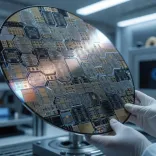
Alibaba 's chip division T-Head unveiled custom silicon as part of the company's push to reduce reliance on suppliers such as Nvidia .
The announcements position Alibaba directly against global AI rivals including OpenAI , Anthropic and Google in the enterprise AI infrastructure race.
Alibaba Group Holding unveiled a broad suite of artificial intelligence products — including its latest large language model, cloud infrastructure upgrades and proprietary chips — at the Alibaba Cloud Summit in Hangzhou on Wednesday, 20 May 2026, declaring its ambition to become China's dominant 'AI factory' as autonomous agents reshape enterprise computing.
The 'AI factory' vision
Liu Weiguang, senior vice-president of Alibaba's cloud computing unit, framed artificial intelligence as a new form of industrial manufacturing, one that generates revenue through what he called 'training and inference factories'. Liu described Alibaba as the only AI and cloud company in China operating across all five layers of the full AI stack — spanning chips, agentic cloud, AI models, model service platforms and agentic applications.
'What we're building is China's AI factory,' Liu said, positioning the company's vertically integrated approach as a structural competitive advantage over domestic and international rivals.
Qwen3.7-Max: built for autonomous agents
Alibaba introduced Qwen3.7-Max, its newest proprietary large language model, designed as 'a robust foundation' for AI agents. According to the company, the model is optimised for agentic coding, complex reasoning and what it terms 'long-horizon tasks' — multi-step missions requiring continuous decision-making over extended periods.
The company said Qwen3.7-Max can autonomously operate for up to 35 hours without performance degradation, a claim that, if validated, would mark a significant step forward in AI agent endurance. Zhou Jingren, recently appointed as chief AI architect of the newly formed Alibaba Group Technology Committee — and formerly chief technology officer of Alibaba Cloud — said the model consistently ranked among the top tier on various benchmarks and outperformed all other AI models in China.
Custom silicon enters the picture
Alongside the model launch, Alibaba also announced custom chip developments as part of its bid to reduce dependence on third-party semiconductor suppliers such as Nvidia. The company's in-house chip division, T-Head, is central to this strategy, enabling Alibaba to claim end-to-end control of its AI infrastructure stack.
The move mirrors a broader industry trend in which hyperscalers — including Google and Amazon — have invested heavily in proprietary silicon to optimise cost and performance for their specific AI workloads, particularly as global chip supply chains remain under geopolitical pressure.
Competitive backdrop
Alibaba's announcements come as competition in China's AI landscape intensifies, with domestic rivals and international players such as OpenAI and Anthropic advancing their own agent-capable models. The company's five-layer stack narrative is a direct response to the growing complexity of enterprise AI deployment, where customers increasingly demand integrated solutions rather than point products.
Industry analysts have noted that the race to control full-stack AI infrastructure is accelerating globally, and Alibaba's positioning in Hangzhou signals it intends to be a primary supplier — not merely a participant — in that buildout.
What's next
The durability of Alibaba's 'AI factory' thesis will depend on enterprise adoption of Qwen3.7-Max in production environments and the commercial performance of its custom chips against established alternatives. Investors and developers will be watching whether the 35-hour autonomous operation claim holds up under real-world workloads — and whether Alibaba Cloud's integrated stack can convert the summit narrative into measurable revenue growth in coming quarters.
Point of View
Timed to coincide with peak enterprise procurement cycles and intensifying US chip-export controls that limit Chinese firms' access to advanced Nvidia silicon. By claiming ownership of all five stack layers — from custom chips to agentic applications — Alibaba is attempting to replicate the vertically integrated playbook that has made hyperscalers like Google and Amazon difficult to displace. What mainstream coverage often underweights is the significance of the 35-hour autonomous operation claim: if reproducible, it shifts the competitive benchmark from raw benchmark scores to real-world agent endurance, a metric that directly maps to enterprise cost savings. The appointment of Zhou Jingren as chief AI architect of a newly formed group-level technology committee also signals internal restructuring, suggesting Alibaba is centralising AI decision-making to move faster — a structural response to the pace set by leaner domestic rivals.
NationPress
3 Oct 2026
Frequently Asked Questions
What is Alibaba's Qwen3.7-Max model?
Qwen3.7-Max is Alibaba 's latest proprietary large language model, announced on 20 May 2026 , designed as a foundation for AI agents. The company says it excels at agentic coding, complex reasoning and long-horizon tasks, and can operate autonomously for up to 35 hours without performance degradation.
What did Alibaba announce at its Cloud Summit 2026?
Alibaba announced Qwen3.7-Max , custom AI chips developed by its T-Head division, and new cloud infrastructure at the Alibaba Cloud Summit in Hangzhou on 20 May 2026 . The company framed the combined announcements as its bid to become China 's 'AI factory', operating across all five layers of the AI stack.
Why is Alibaba building its own AI chips?
Alibaba is developing custom chips through its T-Head division to reduce dependence on third-party suppliers such as Nvidia and gain end-to-end control of its AI infrastructure. This strategy is driven partly by geopolitical constraints on chip exports to China and partly by the cost and performance advantages that proprietary silicon can deliver at hyperscale.
How does Qwen3.7-Max compare to other AI models in China?
Zhou Jingren , chief AI architect of the Alibaba Group Technology Committee , said Qwen3.7-Max consistently ranked among the top tier on various benchmarks and outperformed all other AI models in China . The claim has not yet been independently verified, though the company cited multiple benchmark rankings to support the assertion.
Who is Liu Weiguang at Alibaba?
Liu Weiguang is the senior vice-president of Alibaba 's cloud computing unit. He delivered the keynote vision at the Alibaba Cloud Summit on 20 May 2026 , framing AI as a new form of manufacturing and positioning Alibaba as the only company in China operating all five layers of the full AI stack.