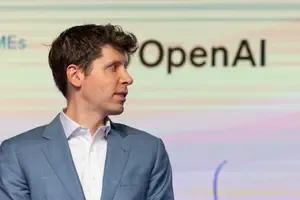
Sam Altman Outlines Three AGI Priorities, Announces $2M OpenAI Credits for YC Startups

Synopsis
OpenAI chief executive Sam Altman has outlined three AGI priorities — accelerating research, companies, and individuals — while announcing a $2 million OpenAI credits offer for every Y Combinator startup and signalling that personal AGI for everyday users is his next major push.
Key Takeaways
OpenAI CEO Sam Altman identified three core AGI focus areas: accelerating research, accelerating companies, and personal AGI for individuals.
OpenAI is offering to invest $2 million in OpenAI credits into every Y Combinator portfolio company.
Altman also referenced a new research milestone called the 'unit distance result,' announced the same week.
Altman flagged personal AGI — helping every individual achieve their goals — as the priority requiring the most immediate increase in effort.
The announcements reflect a broader industry trend of frontier AI labs competing to embed their platforms in the early-stage startup ecosystem.
The moves carry implications for India's developer community, a significant consumer of OpenAI's APIs and tools.
OpenAI chief executive Sam Altman on Wednesday, 20 May 2026 publicly outlined the three areas his company is most focused on as artificial general intelligence development accelerates, while also announcing a $2 million OpenAI credits investment offer for every company in the Y Combinator portfolio.
Context
In the post, Altman identified his top three AGI priorities as: accelerating scientific research, accelerating companies, and enabling personal AGI that helps every individual achieve their goals. He described the third — personal AGI for individuals — as the area requiring the most immediate attention going forward.
Alongside these strategic priorities, Altman referenced two recent announcements: a research milestone described as the 'unit distance result,' and the offer to invest $2 million in OpenAI credits into every Y Combinator (YC) company. The post signals that OpenAI views startup infrastructure support as a near-term lever for broader AGI adoption.
Policy Backdrop
OpenAI, founded in 2015 in San Francisco, has since its 2018 charter committed to ensuring that AGI benefits all of humanity — not just researchers or large enterprises. The company's 2019 multi-billion-dollar partnership with Microsoft provided the cloud infrastructure underpinning its large-scale model training, and successive model releases between 2023 and 2025 have consistently paired capability advances with commercial deployment tools.
The move to offer credits directly to YC companies is consistent with a broader industry pattern: frontier AI labs competing to embed their platforms early in the startup lifecycle, when technical choices tend to lock in for years. Altman himself served as president of Y Combinator before taking the helm at OpenAI, giving the relationship between the two organisations unusual depth.
Stakeholders and Impact
The most immediate beneficiaries of the announced credits programme are the thousands of early-stage companies in the YC portfolio, which spans cohorts from 2005 to the present. Access to $2 million in compute credits can meaningfully lower the barrier to building AI-native products, particularly for seed-stage teams without enterprise cloud contracts.
For individual developers and researchers — the constituency Altman flagged as needing the most attention — the emphasis on 'personal AGI' suggests forthcoming product or platform moves aimed at general consumers, not just enterprise clients. This framing also carries implications for India's rapidly expanding developer community, which has been an active early adopter of OpenAI's application programming interfaces.
The announcements occur against a backdrop of intensifying US-China technological competition and active domestic policy debates in both the United States and India around AI export controls, safety standards, and compute access equity.
What's Next
Altman's explicit call to 'increase our efforts' on personal AGI signals that further product or partnership announcements are likely in the near term. Observers will watch for follow-on details about the scope and eligibility criteria of the YC credits programme, as well as clarification on the 'unit distance result' research milestone.
Broader industry attention will also turn to whether competing frontier labs respond with analogous startup incentive programmes, and how regulators in the United States, European Union, and India respond to the accelerating pace of AGI-oriented deployment commitments.
Point of View
Then enterprise, then the individual. The $2 million YC credits announcement is a direct competitive move to lock in the next generation of AI-native startups at the earliest possible stage, leveraging Altman's own history with Y Combinator. The emphasis on 'personal AGI' is notable because it shifts the rhetorical frame from institutional capability to individual empowerment — a posture that has regulatory and market consequences as AGI governance debates intensify globally. For India, where AI adoption is accelerating among developers and small businesses, these signals from OpenAI's leadership carry outsized weight in shaping both product choices and policy expectations.
NationPress
7 Oct 2026
Frequently Asked Questions
What did Sam Altman announce about Y Combinator startups?
Sam Altman announced that OpenAI is offering to invest $2 million in OpenAI credits into every company in the Y Combinator portfolio, lowering the compute cost barrier for early-stage AI-native startups.
What are Sam Altman's three AGI priorities?
Altman listed three priorities: AGI accelerating scientific research, AGI accelerating companies, and personal AGI that helps every individual achieve their personal goals — with the third flagged as needing the most immediate focus.
What is the 'unit distance result' Sam Altman mentioned?
Altman described the 'unit distance result' as a research milestone announced by OpenAI, though specific technical details of the finding have not been fully disclosed in publicly available information.
How does OpenAI's YC credits offer affect Indian startups?
Indian startups that are part of the Y Combinator portfolio would be eligible for the $2 million OpenAI credits offer, providing significant compute resources that can accelerate product development without upfront cloud infrastructure costs.
What does 'personal AGI' mean in Sam Altman's context?
In Altman's framing, 'personal AGI' refers to AI systems capable of helping individual users — not just enterprises or researchers — achieve their own specific goals, representing a shift toward consumer-facing general-purpose AI applications.