Sam Altman Weighs In on AI Debate With Cryptic Post

Synopsis
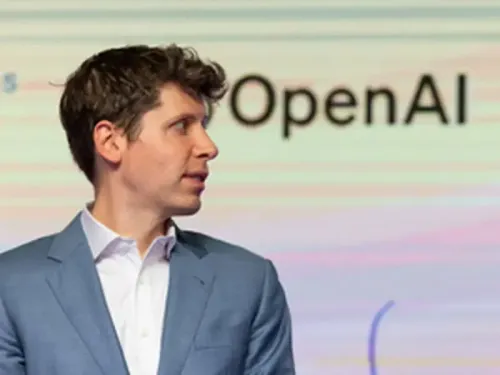
OpenAI chief executive Sam Altman posted a cryptic three-word rebuttal on X on 9 July 2026. The remark, 'it surely doesnt,' offers no explicit subject but signals a public disagreement, drawing attention given Altman's outsized influence on global AI policy and investment sentiment.
Key Takeaways
OpenAI CEO Sam Altman posted 'it surely doesnt' on X on 9 July 2026 , a brief public rebuttal whose subject was not specified in the post.
The remark is consistent with Altman's pattern of using short social-media posts to signal positions on AI capabilities or policy without detailed elaboration.
Altman testified before the US Senate Judiciary Committee in 2023 on AI risks, establishing him as a key industry voice in regulatory debates.
OpenAI develops the GPT series of large language models, whose global deployment makes Altman's public statements consequential for developers and policymakers worldwide, including in India .
The full meaning of the post depends on thread context that was not publicly visible, and no specific claim, person, or policy has been confirmed as the target of the remark.
OpenAI chief executive Sam Altman posted a brief but pointed remark on X on Thursday, 9 July 2026, writing 'it surely doesnt' — a terse interjection that appears to respond to an ongoing conversation about artificial intelligence capabilities or safety, though the precise referent of the comment was not specified in the post.
Context
Altman's post — three words, no punctuation beyond the contraction — is characteristic of the conversational, often elliptical style tech executives use on social media to signal positions without elaborating publicly. The phrase 'it surely doesnt' reads as a rebuttal or negation, suggesting Altman was disagreeing with a claim or assertion made elsewhere in a thread or in wider discourse.
Because the post contains no explicit subject, the full meaning depends on context that was not publicly visible in the original post. What is clear is that Altman chose to engage publicly, lending his considerable platform to whatever debate was underway.
Policy Backdrop
Sam Altman has been a central voice in global conversations about AI governance since at least 2023, when he testified before the US Senate Judiciary Committee on the risks and regulation of advanced AI systems. His public statements — whether detailed policy positions or brief social-media remarks — are closely watched by lawmakers, investors, and researchers worldwide.
OpenAI, the organisation he co-founded and leads, has developed some of the most widely deployed large language models in the world, including the GPT series. The company's trajectory and Altman's commentary on AI capabilities routinely move markets and influence legislative agendas in the United States, the European Union, and beyond.
Stakeholders and Impact
Even a short, context-free post from Altman carries weight for multiple constituencies. AI developers and researchers parse his public remarks for signals about OpenAI's internal views on capability thresholds and safety timelines. Policymakers in Washington, Brussels, and increasingly in New Delhi monitor his commentary as a bellwether for where the frontier AI industry stands on self-regulation versus statutory oversight.
For India, which is rapidly expanding its own AI policy framework and has a large developer community building on OpenAI's platforms, statements from Altman — however brief — feed into domestic debates about technology adoption, data governance, and the pace of AI integration in public services.
What's Next
The broader backdrop against which this post lands includes intensifying international negotiations on AI safety standards, with major forums expected later in 2026. Whether Altman's remark was directed at a specific regulatory proposal, a competing technical claim, or a media narrative remains unclear without the full thread context.
Observers will watch for any follow-up posts or public statements from Altman that clarify the referent — and for whether the remark surfaces in policy or investment discussions in the weeks ahead.
Point of View
It functions as a public signal that something being asserted in the AI discourse is, in Altman's view, simply wrong. This pattern of terse social-media interjections is consistent with how frontier AI executives shape narratives without committing to detailed positions. For Indian policymakers and developers who look to OpenAI's leadership for directional cues on capability and safety, even ambiguous remarks from Altman carry interpretive weight. The post lands at a moment when global AI governance frameworks are still being negotiated, making every public signal from key industry figures politically consequential.
NationPress
8 Oct 2026
Frequently Asked Questions
What did Sam Altman post on X on 9 July 2026?
Sam Altman posted the phrase 'it surely doesnt' on X on 9 July 2026. The post was brief and did not specify what 'it' referred to, making the full context unclear without the surrounding thread.
Why does Sam Altman's social media activity matter for India?
India has a large developer and startup community that builds on OpenAI's platforms, and Indian policymakers are actively shaping AI governance frameworks. Statements from Altman, even brief ones, influence how AI capabilities and risks are perceived in Indian policy and investment circles.
Has Sam Altman spoken about AI regulation before?
Yes. In 2023, Sam Altman testified before the US Senate Judiciary Committee on the risks and regulation of advanced AI systems, making him one of the most prominent industry voices in global AI governance debates.