Sam Altman Asks Public: What Problem Should AI Solve?

Synopsis
OpenAI chief executive Sam Altman posted on X asking the global public what problems they most hope AI will solve, adding that OpenAI 'maybe can help.' The post reflects a broader industry pattern of framing AI development as responsive to societal priorities amid accelerating capabilities and global regulatory debates.
Key Takeaways
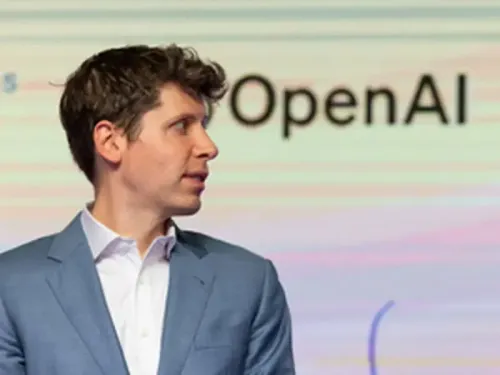
Sam Altman , chief executive of OpenAI , asked the public on X what problems they most hope artificial intelligence will solve.
The post hints at OpenAI 's potential involvement, stating 'maybe we can help,' though no specific commitment was made.
OpenAI 's founding charter since 2018 has emphasised broad benefit distribution and avoiding AI that concentrates power or causes harm.
The outreach mirrors a pattern among AI company leaders of using social platforms to solicit public priorities and frame AI progress as community-responsive.
Commonly cited priority areas in such exercises include climate, healthcare, education, and food security — domains with significant relevance to India .
Any clustering of public responses around specific themes could influence future OpenAI research or product directions, though no roadmap has been announced.
OpenAI chief executive Sam Altman turned to social media platform X to pose a direct question to the global public, asking which problems they most hope artificial intelligence will solve in the future — and signalling that OpenAI may be positioned to help address them.
Context
Altman's post — 'What problem do you most hope AI will solve in the future? Maybe we can help!' — is brief but pointed. It invites open-ended responses from anyone following the OpenAI chief, whose account commands a large global audience spanning researchers, policymakers, developers, and everyday users. The phrase 'maybe we can help' stops short of a commitment but frames OpenAI as an organisation actively listening to societal priorities.
The post carries particular weight given OpenAI's stated founding mission: the development of artificial general intelligence that benefits humanity as a whole. That charter, articulated as far back as 2018, explicitly emphasised broad benefit distribution and avoiding uses of AI that concentrate power or cause harm.
Policy Backdrop
The question arrives at a moment of intense global debate over what AI should be used for, who controls it, and how its benefits are distributed. Governments across the world — including India, the European Union, and the United States — are actively legislating or drafting frameworks to govern AI deployment. In this environment, a public solicitation of priorities by the head of one of the world's most influential AI laboratories carries both symbolic and strategic weight.
India, home to one of the world's largest pools of AI researchers and a rapidly expanding digital economy, has a particular stake in how leading AI companies prioritise their research agendas. Domains such as agricultural productivity, affordable healthcare, multilingual access to information, and climate resilience are among the areas where AI applications could have an outsized impact on the country's population of over 140 crore.
Stakeholders and Impact
The post is directed at the general public, but its implications extend to AI researchers, civil society organisations, governments, and industry partners who watch OpenAI's direction closely. Public engagement exercises of this kind serve a dual purpose: they generate goodwill by signalling responsiveness to societal needs, and they surface real-world use cases that may inform product or research roadmaps.
Recurring themes in such public conversations typically include climate change mitigation, early disease detection, personalised education, food security, and mental health support. Any clustering of responses around specific domains could, in principle, influence where OpenAI directs future resources — though no specific commitment has been made in this post.
What's Next
Observers will watch whether the public responses to Altman's question translate into concrete announcements — new research initiatives, partnerships with governments, or product features targeting the most-cited problem areas. The post is consistent with a broader pattern of AI company leaders using social platforms to frame their work as community-driven rather than purely commercial or technical. Whether that framing is followed by substantive action remains the central question for critics and supporters alike.
Point of View
Public-interest institution at a time when scrutiny of AI companies is intensifying worldwide. For India, where AI governance frameworks are still being shaped and public trust in technology platforms is contested, the gesture carries both opportunity and expectation: if global AI leaders are soliciting priorities, Indian voices around healthcare access, agricultural efficiency, and multilingual inclusion deserve to be centred. The post also reflects a wider industry arc in which capability announcements are increasingly paired with appeals to social purpose, a dynamic that regulators and civil society are watching with growing scepticism. Whether such engagement translates into verifiable, equitable outcomes will define how AI companies are judged in the years ahead.
NationPress
7 Oct 2026
Frequently Asked Questions
What did Sam Altman post on X about AI?
Sam Altman, chief executive of OpenAI, posted on X asking the public what problem they most hope artificial intelligence will solve in the future, adding that OpenAI 'maybe can help.'
Why is Sam Altman asking the public about AI problems?
The post reflects a broader pattern of AI company leaders soliciting public priorities to frame their work as community-driven and responsive to societal needs, rather than purely commercial or technical.
What is OpenAI's mission?
OpenAI was founded in 2015 with the stated goal of developing artificial general intelligence that benefits humanity as a whole, with its 2018 charter emphasising broad benefit distribution and safety.
How does Sam Altman's post affect India?
India, with over 140 crore people and pressing needs in healthcare, agriculture, education, and climate resilience, has a significant stake in how leading AI companies like OpenAI prioritise their research and product agendas.
Will OpenAI act on the public responses to Altman's question?
No specific commitment has been made. Observers are watching whether recurring themes in public replies — such as climate, health, or education — lead to concrete OpenAI research initiatives or product announcements.