CAS finds largest Indian Ocean whale-fall site, fossils 5.3 million years old
Synopsis
Chinese scientists have found the largest whale-fall site ever recorded in the Indian Ocean — a fossil graveyard stretching back 5.3 million years that could rewrite what we know about cetacean evolution and deep-sea ecosystems.
Key Takeaways
Chinese Academy of Sciences (CAS) researchers discovered the largest whale-fall site ever recorded in the Indian Ocean , published in Nature on 11 June 2026 .
Some fossils at the site date back approximately 5.3 million years , placing them in the Early Pliocene epoch.
The study was conducted by the CAS Institute of Deep-Sea Science and Engineering in Sanya, Hainan , in collaboration with the University of Pisa and Earth Sciences New Zealand .
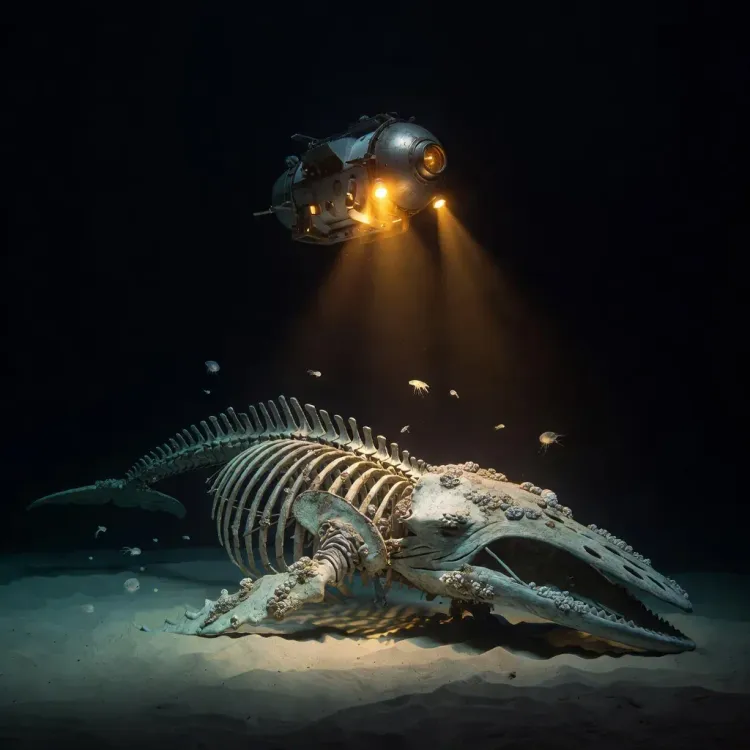
The deep-sea submersible Fendouzhe was used to survey and sample the site, with remains including those of the Antarctic minke whale recovered.
The paper states the findings 'reshape the understanding of the limits and biogeography of whale-fall ecosystems' and establish deep-sea floors as fossil archives for cetacean evolution.
Lead researcher Peng Xiaotong and the CAS team used sediment coring and high-resolution imaging to document the site, located in the Diamantina Zone .
Chinese Academy of Sciences (CAS) deep-sea researchers have discovered the largest whale-fall site ever recorded in the Indian Ocean, a sprawling underwater graveyard containing whale fossils, carcasses, and living ecosystems with some remains dating back approximately 5.3 million years. The findings, published in the peer-reviewed journal Nature on Wednesday, 11 June 2026, mark the deepest and most extensive known accumulation of cetacean fossil material on Earth.
What the discovery revealed
The study was led by researchers from the CAS Institute of Deep-Sea Science and Engineering, based in Sanya, an island city in southern Hainan province, in collaboration with scientists from the University of Pisa and Earth Sciences New Zealand. The site, located in the Diamantina Zone of the Indian Ocean, contains layered evidence of whale-fall events spanning the Early Pliocene epoch to the present day. Researchers described it as a 'whale necropolis' — a term reflecting both the scale and the geological significance of the accumulation.
Why it matters
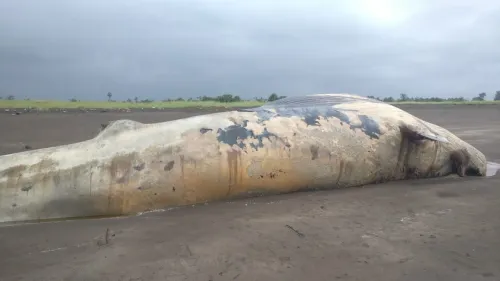
A whale fall occurs when a whale dies and its carcass eventually sinks to the ocean floor, triggering a succession of deep-sea ecosystems that can persist for decades. The carcass first attracts sharks and scavengers near the surface before descending to depths where specialist organisms — including chemosynthetic bacteria — colonise the bones. The paper argues that sites like this one function as natural archives, preserving evolutionary data across geological timescales. 'These findings reshape the understanding of the limits and biogeography of whale-fall ecosystems and establish some deep-sea floors as a fossil archive for tracing cetacean evolution over geological time,' the authors wrote.
The research vessel and tools
The expedition deployed the deep-sea submersible Fendouzhe, one of China's most capable crewed deep-sea vehicles, to survey and sample the site. Specimens recovered included remains consistent with the Antarctic minke whale, among other cetacean species. Lead researcher Peng Xiaotong and the CAS team used sediment coring and high-resolution imaging to document the fossil record in situ, according to the journal paper.
Competitive backdrop
The discovery underscores the expanding ambitions of China's deep-sea science programme, which has steadily increased its presence in the Indian Ocean and other remote ocean zones over the past decade. The CAS Institute of Deep-Sea Science and Engineering in Sanya has emerged as a central node in this effort, conducting surveys that have yielded multiple internationally significant findings. International collaboration — in this case with European and Australasian institutions — has become a recurring feature of CAS-led deep-sea publications.
What's next
The paper's authors indicate that further analysis of recovered specimens could refine the timeline of cetacean migration through the Indian Ocean basin and shed light on how deep-sea ecosystems responded to historical climate shifts. Researchers and marine biologists tracking the broader field will be watching whether follow-up expeditions expand the mapped boundaries of the site and whether additional fossil-bearing whale-fall clusters exist elsewhere along the Diamantina Zone.
Point of View
Backed by state investment in assets like the Fendouzhe submersible. Mainstream coverage tends to frame such findings purely as natural history, but the strategic dimension — China systematically mapping and publishing on the Indian Ocean floor — deserves equal attention. The deliberate inclusion of the University of Pisa and Earth Sciences New Zealand as co-authors also reflects a well-worn playbook: international credentialing that smooths the path to top-tier journals and deflects criticism of unilateral ocean access. What is underreported is how the data gathered during these expeditions — sediment composition, bathymetric mapping, biological sampling — has dual-use value well beyond palaeontology.
NationPress
26 Oct 2026
Frequently Asked Questions
What is the whale-fall site discovered by Chinese scientists in the Indian Ocean?
It is the largest whale-fall site ever recorded in the Indian Ocean, a deep-sea accumulation of whale fossils, carcasses, and the ecosystems they support, located in the Diamantina Zone. Some fossils date back approximately 5.3 million years to the Early Pliocene epoch. The findings were published in the journal Nature on 11 June 2026.
Who conducted the whale-fall research and where is the team based?
The study was led by researchers from the CAS Institute of Deep-Sea Science and Engineering, based in Sanya, Hainan province, China. They collaborated with scientists from the University of Pisa and Earth Sciences New Zealand. Lead researcher Peng Xiaotong headed the CAS team.
What is a whale fall and why is it scientifically significant?
A whale fall is the process by which a dead whale sinks to the ocean floor and sustains a succession of deep-sea ecosystems for decades. It is significant because the bones support chemosynthetic communities found nowhere else, and, as this study shows, fossil whale falls can serve as archives for tracing cetacean evolution over millions of years.
What submersible was used to explore the Indian Ocean whale-fall site?
China's deep-sea crewed submersible Fendouzhe was deployed to survey and sample the site. The team used sediment coring and high-resolution imaging to document the fossil record in situ.
How does this discovery affect our understanding of cetacean evolution?
The paper argues that deep-sea floors containing whale-fall fossil clusters function as geological archives, enabling scientists to trace cetacean migration and evolutionary change over millions of years. The authors state the findings 'reshape the understanding of the limits and biogeography of whale-fall ecosystems.' Further analysis of recovered specimens is expected to refine the timeline of whale migration through the Indian Ocean basin.