Chinese submersible finds rich 'garden-like' life in 9km-deep ocean trenches
Synopsis
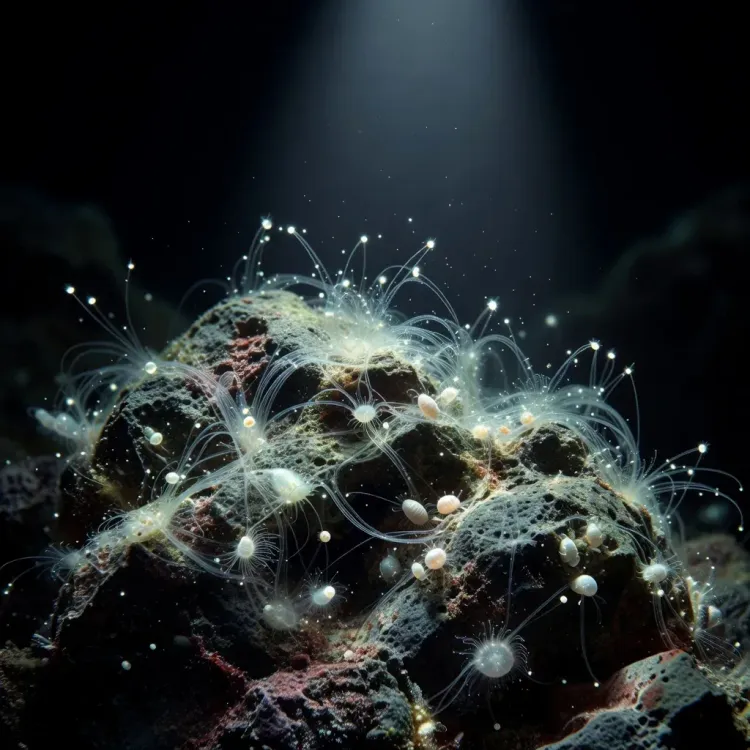
China's Fendouzhe submersible has uncovered a flourishing 'garden-like' ecosystem on rocks more than 9km below the ocean surface — overturning decades of scientific consensus that virtually nothing could survive in hadal trenches.
Key Takeaways
An international team led by Professor Peng Xiaotong of the Chinese Academy of Sciences published the findings in Science on May 14, 2026 .
China's crewed submersible Fendouzhe (Striver) conducted dives across seven hadal trenches in the Indo-Pacific between 2020 and 2024 .
The newly discovered communities live on rocks at depths greater than 9 kilometres (5.6 miles) , where pressure is sufficient to crush a submarine.
Previously unknown fauna includes filamentous foraminifera , flagged as potential carbon hotspots with implications for the global carbon cycle.
Sites surveyed include the Mariana Trench , Kermadec Trench , Kuril-Kamchatka , Aleutian , Atacama , and Mussau trenches.
The discovery challenges the long-held assumption that hadal zones support only minimal life such as anemones, sponges, or bacteria.
An international research team, supported by China's crewed deep-sea submersible Fendouzhe (also known as Striver), has discovered a thriving and previously unknown ecosystem living on rocks in ocean trenches deeper than 9 kilometres (5.6 miles) — a finding that fundamentally reshapes scientific understanding of life at the planet's extreme depths. The results were published in the journal Science on May 14, 2026.
A 'Garden-Like' World Where None Was Expected
Until this discovery, the scientific consensus held that only a handful of anemones, sponges, or bacteria could endure the crushing pressures, perpetual darkness, and near-freezing temperatures of the hadal zone — the deepest layer of the ocean. The new findings overturn that assumption entirely, revealing a complex community of organisms sustained by organic debris drifting down from shallower waters above.
The ecosystem has been described as unexpectedly rich, with researchers likening it to a 'garden-like' community thriving in one of Earth's most inhospitable environments.
The Research: Seven Trenches Across the Indo-Pacific
The study was led by Professor Peng Xiaotong from the Institute of Deep-Sea Science and Engineering at the Chinese Academy of Sciences. Writing in the paper, Peng stated: 'Between 2020 and 2024, we used the submersible Fendouzhe to investigate seven hadal trenches, fracture zones and basins in the Indo-Pacific region, uncovering previously unknown faunas inhabiting extreme hadal depths.'
The survey spanned some of the world's most geologically significant underwater features, including the Mariana Trench, the Kermadec Trench, the Kuril-Kamchatka trench system, the Aleutian trench, the Atacama trench, and the Mussau trench, among other sites across the Indo-Pacific region.
Why It Matters: Carbon Hotspots and New Biology
Among the newly identified organisms are filamentous foraminifera — single-celled organisms that researchers have flagged as potentially significant carbon hotspots, with implications for understanding the deep ocean's role in the global carbon cycle. The trenches, long dismissed as biological deserts, may in fact be active participants in planetary-scale biogeochemical processes.
The findings also raise urgent questions about how deep-sea mining and other human activities might disturb ecosystems that science is only now beginning to document.
What's Next: Deeper Surveys and Policy Implications
The research team's four-year, multi-trench survey represents one of the most systematic hadal investigations ever conducted. With the Fendouzhe submersible capable of reaching depths exceeding 10,000 metres, further dives are expected to catalogue additional species and map the spatial extent of these communities.
The discovery arrives at a moment of intensifying international debate over deep-sea governance, and scientists are expected to call for stronger protections for hadal zones as the full biodiversity picture comes into focus.
Point of View
Given their possible role in carbon sequestration modelling and climate policy. Mainstream coverage will focus on the 'garden' metaphor, but the harder story is that whoever maps and understands these ecosystems first will have outsized influence over the emerging international legal frameworks governing deep-sea resource extraction. With the UN's High Seas Treaty still in the ratification process, the timing of this publication is unlikely to be accidental.
NationPress
11 Oct 2026
Frequently Asked Questions
What did scientists discover in the deep ocean trenches?
Scientists discovered a previously unknown, thriving ecosystem living on rocks at depths greater than 9 kilometres in hadal ocean trenches across the Indo-Pacific. The community includes newly identified fauna such as filamentous foraminifera and overturns the long-held view that only minimal life — anemones, sponges, or bacteria — could survive at such extreme depths.
Which submersible was used for the deep-sea research?
China's crewed deep-sea submersible Fendouzhe, also known as Striver, was used to conduct the dives. It is capable of reaching depths exceeding 10,000 metres, making it one of the few vessels in the world able to access the hadal zone.
Who led the research and where was it published?
The study was led by Professor Peng Xiaotong from the Institute of Deep-Sea Science and Engineering at the Chinese Academy of Sciences. The findings were published in the peer-reviewed journal Science on May 14, 2026.
Which ocean trenches were investigated in the study?
The research team investigated seven hadal trenches, fracture zones, and basins between 2020 and 2024. Named sites include the Mariana Trench, Kermadec Trench, Kuril-Kamchatka trench, Aleutian trench, Atacama trench, and Mussau trench, all located in the Indo-Pacific region.
Why does the deep-sea ecosystem discovery matter for climate science?
Researchers identified filamentous foraminifera among the new fauna and flagged them as potential carbon hotspots, suggesting hadal trenches may play a previously unrecognised role in the global carbon cycle. If confirmed, this could alter models of how carbon is stored in the deep ocean, with direct relevance to climate science and policy.