Tsinghua-led study finds subsea turbidity currents far more common than thought
Synopsis
A Tsinghua University-led international study has found that cable-snapping turbidity currents form in lakes and reservoirs — environments once considered safe — dramatically expanding the known threat to global internet infrastructure.
Key Takeaways
Tsinghua University led an international team that published findings on May 26, 2026 in the Proceedings of the National Academy of Sciences .
Turbidity currents can form and self-accelerate in reservoirs and lakes , not just deep ocean settings, overturning prior scientific consensus.
These flows are described as 'powerful, erosive gravity underflows that sever intercontinental telecommunication cables' according to the paper.
The research team included institutions from China, the United States, Japan, and the United Kingdom , including Durham University and Hokkaido University .
The team has developed a new predictive framework to help protect submarine cable networks and manage reservoir safety .
Agencies including the US National Oceanic and Atmospheric Administration and the United States Geological Survey have historically tracked such geohazards.
An international research team led by Tsinghua University has found that turbidity currents — powerful undersea gravity flows capable of severing intercontinental internet cables — form far more frequently and in far gentler environments than scientists had previously assumed. The study, published on May 26, 2026 in the Proceedings of the National Academy of Sciences, also introduces a new framework for predicting and managing these destructive flows.
What are turbidity currents and why do they matter?
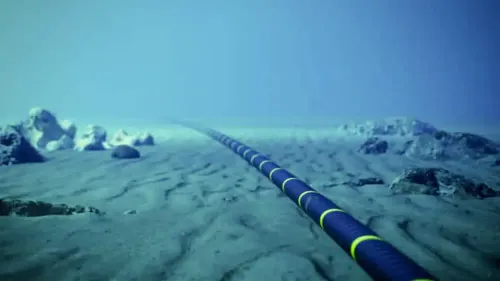
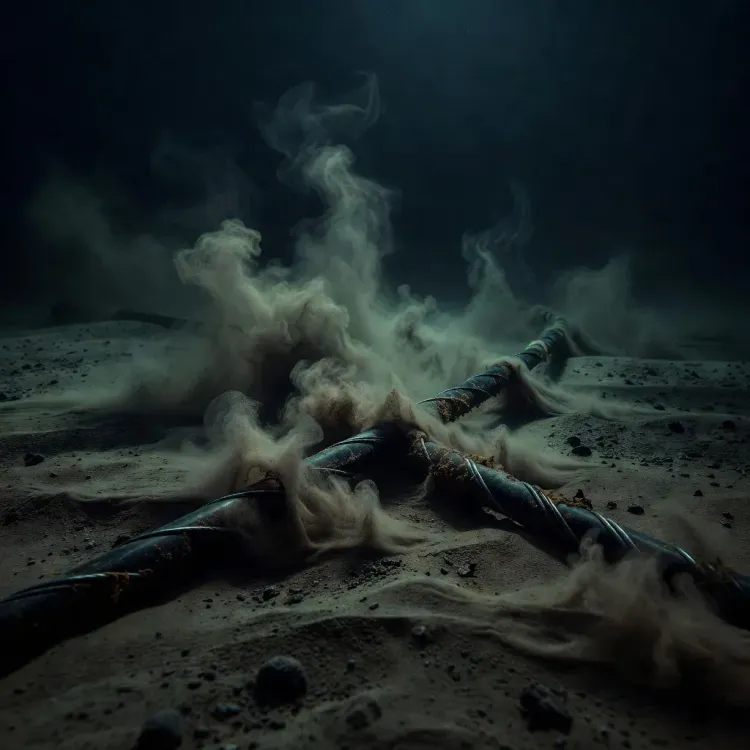
Turbidity currents are fast-moving, sediment-laden underwater avalanches that can travel vast distances along the ocean floor. They are among the primary natural threats to the global network of submarine telecommunications cables, which carry an estimated 95% of international internet traffic. When these currents accelerate, they erode the seabed and can snap cables connecting entire continents.
As the researchers wrote in their paper: 'Self-accelerating turbidity currents are powerful, erosive gravity underflows that sever intercontinental telecommunication cables and reshape subaqueous landscapes.' Until now, direct field observations of accelerating turbidity currents have been rare, with documented cases confined almost exclusively to deep submarine settings.
The breakthrough finding
The team discovered that these currents can form and self-accelerate in comparatively gentle environments — including reservoirs and lakes — where conventional scientific understanding held such phenomena to be impossible. This significantly expands the threat landscape for freshwater infrastructure as well as ocean-floor cable networks.
According to the peer-reviewed paper: 'Despite success in small-scale set-ups, field observations of accelerating turbidity currents have been rare, with only a few cases primarily in submarine settings.' The new framework developed by the team aims to close that observational gap and enable more accurate hazard modelling.
Who is behind the research?
The study brought together scientists from Tsinghua University, the Yellow River Institute of Hydraulic Research, the University of Wyoming, the University of Illinois, Texas Tech University, Hokkaido University in Japan, and Durham University in the United Kingdom. The breadth of the collaboration underscores the global stakes of understanding submarine sediment dynamics.
Why it matters for global connectivity
Subsea cable damage from turbidity currents has caused major connectivity disruptions historically — most notably the 1929 Grand Banks earthquake off Newfoundland, Canada, which triggered a turbidity current that severed multiple transatlantic telegraph cables in sequence. With global data traffic growing exponentially and geopolitical tensions raising the profile of cable security, the ability to predict these events has taken on new urgency.
Agencies including the United States Geological Survey and the US National Oceanic and Atmospheric Administration have long tracked submarine geohazards, and findings such as these are expected to inform updated risk assessments for cable routing and reservoir management worldwide.
What's next
The researchers' predictive framework is expected to feed into both submarine infrastructure planning and freshwater reservoir safety protocols. As undersea cable investment accelerates globally — driven by hyperscaler demand and government connectivity programmes — the ability to model turbidity current risk with greater precision will be closely watched by cable operators, insurers, and regulators alike.
Point of View
Hyperscalers, and insurers all reassessing risk. The finding that turbidity currents can form in freshwater reservoirs is particularly disruptive: it means the hazard is not confined to deep-ocean cable corridors but extends to inland water infrastructure with its own economic dependencies. Mainstream coverage tends to focus on deliberate cable sabotage, but natural geohazards like turbidity currents represent a statistically significant and underappreciated threat vector. The new predictive framework from this consortium could become a standard reference for cable routing decisions and environmental impact assessments as investment in new transoceanic links accelerates.
NationPress
19 Sept 2026
Frequently Asked Questions
What are turbidity currents and how do they damage subsea cables?
Turbidity currents are fast-moving, sediment-laden underwater flows that travel along the ocean floor with enough force to snap submarine telecommunications cables. According to the research paper, they are 'powerful, erosive gravity underflows that sever intercontinental telecommunication cables and reshape subaqueous landscapes.'
What did the Tsinghua University study find?
The study found that turbidity currents are more common than previously believed, forming even in gentle environments like reservoirs and lakes where such currents were thought to be impossible. The findings were published on May 26, 2026 in the Proceedings of the National Academy of Sciences.
Why does this research matter for global internet infrastructure?
Subsea cables carry the vast majority of international internet traffic, and turbidity currents are one of the primary natural threats to these cables. Better prediction of when and where these currents form could help cable operators and governments protect critical connectivity infrastructure.
Which institutions were involved in the turbidity current research?
The international team included researchers from Tsinghua University, the Yellow River Institute of Hydraulic Research, the University of Wyoming, the University of Illinois, Texas Tech University, Hokkaido University in Japan, and Durham University in the United Kingdom.
What is the practical outcome of this research?
The team developed a new framework for understanding and predicting turbidity current formation, which is expected to improve hazard modelling for submarine cable routing and freshwater reservoir management. This could inform updated risk assessments by agencies such as the US Geological Survey and the US National Oceanic and Atmospheric Administration.