Submarine cable cuts are deterrence weapons like nukes, RETN CEO warns
Synopsis
RETN CEO Tony O'Sullivan says deep-sea cable-cutting technology mirrors nuclear deterrence — the threat of use, not actual use, is the weapon. Meanwhile, China and the US are absent from a 17-nation seabed defence coalition, exposing a critical gap in global undersea infrastructure protection.
Key Takeaways
Tony O'Sullivan , CEO of RETN , compared deep-sea cable-cutting technology to nuclear weapons, arguing its deterrent threat outweighs its physical destructive potential.
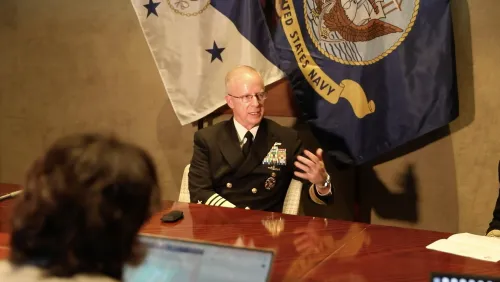
17 Asian and European nations have stepped up collaboration on seabed defence strategies in recent months, but China and the United States are not among them.
Most submarine cable disruptions to date have been accidental; deliberate sabotage remains rare but its psychological impact on governments and populations is significant.
The Nord Stream pipeline sabotage and China 's reported development of deep-sea cable-cutter technology have elevated the seabed as a new front in geopolitical competition.
O'Sullivan identified 'naivety about network design' — not deliberate cable cuts — as the greater long-term threat to the global internet.
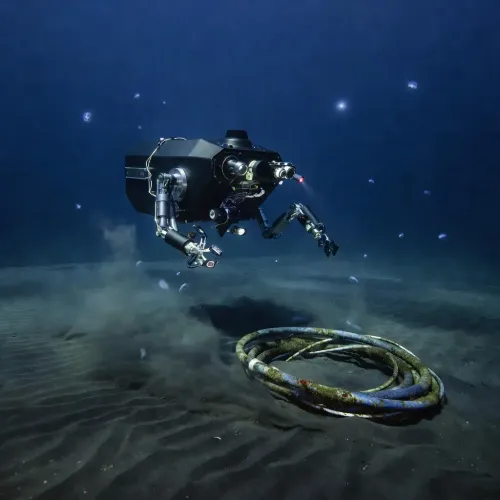
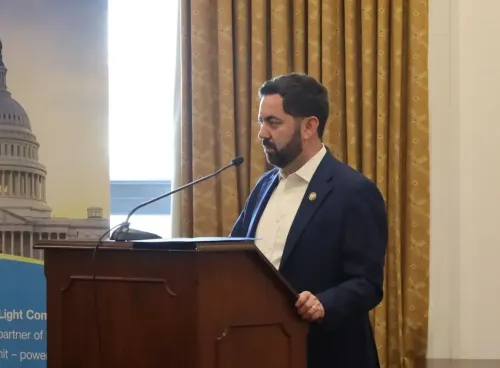
Tony O'Sullivan, CEO of global internet service provider RETN, has warned that deep-sea cable-cutting technology functions as a tool of hybrid warfare whose primary power lies in psychological deterrence rather than physical destruction — drawing a direct parallel to nuclear weapons. Speaking in Hong Kong, O'Sullivan argued that the threat of severing undersea cables is more destabilising than any actual cut, as 17 Asian and European nations have accelerated collaboration on seabed defence strategies in recent months.
The nuclear analogy
O'Sullivan was unequivocal in framing cable-cutter technology as a deterrent instrument. 'It does not have quite the same devastating impact with a single use, but it is exactly like a nuclear weapon in a sense that it is not the actual use of it, [but] the threat of the use of it is the bigger issue,' he said. He added that the goal is 'creating an unease in a population with the threat that something might actually happen, and therefore disturbing their normal operations of government or political system.'Why it matters
The seabed has emerged as the newest front in geopolitical competition. From the sabotage of the Nord Stream pipeline to China's reported development of deep-sea cable-cutting technology, undersea infrastructure is now firmly in the crosshairs of state-level strategic planning. Despite the urgency, the two largest marine powers — China and the United States — were notably absent from the 17-nation collaborative framework, raising questions about the initiative's scope and effectiveness.The real threat: network naivety
O'Sullivan stressed that deliberate cable sabotage is not the primary danger he foresees. Most cable disruptions to date have been accidental, and he believes the more pressing vulnerability is structural. 'I do not see the actual idea of cable cuts as the threat. I see the threat to the internet more coming from naivety about network design,' he said. This framing shifts the policy conversation from military countermeasures toward resilient infrastructure planning and redundancy architecture.Competitive backdrop
The South China Sea, the Red Sea, and chokepoints around Taiwan have all seen elevated cable-security concerns in recent years. Disruptions near the Red Sea during the Ukraine conflict period and ongoing tensions in Asia have pushed governments in Europe, Japan, Britain, and Central Asia to reassess their dependence on submarine cable networks. The International Cable Protection Committee has also intensified its engagement with member states on threat mitigation protocols.What's next
With China and the United States outside the current multilateral framework, the effectiveness of any coordinated seabed defence strategy remains limited. The industry will be watching whether the 17-nation coalition expands its membership, and whether RETN and peers accelerate investment in network redundancy to reduce single-point-of-failure risks across critical global internet corridors.Point of View
A doctrine that has historically stabilised great-power conflict even as it raises baseline anxiety. What mainstream coverage underplays is the structural asymmetry: nations with diversified, redundant cable networks absorb a cut; those dependent on one or two corridors face potential internet blackout. The absence of China and the US from the 17-nation framework is the real story — it signals that both powers view seabed dominance as a unilateral strategic asset, not a shared governance problem. Until the two largest marine powers are at the table, multilateral cable-protection efforts remain a coalition of the mid-tier.
NationPress
26 Oct 2026
Frequently Asked Questions
What did RETN CEO Tony O'Sullivan say about submarine cable cuts?
Tony O'Sullivan said deep-sea cable-cutting technology functions like a nuclear weapon in that its deterrent threat — not its actual use — is the primary strategic instrument. Speaking in Hong Kong, he argued that the goal is to create psychological unease in populations and disrupt normal government operations.
Why are submarine cables considered a geopolitical threat?
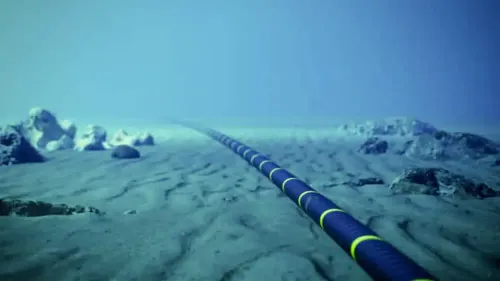
Submarine cables carry the vast majority of global internet traffic, making them critical infrastructure. Events like the Nord Stream pipeline sabotage and China's reported development of deep-sea cable-cutting technology have elevated the seabed as a new front in hybrid warfare and geopolitical competition.
Which countries are collaborating on seabed cable defence?
17 Asian and European nations have stepped up collaboration on seabed defence strategies in recent months. Notably, China and the United States — the two largest marine powers — are not part of this coalition, limiting its overall strategic reach.
Have submarine cables actually been deliberately cut?
Most submarine cable disruptions recorded to date have been accidental, not deliberate acts of sabotage. O'Sullivan noted that the real danger he foresees is not intentional cable cuts but 'naivety about network design' that leaves infrastructure vulnerable.
What regions are most at risk from submarine cable disruptions?
The South China Sea, the Red Sea, and maritime chokepoints around Taiwan have seen elevated cable-security concerns. Nations in Europe, Japan, Britain, and Central Asia have been reassessing their dependence on submarine cable networks amid rising geopolitical tensions.