PLA researchers warn undersea cables carrying 99% of global data face drone threat

Synopsis
PLA-affiliated researchers have publicly declared that undersea cables carrying 99% of global internet traffic and US$10 trillion in daily transactions are an 'easy target,' warning that cheap drones are lowering the barrier to seabed warfare — a striking signal of how China's military is mapping critical global infrastructure vulnerabilities.
Key Takeaways
Shi Guanglei and Shi Haiming of China's National Defence University published the warning in Science and Technology Daily on 5 August 2026 .
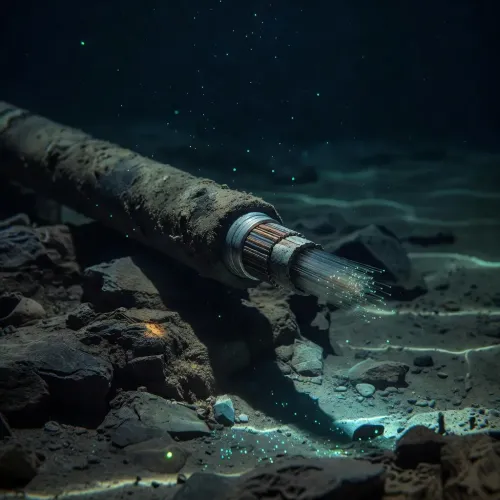
Undersea cables carry 99 per cent of intercontinental data traffic and support cross-border financial transactions worth an estimated US$10 trillion .
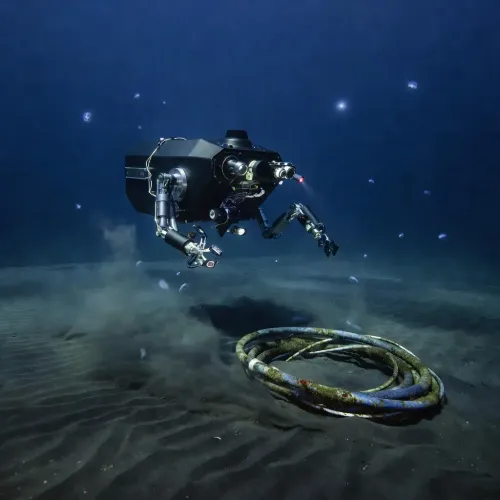
The researchers said small unmanned undersea vehicles ( UUVs ) are 'low-cost, easy to deploy in batches and pose no risk of casualties,' lowering the barrier for smaller nations to conduct seabed operations.
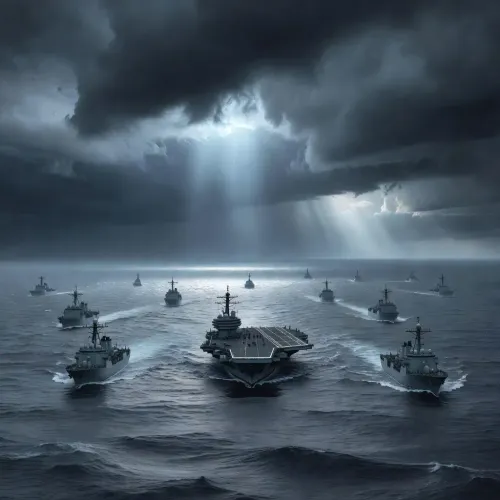
The AUKUS pact between Australia , Britain , and the United States was cited as a key driver accelerating undersea military competition.
The 2022 Nord Stream pipeline sabotage and recent Red Sea cable cuts were highlighted as evidence that underwater infrastructure is increasingly being targeted.
Chinese military researchers at the National Defence University have warned that undersea cables — which carry 99 per cent of intercontinental data traffic — are increasingly vulnerable to attack from low-cost unmanned drones, according to an article published in Science and Technology Daily on 5 August 2026. The warning signals a sharpening focus among People's Liberation Army (PLA) strategists on the seabed as a contested domain in great-power competition.
The core warning
Authors Shi Guanglei and Shi Haiming of the National Defence University wrote that the seabed had long been considered a strategic 'blind spot' owing to the difficulty and cost of operating there, but was fast becoming a 'new arena for great power rivalry.' The researchers pointed specifically to the AUKUS pact between Australia, Britain, and the United States as a key driver accelerating this shift.
'The barrier to entry for undersea warfare is lowering,' the authors wrote, noting that in the past, underwater operations relied heavily on crewed submarines that were expensive and put personnel at risk, limiting such activities to major military powers.
Why low-cost drones change the calculus
The researchers highlighted that small and medium-sized unmanned undersea vehicles (UUVs) are 'low-cost, easy to deploy in batches and pose no risk of casualties, allowing countries to seize control of the seabed.' This democratisation of undersea capability means that nations previously locked out of submarine warfare can now threaten critical underwater infrastructure.
The financial stakes are considerable. Undersea cables support cross-border financial transactions widely estimated to be worth US$10 trillion daily, in addition to underpinning global internet services and cloud connectivity.
Recent incidents cited as evidence
The article pointed to two high-profile incidents as evidence that underwater infrastructure is an 'easy target': the 2022 sabotage of the Nord Stream natural gas pipelines connecting Russia to Germany, and disruptions to internet services after cables in the Red Sea were severed last year. Both events caused significant economic and operational disruption and remain only partially resolved in terms of attribution.
The International Cable Protection Committee has previously documented a rising frequency of cable incidents globally, though the causes range from anchor drag to deliberate interference.
What's next
The publication of this analysis in a state-affiliated science journal suggests PLA planners are actively mapping vulnerabilities in global digital infrastructure — a development that will draw close scrutiny from NATO members and Indo-Pacific allies. As UUV technology matures and proliferates, the window for establishing international norms around undersea infrastructure protection is narrowing fast.
Point of View
But this paper frames seabed dominance as a strategic objective for any serious military power. The explicit citation of AUKUS as a catalyst suggests Beijing views the trilateral pact as having already shifted the undersea balance, accelerating its own UUV development calculus. With no binding international treaty governing deliberate cable interference, the window for deterrence-by-norm is closing faster than policymakers appear to recognise.
NationPress
20 Sept 2026
Frequently Asked Questions
What did Chinese military researchers warn about undersea cables?
Researchers at China's National Defence University warned that undersea cables, which carry 99 per cent of intercontinental data traffic, have become an 'easy target' for attack, particularly from low-cost unmanned undersea vehicles ( UUVs ). The warning was published in Science and Technology Daily in August 2026 .
Why are undersea cables considered critical infrastructure?
Undersea cables underpin virtually all global internet connectivity and support cross-border financial transactions estimated at US$10 trillion daily. Disrupting them can knock out online services and financial systems simultaneously across multiple countries.
What role does AUKUS play in undersea military competition?
The PLA researchers specifically cited the AUKUS pact between Australia , Britain , and the United States as a key driver lowering the barrier to undersea warfare. They argued the pact is accelerating the development and deployment of advanced underwater military capabilities.
What past incidents were cited as examples of undersea infrastructure attacks?
The researchers cited the 2022 sabotage of the Nord Stream natural gas pipelines between Russia and Germany , and the severing of internet cables in the Red Sea last year as evidence that underwater infrastructure is already being targeted.
How do unmanned undersea vehicles change the threat landscape?
UUVs are described as 'low-cost, easy to deploy in batches and pose no risk of casualties,' meaning smaller nations that could never afford crewed submarine programmes can now conduct undersea operations. This dramatically widens the pool of actors capable of threatening global cable networks.