Sam Altman: ChatGPT Can Now Build and Publish Web Apps
Synopsis
OpenAI CEO Sam Altman announced on June 5, 2026 that ChatGPT can now build and publish web apps, comparing the milestone to HyperCard and signalling a new era of accessible software creation for non-programmers worldwide.
Key Takeaways
Sam Altman announced on June 5, 2026 that ChatGPT can now build and publish web applications.
Altman invoked HyperCard , Apple's 1987 authoring tool, as a nostalgic predecessor that democratised software creation for non-programmers.
OpenAI first launched ChatGPT in November 2022 ; GPT-4 in March 2023 expanded its coding capabilities substantially.
The feature is aimed at first-time builders, students, and small-business owners who lack formal development skills.
India's large and growing ChatGPT user base makes the feature particularly relevant to the country's aspirational developer community.
Further details on hosting, deployment scope, and platform limits are awaited from OpenAI's developer channels.
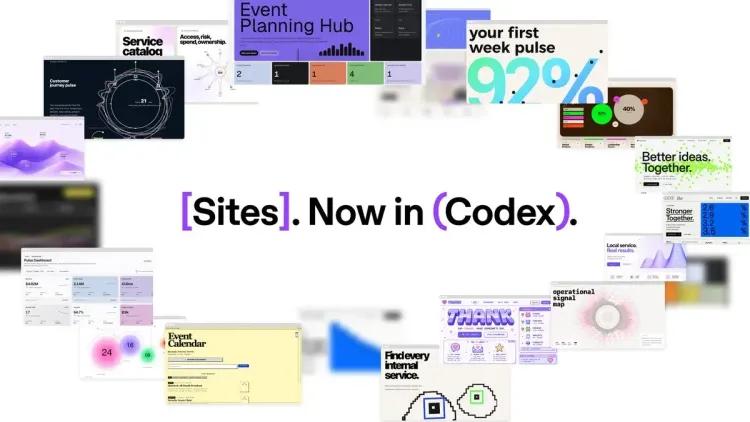
OpenAI chief executive Sam Altman announced on Friday, June 5, 2026 that ChatGPT can now build and publish web applications, calling the capability something he wished had existed during his childhood while expressing nostalgia for HyperCard, the pioneering Apple software that once let non-programmers create interactive digital projects.
Context
Altman's post read: 'build and publish web apps with chatgpt! i really wish i had this when i was a kid, but i do miss hypercard.' The reference to HyperCard — the stack-based authoring tool released by Apple in 1987 — is pointed. HyperCard is widely credited as an early democratising force in software creation, allowing ordinary users to build interactive applications without formal programming knowledge. Altman's framing positions ChatGPT's new web-app feature as a spiritual successor to that tradition.
The announcement arrives as OpenAI continues to expand ChatGPT beyond a conversational assistant into a full-stack development environment. The company first launched ChatGPT in November 2022, and the release of GPT-4 in March 2023 significantly strengthened its code-generation and reasoning capabilities, laying the groundwork for features like the one Altman highlighted.
Policy Backdrop
The broader arc here is the steady lowering of barriers to software creation. From HyperCard in the late 1980s to drag-and-drop website builders in the 2000s, each generation of tools has expanded who can participate in building digital products. Generative AI, accelerating sharply after 2022, represents the most significant shift yet — moving the interface from visual widgets to plain-language instructions.
For India, where millions of aspirational developers and students seek accessible entry points into the technology economy, tools that collapse the gap between idea and deployable product carry particular relevance. The country has one of the world's largest bases of ChatGPT users and a fast-growing developer community that has closely tracked OpenAI's product releases.
Stakeholders and Impact
The primary beneficiaries of web-app publishing inside ChatGPT are first-time builders, students, and small-business owners who lack the resources to hire developers. For this cohort, the ability to describe a product in natural language and receive a deployable application compresses what previously required weeks of learning and iteration.
Established developers and software firms are also watching closely. If ChatGPT can handle end-to-end app creation — from writing code to deployment — it shifts the competitive landscape for freelance developers and low-code platform providers alike. Altman's nostalgic framing suggests OpenAI sees this not merely as a productivity tool but as a creative platform with broad cultural resonance.
What's Next
Attention will now turn to the precise scope and limits of ChatGPT's web-app publishing feature: what kinds of applications it supports, how hosting and domain management work, and whether the capability extends to mobile or remains web-only. Further detail is expected through OpenAI's developer channels and any upcoming product events.
If the feature delivers on its promise, it could redefine how the next generation of builders — in India and globally — first encounters software creation, much as HyperCard did for an earlier cohort four decades ago.
Point of View
OpenAI signals that it sees ChatGPT not just as a productivity layer but as a platform with the potential to reshape creative culture, much as Apple's tool did in the late 1980s. For India, where millions of young people are seeking affordable, low-friction entry points into the software economy, the timing of such a feature is commercially significant and politically legible — it fits neatly into national narratives around digital skilling and startup empowerment. The real test will be whether the feature's depth matches the ambition of the announcement.
NationPress
21 Oct 2026
Frequently Asked Questions
Can ChatGPT now build and publish websites?
Yes. OpenAI CEO Sam Altman announced on June 5, 2026 that ChatGPT can build and publish web applications, though full technical details of the feature are yet to be disclosed by the company.
What is HyperCard and why did Sam Altman mention it?
HyperCard was an Apple software tool released in 1987 that allowed non-programmers to build interactive digital projects. Altman referenced it to draw a historical parallel, suggesting ChatGPT's new web-app feature continues the tradition of democratising software creation.
How does ChatGPT help with app development?
ChatGPT uses generative AI to write, debug, and now reportedly deploy code based on plain-language instructions, making software development accessible to people without formal programming training.
What does ChatGPT's web app builder mean for Indian developers?
For India's large base of aspiring developers and students, a tool that converts natural-language descriptions into deployable web apps could significantly lower the cost and skill barrier to entering the software economy.
When did OpenAI launch ChatGPT and what are its coding capabilities?
OpenAI launched ChatGPT in November 2022. The release of GPT-4 in March 2023 expanded its code-generation and reasoning capabilities, and the platform has continued adding developer-focused features since then.