Sam Altman Shares ChatGPT Family Podcast Use Case
Synopsis
OpenAI CEO Sam Altman shared a ChatGPT use case he heard at dinner: families connecting calendars and children's interests to auto-generate a personalised school-run podcast each morning, spotlighting AI's quiet move into domestic life.
Key Takeaways
OpenAI CEO Sam Altman shared the use case on X on 31 July 2026 , describing it as something he heard the previous evening.
The workflow connects family calendars and children's interests to ChatGPT , which generates a personalised morning podcast for the school drive.
Content includes event-specific details such as a child's soccer game, an upcoming birthday, and daily news.
ChatGPT has offered voice mode, memory, and calendar-compatible integrations since its public launch in November 2022 .
The use case illustrates a broader shift: generative AI moving from enterprise showcase to household routine.
No dedicated family-calendar or podcast product has been officially announced by OpenAI .
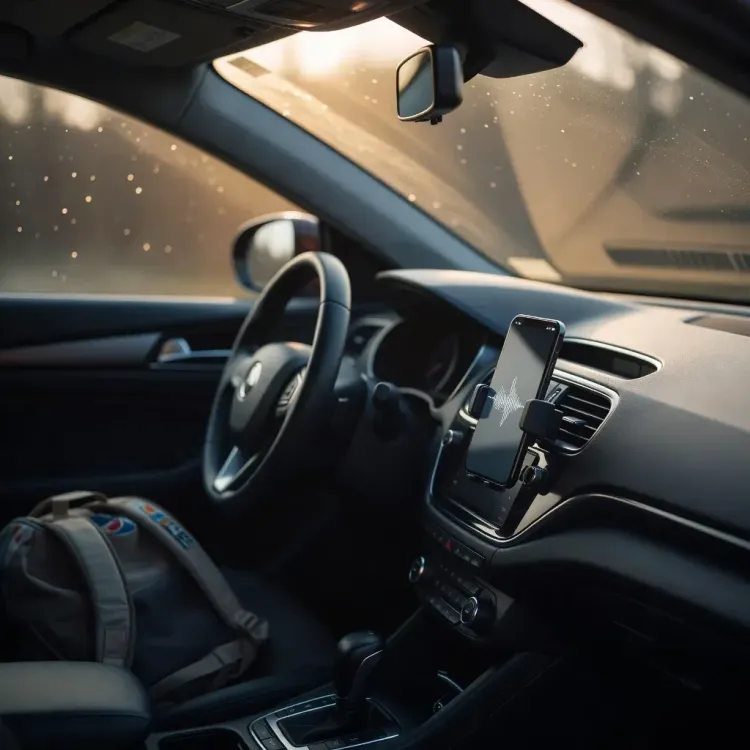
A simple idea overheard at a dinner party may be one of the most vivid illustrations yet of where generative AI is quietly landing in everyday life. OpenAI chief executive Sam Altman shared on X on 31 July 2026 a use case he heard the previous evening: a family using ChatGPT to auto-generate a personalised morning podcast for the school run, pulling from family calendars and each child's interests.
Altman described the setup in his own words: connect your family calendars and feed in your kids' interests, then have ChatGPT produce a short daily podcast every morning — one that might cover a child's soccer game that afternoon, an upcoming birthday, and a slice of the day's news. Bespoke, automatic, and ready before the first traffic light.
Why this use case cuts through the noise
Most public demonstrations of generative AI lean on enterprise scale — code generation, legal document review, customer-service automation. This one is different. It is domestic, low-stakes, and immediately legible to any parent who has tried to hold a conversation with a distracted child at 7 a.m. The fact that Altman — the person who oversees the world's most-watched AI lab — chose to amplify it signals something about where the industry sees its next growth surface: the family home. ChatGPT has been publicly available since November 2022. In the years since, OpenAI has layered in voice mode, memory, and custom GPT capabilities that allow the model to reference personal data such as calendars and stated preferences. The morning-podcast workflow described by Altman sits squarely at the intersection of those features — calendar access for scheduling context, memory or a system prompt for children's interests, and the model's ability to stitch it all into a coherent, conversational audio brief.Consumer AI moving from novelty to household routine
The anecdote fits a broader pattern: after years of headline-grabbing benchmarks, generative AI is finding its most durable foothold not in boardrooms but in kitchens and car seats. Families are among the stakeholders most likely to experiment with low-friction, high-repetition tasks — exactly the kind of workflow where a well-prompted AI agent delivers consistent value without requiring technical expertise. The use case also hints at a product direction worth watching. OpenAI has not announced a dedicated family-calendar integration or a native podcast-generation feature, but the workflow Altman described is achievable today through existing APIs and third-party connectors. If the company formalises something like it, the school-run podcast could move from clever hack to mainstream feature. The AI that once promised to change civilisation may first change the morning commute — and that, it turns out, is no small thing.Point of View
Low-tech use case — rather than a benchmark or enterprise deployment — is a deliberate signal about where the consumer AI market is heading. The school-run podcast sits at the convergence of calendar integration, memory, and voice: three capability layers OpenAI has been steadily building since 2023. For the broader industry, the pattern is clear: durable AI adoption is being driven not by power users but by parents solving a 7 a.m. problem. The company that owns that morning routine owns a sticky, high-frequency touchpoint that compounds in value every day.
NationPress
15 Sept 2026
Frequently Asked Questions
What ChatGPT use case did Sam Altman share?
Altman shared a use case where families connect their calendars and children's interests to ChatGPT, which then generates a personalised morning podcast for the school commute, covering events like a soccer game, a birthday, and the day's news.
Can ChatGPT actually connect to family calendars?
ChatGPT supports integrations with calendar data through its API and third-party connectors, and features like memory and custom system prompts allow it to incorporate personal context such as a child's interests. OpenAI has not announced a dedicated family-calendar product.
When did ChatGPT launch?
ChatGPT was publicly launched by OpenAI in November 2022 and has since added voice mode, memory, and custom GPT capabilities.
How can I make a morning podcast with ChatGPT?
You can connect a calendar tool to ChatGPT via its API or a supported integration, provide a system prompt describing your children's interests and schedule, and instruct it to generate a short daily audio or text brief each morning. The exact steps depend on the tools and integrations you use.
Why is Sam Altman sharing everyday ChatGPT use cases?
Altman regularly highlights real-world examples of ChatGPT use to demonstrate practical value beyond enterprise applications. Sharing a domestic use case signals OpenAI's interest in consumer and family-oriented AI adoption.