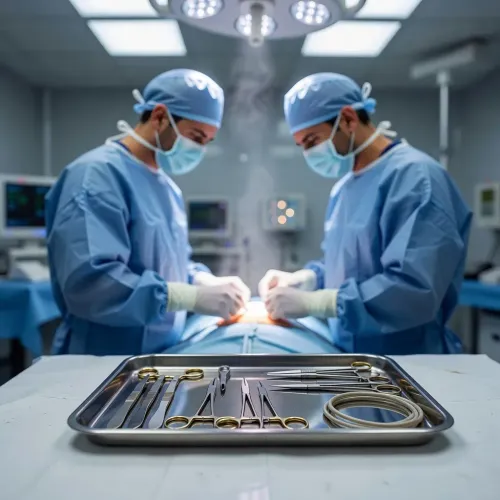
14th-century Chinese tomb rewrites history of anaesthetic use
Synopsis
A 14th-century tomb in Jiangyin, China has yielded the first physical — not just textual — proof that Chinese surgeons prepared plant-based anaesthetics roughly five centuries before William T.G. Morton's celebrated 1846 Boston demonstration, according to a study published in the journal Antiquity.
Key Takeaways
Physical artefacts from the tomb of Xia Quan in Jiangyin, Jiangsu province confirm plant-based anaesthetic use in 14th-century AD China — the first material evidence of the practice.
The findings were published on Tuesday in the peer-reviewed journal Antiquity , produced by Cambridge University Press .
Western medicine has long dated modern anaesthesia to October 16, 1846 , when William T.G.
Morton demonstrated ether at Massachusetts General Hospital in Boston .
The herbal formula Mafeisan , attributed to Han dynasty surgeon Hua Tuo and reportedly used on the warlord Cao Cao , had previously been known only from ancient texts.
Lead researcher Zhao Conggang and collaborators including scholars linked to Northwestern University contributed to the study's framework.
Physical evidence recovered from a 14th-century AD tomb in Jiangyin, Jiangsu province, China, has for the first time confirmed that Chinese surgeons were compounding plant-based anaesthetics centuries before the procedure entered Western medicine. The findings, published on Tuesday in the peer-reviewed journal Antiquity, challenge the long-standing narrative that modern anaesthesia began on October 16, 1846, when American dentist William T.G. Morton demonstrated inhaled ether at Massachusetts General Hospital in Boston.
The tomb and who it belonged to
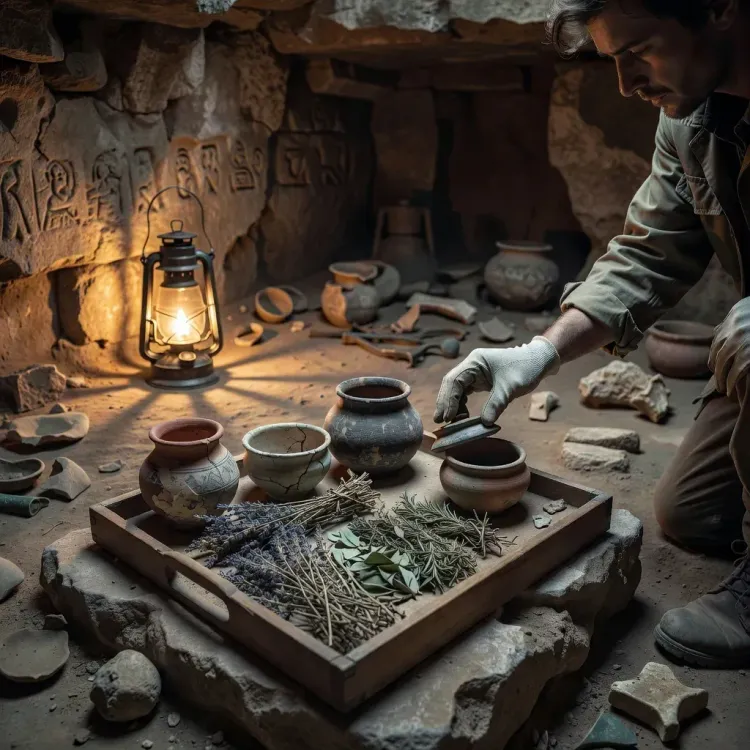
The burial site belongs to Xia Quan, a celebrated practitioner of traditional Chinese medicine during the Ming dynasty. Jiangyin sits in China's eastern Jiangsu province, and the tomb's contents provided the first material — rather than purely textual — proof that anaesthetic compounds were being actively prepared and used in surgical contexts in medieval China. Prior to this discovery, the practice had been documented only in ancient Chinese manuscripts, leaving historians without corroborating physical artefacts.
Why it matters
The standard Western account credits Morton's 1846 Boston demonstration as the watershed moment in surgical anaesthesia. This new evidence pushes confirmed anaesthetic use back by roughly five centuries, fundamentally repositioning the contribution of Chinese medical tradition to global surgical history. Researchers associated with the study, which was published by Cambridge University Press, noted that ancient Chinese texts had long referenced a preparation known as Mafeisan — a herbal anaesthetic formula historically attributed to the legendary Han dynasty surgeon Hua Tuo, who reportedly used it on the warlord Cao Cao.
The competitive historical backdrop
The debate over anaesthesia's origins is not merely academic. For decades, Western medical historiography has treated the Massachusetts General Hospital demonstration as the definitive starting point, marginalising earlier non-Western practices as anecdotal or unverified. Researchers at Northwestern University were among those contributing to the broader scholarly framework cited in the study, according to reports. The Jiangyin tomb evidence now gives that marginalised tradition a verifiable archaeological anchor.
What the evidence shows
The paper in Antiquity details how residues or artefacts from the tomb of Xia Quan confirm the physical preparation of plant-derived anaesthetic substances. The study's lead author is listed as Zhao Conggang. While the precise botanical compounds have not been detailed in available summaries, the research team's findings were sufficient to satisfy the peer-review standards of one of archaeology's most rigorous journals.
What's next
The publication is expected to prompt a reassessment of surgical history curricula and museum narratives worldwide. Archaeologists and historians of medicine will likely focus next on identifying additional Ming-dynasty or earlier sites that could further corroborate the timeline. The broader implication is a more pluralistic account of how humanity arrived at safe, pain-free surgery — one in which China's contribution is no longer a footnote.
Point of View
Sustained more by institutional inertia than evidence. What changes now is the evidentiary standard — a peer-reviewed artefact record is far harder to dismiss than a manuscript citation. The deeper story is about whose knowledge systems get treated as 'history' versus 'folklore,' a question with live implications for how intellectual property, pharmaceutical heritage, and biomedical credit are assigned in an era of renewed geopolitical competition. Expect this paper to be cited heavily in ongoing UNESCO and WHO discussions about traditional medicine's formal recognition.
NationPress
18 Oct 2026
Frequently Asked Questions
What did researchers find in the Chinese tomb in Jiangyin?
Researchers found physical artefacts in the tomb of Xia Quan , a Ming dynasty traditional Chinese medicine surgeon buried in Jiangyin, Jiangsu province , that confirm the preparation and use of plant-based anaesthetics in 14th-century AD China . This is the first material — as opposed to purely textual — evidence of anaesthetic use in pre-modern China.
How does this change the history of anaesthesia?
The discovery pushes confirmed anaesthetic use back by roughly five centuries , predating the October 16, 1846 demonstration by William T.G. Morton at Massachusetts General Hospital in Boston , which has long been considered the starting point of modern surgical anaesthesia. The Jiangyin evidence gives Chinese medical tradition an archaeological anchor it previously lacked.
What is Mafeisan and who invented it?
Mafeisan is a herbal anaesthetic formula historically attributed to the Han dynasty surgeon Hua Tuo , who reportedly administered it to the warlord Cao Cao . Until now, references to Mafeisan existed only in ancient Chinese texts; the Jiangyin tomb findings provide the first physical corroboration that such preparations were actually compounded and used.
Where was the study published and who conducted it?
The study was published on Tuesday in the peer-reviewed journal Antiquity , issued by Cambridge University Press . Zhao Conggang is listed as lead author, with researchers linked to Northwestern University contributing to the broader scholarly framework.
What happens next following this discovery?
The publication is expected to prompt revisions to surgical history curricula and museum displays globally. Archaeologists will likely target additional Ming dynasty and earlier Chinese sites to further corroborate the revised timeline, while the findings are expected to strengthen formal recognition of traditional Chinese medicine's role in the history of global surgery.