China performs world's first commercial BCI implant surgery
Synopsis
China has performed the world's first commercial brain-computer interface surgery using Neuracle Medical Technology's NEO device at Shanghai's Huashan Hospital — beating Neuralink to commercial status just four months after regulatory approval in March 2026.
Key Takeaways
China completed the world's first commercial brain-computer interface (BCI) surgery on Monday, July 14, 2026 , at Huashan Hospital , Shanghai .
The patient is recovering with stable vital signs after receiving the NEO device to assist hand mobility lost due to a spinal cord injury 10 years ago .
Neuracle Medical Technology 's NEO device received commercial approval from China's National Medical Products Administration on March 13, 2026 — the first BCI to achieve commercial prescription status globally.
Within four months of approval, NEO completed production rollout, hospital onboarding, patient screening, and inclusion in local commercial health insurance.
Elon Musk 's Neuralink and its Telepathy device remain under clinical trial status with the US Food and Drug Administration (FDA) , yet to reach commercial prescription approval.
Neuracle Medical Technology is publicly listed on China's Star Market on the Shanghai Stock Exchange .
China has completed the world's first commercial surgery using an invasive brain-computer interface (BCI) device, marking a significant milestone in the global neurotechnology race. The procedure was performed on Monday, July 14, 2026, at Huashan Hospital in Shanghai, using the NEO device developed by Neuracle Medical Technology, a Shenzhen-based start-up.
The procedure and the patient
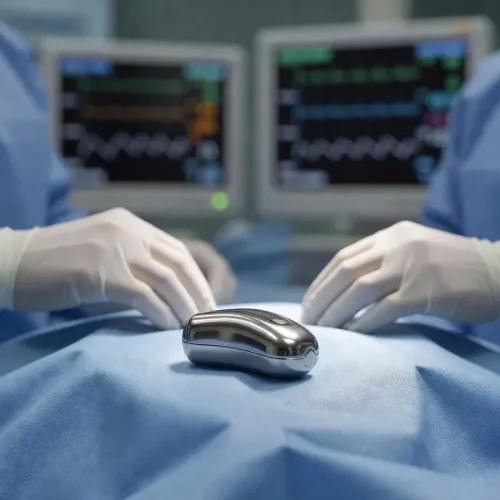
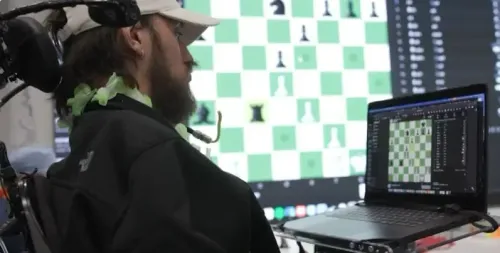
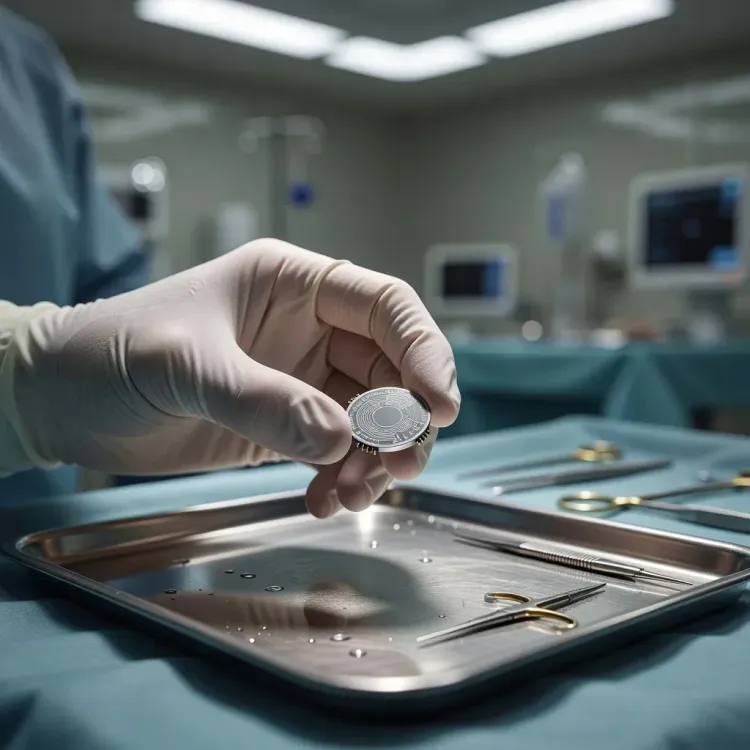
Chinese surgeons implanted a coin-sized brain chip on a patient suffering from impaired hand mobility caused by a spinal cord injury sustained in a car accident 10 years ago, according to a statement from the Science and Technology Commission of Shanghai Municipality. The procedure captured stable, high-quality epidural brain signals, with the patient recovering and vital signs remaining stable.
The NEO device is placed on the brain's outer surface without penetrating tissue, reading neural signals and translating them into hand movements to assist motor function. Its epidural positioning distinguishes it from fully penetrating implants.
Why it matters: regulatory milestone
The NEO device became the world's first commercially prescribed BCI after receiving approval from China's National Medical Products Administration on March 13, 2026. This made it available as a commercial product rather than one confined to laboratories and clinical trials, setting it apart from competitors still in trial phases.
The approval and subsequent commercial surgery place China ahead in the race to commercialise BCI technology — a domain where Elon Musk's Neuralink and its Telepathy device have attracted the most global attention, though Neuralink remains under clinical trial status in the United States.
Rapid commercialisation timeline
According to the Science and Technology Commission of Shanghai Municipality, within just four months of receiving regulatory clearance, NEO had completed production rollout, hospital introductions, patient screening, and inclusion in local commercial health insurance schemes. That speed of deployment is notable for a class-III medical device of this complexity.
The swift integration into insurance coverage is particularly significant, as it signals institutional confidence in the technology's safety profile and broadens patient access beyond early adopters.
The competitive backdrop
Neuralink, backed by Elon Musk, has implanted its Telepathy chip in a small number of human patients in the US under clinical trial authorisation from the US Food and Drug Administration (FDA), but has not yet reached commercial prescription status. China's move to full commercialisation — supported by a domestic regulatory pathway and insurance integration — represents a structural advantage in bringing BCI from lab to clinic at scale.
Neuracle Medical Technology is listed on China's Star Market, the Nasdaq-style board of the Shanghai Stock Exchange, giving it access to public capital markets as it scales production.
What's next
The commercial launch of NEO is likely to accelerate patient screening and broader hospital adoption across China, while intensifying regulatory and competitive pressure on Western BCI developers. Analysts and industry observers will be watching whether the FDA accelerates its own commercial approval pathway for Neuralink or rival devices in response.
Point of View
Including insurance integration. This mirrors the pattern seen in EV batteries and solar manufacturing: China using domestic regulatory speed and industrial policy as a competitive moat rather than pure R&D primacy. What mainstream coverage underplays is that Neuralink's continued clinical-trial status in the US reflects a fundamentally different, more cautious FDA framework — not a technology lag — yet the commercial optics now favour Beijing. The more consequential question is whether this triggers an FDA fast-track push for Western BCI developers, or whether the gap in commercial deployment widens before a US device reaches the same milestone.
NationPress
14 Oct 2026
Frequently Asked Questions
What is the world's first commercial BCI surgery performed in China?
Chinese surgeons at Huashan Hospital in Shanghai implanted the NEO brain-computer interface device in a patient with impaired hand mobility on Monday, July 14, 2026 . The NEO device, developed by Neuracle Medical Technology , reads neural signals from the brain's outer surface and translates them into hand movements without penetrating brain tissue.
Who approved the NEO BCI device and when?
China's National Medical Products Administration approved the NEO device on March 13, 2026 , making it the world's first commercially prescribed brain-computer interface. The approval moved the device from clinical trial status to a commercially available medical product.
How does China's NEO BCI compare to Elon Musk's Neuralink?
Neuralink 's Telepathy device has been implanted in a small number of patients in the United States under US Food and Drug Administration (FDA) clinical trial authorisation, but has not reached commercial prescription status. China's NEO device has surpassed Neuralink by achieving full commercial approval and completing the world's first commercial BCI surgery.
What is Neuracle Medical Technology and where is it listed?
Neuracle Medical Technology is a Shenzhen -based start-up that developed the NEO BCI device. The company is publicly listed on China's Star Market , the technology-focused board of the Shanghai Stock Exchange .
How quickly did China roll out the NEO BCI after approval?
Within just four months of receiving regulatory clearance in March 2026 , NEO completed production rollout, hospital introductions, patient screening, and inclusion in local commercial health insurance, according to the Science and Technology Commission of Shanghai Municipality . This rapid deployment timeline is unusually fast for a complex class-III medical device.