Chinese brain-mimicking chip beats Nvidia A100 GPU by up to 478x
Synopsis
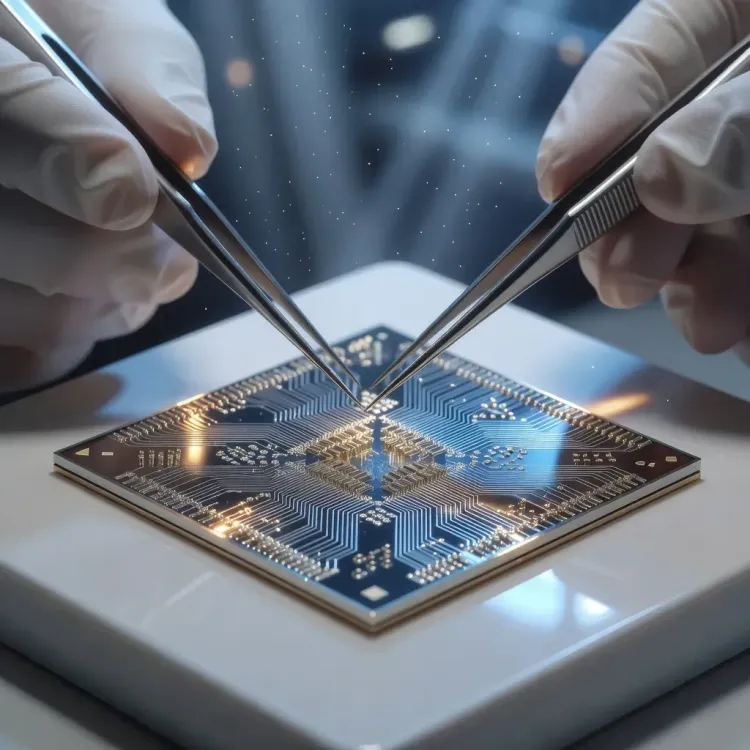
Chinese researchers have built a 40nm chip that reconstructs brain surfaces up to 478 times faster than an Nvidia A100 GPU — potentially putting real-time Alzheimer's screening and AI-guided neurosurgery inside a single compact device.
Key Takeaways
Peking University and the Chinese Academy of Sciences published the neuromorphic chip study in Science on 3 July 2026 .
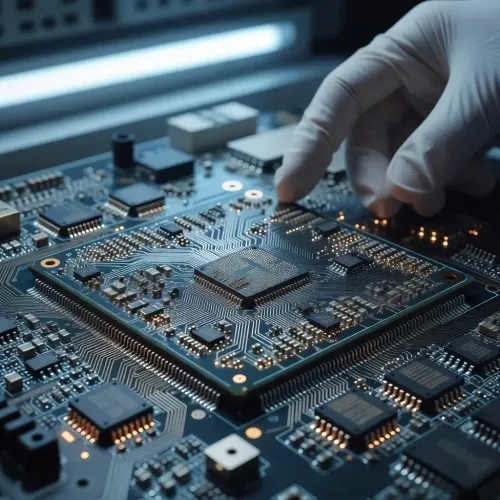
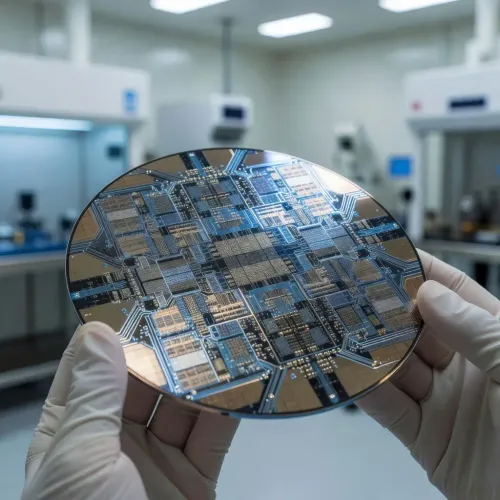
The 40-nanometre memory chip with an integrated artificial neural network reconstructs complex brain surfaces in under 0.5 seconds .
Performance is 50 to 478 times faster than state-of-the-art Nvidia A100 GPU systems, according to the research team.
Lead author Professor Yang Yuchao cited applications in intraoperative neuronavigation , Alzheimer's disease screening , and personalised brain interventions .
The chip is designed to enable personalised digital brain twins and advance brain-computer interface (BCI) hardware.
No commercialisation timeline has been announced; independent clinical validation remains the next critical step.
A 40-nanometre neuromorphic memory chip developed by researchers at Peking University and the Chinese Academy of Sciences can reconstruct complex brain surfaces in under half a second — 50 to 478 times faster than state-of-the-art Nvidia A100 GPU systems, according to the team. The breakthrough was detailed in a peer-reviewed study published in the journal Science on Thursday, 3 July 2026.
What the chip does
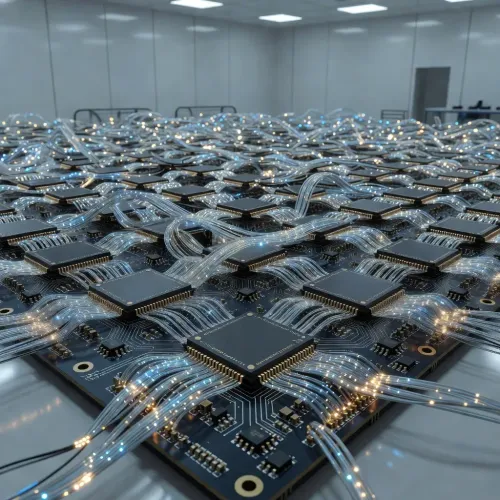
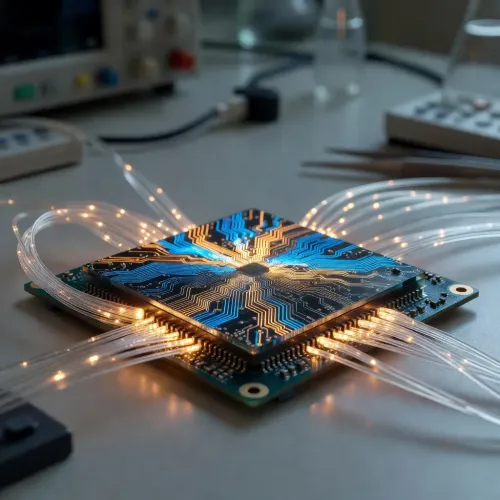
The device integrates an artificial neural network directly onto the memory chip, allowing it to model intricate brain structures — including the brain's folds — in real time. This overcomes long-standing computational bottlenecks that have historically prevented on-device, real-time neurological modelling at clinical speeds.
The chip is small enough to be embedded in portable or implantable systems, opening a path toward hardware that operates at the point of care rather than in remote data centres.
Medical and surgical applications
Lead author Professor Yang Yuchao, of Peking University's School of Integrated Circuits and deputy dean of its School of Electronic and Computer Engineering, told state-run Guangming Daily that the chip could accurately render the brain's folds for medical use. “This breakthrough opens up new possibilities for brain-computer interfaces and the diagnosis and treatment of brain diseases,” he said.
Professor Yang outlined three near-term clinical use cases: intraoperative neuronavigation (a real-time surgical guidance system), early screening for Alzheimer's disease, and personalised interventions. “In the future, personalised and dynamic digital brain twins will become possible,” he added.
Why it matters
Brain-machine interfaces (BCI) and AI-assisted neurosurgery both require processing power that conventional GPU clusters struggle to deliver at implantable scale and latency. A chip that matches or exceeds A100-class performance while fitting inside a compact device could fundamentally shift the hardware architecture of next-generation neurotechnology.
The study also arrives as global competition in neuromorphic and edge-AI silicon intensifies, with institutions including Germany's Juelich Research Centre active in the space. China's entry at this performance level signals a meaningful advance in domestically developed specialised silicon.
What's next
The researchers have indicated that the chip provides a hardware foundation ready for real-world clinical trials, though no timeline for commercialisation or regulatory approval has been announced. Independent validation of the 50–478x speed claims will be a key milestone before the technology can move from laboratory to hospital.
Investors and medtech developers tracking the BCI sector should watch for follow-on studies, partnership announcements from Peking University, and any licensing activity tied to the underlying Chinese Academy of Sciences intellectual property.
Point of View
Suggesting performance is highly task-dependent — a detail that mainstream coverage tends to flatten into a single headline figure. What the study actually demonstrates is that neuromorphic in-memory computing can outperform GPU clusters on a narrow but clinically critical workload: cortical surface reconstruction. This fits a broader pattern in which China's semiconductor research pivots from general-purpose compute — where export controls constrain access to leading-edge nodes — toward domain-specific architectures where a 40nm process is entirely sufficient. The geopolitical subtext is hard to miss: every neuromorphic or edge-AI breakthrough at a Chinese institution reduces the leverage that GPU export restrictions provide. Medtech and BCI investors should treat this less as a medical story and more as an early signal in the specialised-silicon race.
NationPress
3 Oct 2026
Frequently Asked Questions
What is the Chinese brain-mimicking chip and who developed it?
It is a 40-nanometre memory chip with an integrated artificial neural network, developed by researchers at Peking University and the Chinese Academy of Sciences . The chip can model complex brain structures in real time and was described in a peer-reviewed paper published in Science on 3 July 2026 .
How much faster is this chip than the Nvidia A100 GPU?
According to the research team, the chip reconstructs complex brain surfaces 50 to 478 times faster than state-of-the-art Nvidia A100 GPU systems, completing the task in under half a second. The wide range reflects variation across different brain-modelling tasks.
What medical applications does this chip enable?
Lead researcher Professor Yang Yuchao identified three primary applications: real-time intraoperative neuronavigation to guide surgeons, early screening for Alzheimer's disease , and personalised brain interventions . The chip also underpins next-generation brain-computer interfaces (BCI) .
When will this neuromorphic chip be available commercially?
No commercialisation timeline has been announced. The research team has stated the chip provides a hardware foundation for clinical applications, but independent validation and regulatory approval processes would need to follow before hospital deployment.
How does this chip fit into the global neuromorphic computing race?
Institutions such as Germany 's Juelich Research Centre are among the global players in neuromorphic computing. China's demonstration of A100-class performance on a 40nm process node — well within domestically accessible fabrication — highlights how domain-specific chip design is becoming a strategic alternative to general-purpose GPU procurement.