China team builds hair-thin brain implant array lasting 18 months
Synopsis
A China-Japan team has built a hair-thin, tissue-soft brain implant electrode array that recorded clear neural signals for 18 months in animal trials — potentially solving the chronic scar-tissue problem that has hobbled invasive BCIs for decades.
Key Takeaways
Tsinghua University's Shenzhen International Graduate School and The University of Tokyo jointly developed the flexible electrode array, with findings published in PNAS .
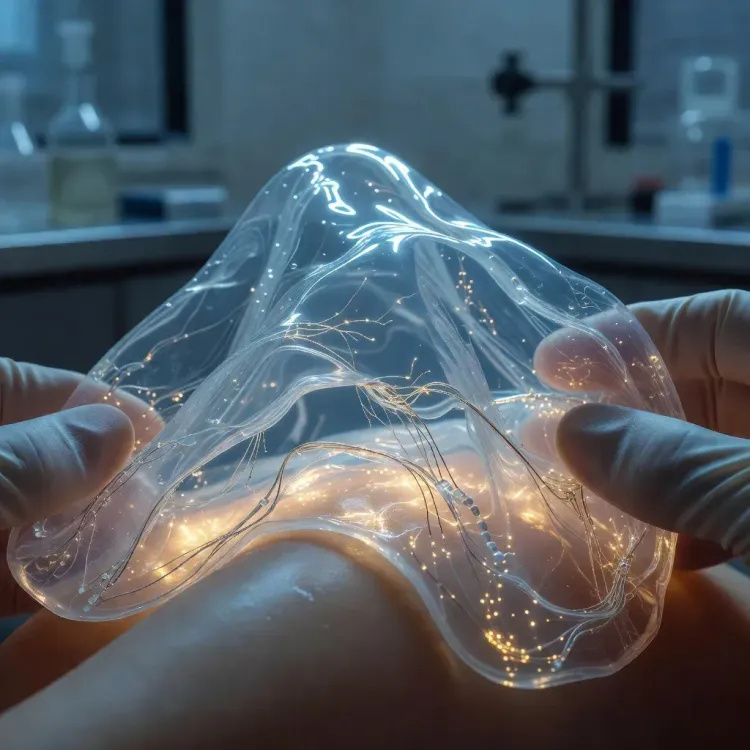
The implant uses a conductive hydrogel with interfacial percolation that matches the mechanical softness of brain tissue, eliminating the hard-against-soft friction that causes scarring.
In rabbit animal trials, the array maintained signal clarity for 18 months — a record for invasive neural implants of this type.
Key researchers include Professor Li Xiaojian , Professor Takao Someya of The University of Tokyo , and Associate Professor Xu Xiaomin .
Conventional arrays made of platinum or platinum-iridium alloys degrade in signal quality over time due to inflammation and scar tissue formation around stiff electrodes.
No human trial timeline has been announced; independent replication and regulatory review remain the next major hurdles.
A China-led research team has engineered a flexible brain-computer interface (BCI) electrode array thinner than a human hair that remained fully functional inside living subjects for 18 months — setting a new durability benchmark for invasive neural implants. The work, published in PNAS, was conducted jointly by Tsinghua University's Shenzhen International Graduate School and The University of Tokyo, with Professor Li Xiaojian and Professor Takao Someya among the lead contributors.
Why it matters
Invasive brain implants capture the richest neural signals of any BCI architecture, but a long-standing materials problem has limited their clinical viability. Conventional electrocorticography (ECoG) arrays are fabricated from platinum or platinum-iridium alloys — excellent conductors, but orders of magnitude stiffer than the soft cortical tissue they contact. Over time, this mechanical mismatch generates micro-motion at the electrode-tissue interface, triggering chronic inflammation, scar formation, and a year-on-year decline in recorded signal quality.
The breakthrough: conductive hydrogel with interfacial percolation
The team's solution centres on a material the researchers describe as a conductive hydrogel with interfacial percolation — a composite that matches the mechanical compliance of brain tissue while maintaining the electrical conductivity needed to capture clear neural activity. In animal trials conducted on rabbits, the implanted array recorded neural activity with what the researchers called unprecedented long-term clarity, with signal fidelity holding steady across the full 18-month observation window. Associate Professor Xu Xiaomin, also named among the contributors, helped characterise the material's long-term biostability, according to China Science Daily.
The competitive backdrop
The result lands as the global BCI sector intensifies. Neuralink, Synchron, and a growing cohort of Chinese state-backed programmes are racing to demonstrate safe, long-duration implants in humans. The persistent failure mode across competing designs has been exactly the scar-tissue degradation this team claims to have addressed. If the hydrogel approach translates from rabbits to primates and eventually humans, it could reframe the materials roadmap for the entire field.
What's next
The research team has not announced a timeline for primate studies or human trials, and regulatory pathways for implantable neural devices in China and internationally remain lengthy. Independent replication of the 18-month durability claim will be a critical near-term milestone. Observers will watch whether Tsinghua University or its partners file patents covering the hydrogel fabrication process, which could shape licensing dynamics across the BCI industry for years to come.
Point of View
A species whose immune response and cortical mechanics differ meaningfully from primates. What mainstream coverage underplays is that the materials innovation — interfacial percolation in a conductive hydrogel — is genuinely novel and addresses a failure mode that has quietly killed multiple well-funded BCI programmes. The Tsinghua-Tokyo collaboration also signals that China's BCI push is deliberately internationalising its research base, likely to accelerate peer credibility and sidestep the export-control frictions that complicate hardware procurement. If patent filings follow, the hydrogel fabrication process could become a chokepoint in the global BCI supply chain, much as certain photoresist chemistries became leverage points in the semiconductor contest.
NationPress
19 Sept 2026
Frequently Asked Questions
What did Chinese scientists achieve with the new brain implant?
A China-Japan research team developed a flexible brain implant electrode array that is thinner than a human hair, as soft as brain tissue, and remained functional for 18 months in animal trials — the longest stable performance recorded for an invasive neural implant of this type. The work was published in the journal PNAS.
What material makes this brain implant different from existing ones?
The array uses a conductive hydrogel with interfacial percolation, a composite material that matches the mechanical softness of brain tissue. Unlike conventional platinum or platinum-iridium electrodes, it does not create the hard-against-soft friction that triggers inflammation and scar formation over time.
Which institutions were involved in this brain-computer interface research?
The study was a joint effort between Tsinghua University's Shenzhen International Graduate School and The University of Tokyo. Named contributors include Professor Li Xiaojian, Professor Takao Someya, and Associate Professor Xu Xiaomin.
When will this brain implant be available for humans?
No human trial timeline has been announced. The 18-month durability data comes from rabbit animal trials, and the technology must clear primate studies and lengthy regulatory review processes in China and internationally before any clinical application is possible.
How does this compare to other brain-computer interface projects like Neuralink?
Companies such as Neuralink and Synchron are already conducting human trials, but chronic signal degradation due to scar tissue remains an industry-wide problem. If the hydrogel approach is validated in primates and humans, it could offer a materials solution that competing programmes have not yet demonstrated at this duration.