BrainCo launches brain-to-robot AI platform at WAIC Shanghai
Synopsis
BrainCo claims a world first: an EEG-based platform that lets users control humanoid robots, robotic arms, and robotic dogs using only their thoughts — unveiled at China's premier AI event on 17 July 2026, with no physical input required.
Key Takeaways
BrainCo unveiled the Brain-Controlled Robot AI Platform at the World Artificial Intelligence Conference (WAIC) in Shanghai on 17 July 2026 .
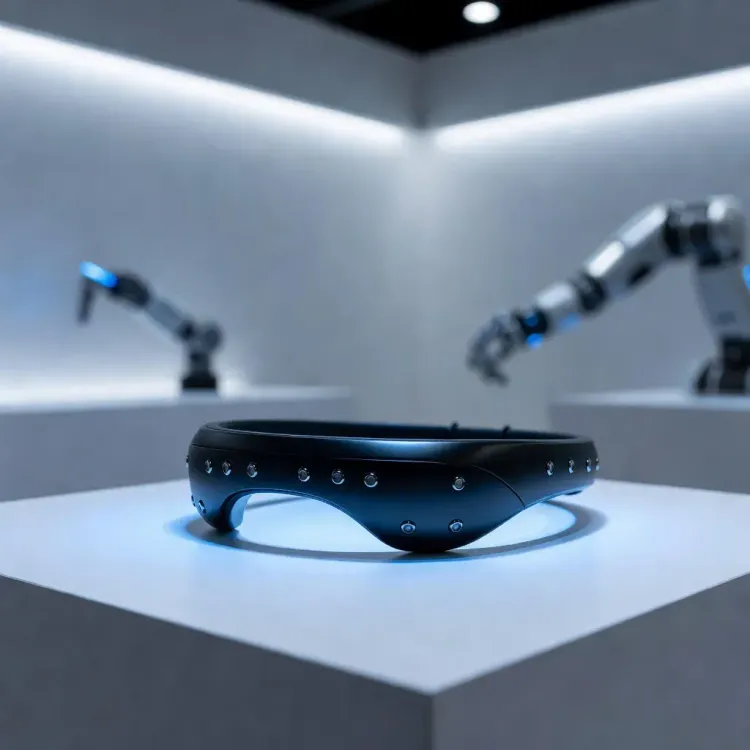
The platform captures brain signals via an EEG headset and uses AI algorithms to translate neural intent directly into robotic commands.
It is compatible with third-party humanoid robots , robotic arms , and robotic dogs , positioning it as an open-ecosystem middleware layer.
BrainCo was founded in 2015 and is based in Hangzhou , counted among the city's elite 'six little dragons' tech cohort.
No commercial launch date or pricing has been disclosed; the platform remains at the demonstration stage as of the conference announcement.
Chinese brain-computer interface unicorn BrainCo unveiled what it describes as the world's first integrated brain-to-robot control platform at the World Artificial Intelligence Conference (WAIC) in Shanghai on Friday, 17 July 2026, allowing users to command robots using only their thoughts — no physical movement required.
What the platform does
The Brain-Controlled Robot AI Platform works by capturing neural signals through an electroencephalogram (EEG) headset worn by the user. Proprietary AI-based algorithms then decode those brain signals in real time, translating the user's intentions directly into robotic actions, according to the company.
In a demonstration scenario cited by BrainCo, a robotic arm was directed to grasp a cup and pick up an apple based solely on brain signals — with no keyboard, joystick, or voice command involved.
Compatibility and hardware reach
The platform is designed as an open ecosystem, reportedly compatible with a wide range of third-party hardware including humanoid robots, robotic arms, and robotic dogs. This broad hardware compatibility positions the platform as a potential middleware layer for the fast-growing embodied AI industry rather than a single-device product.
Why it matters
The launch arrives as global technology firms accelerate investment in embodied AI — systems where artificial intelligence is integrated into physical machines capable of perceiving, reasoning, and interacting with the real world. BrainCo's approach is notable for removing the need for any motor input from the user, which has significant implications for accessibility and human-machine collaboration in industrial and medical settings.
BrainCo, founded in 2015 and headquartered in Hangzhou, is one of the city's so-called 'six little dragons' — an informal grouping of high-tech firms from the eastern Chinese city that have gained global prominence across AI, robotics, and adjacent technologies.
The competitive backdrop
The brain-computer interface space has attracted intense global attention, with players ranging from well-funded startups to major technology conglomerates investing in non-invasive and invasive neural interface technologies. BrainCo's non-invasive EEG-based approach contrasts with implant-dependent methods, potentially lowering barriers to consumer and enterprise adoption.
What's next
The company has not disclosed a commercial rollout timeline or pricing for the Brain-Controlled Robot AI Platform. Analysts and industry observers will be watching whether BrainCo can convert the WAIC showcase into enterprise partnerships with robotics manufacturers — and how quickly rival BCI developers respond with competing integrated platforms.
Point of View
The company is betting that the real value lies in the neural decoding layer, not in any single robot chassis — a strategy that mirrors how operating systems captured value above commodity hardware. What mainstream coverage underplays is that non-invasive BCI for robot control has historically struggled with signal fidelity and latency at scale; the gap between a curated conference demo and reliable industrial deployment remains wide. The 'six little dragons' framing also matters geopolitically — Hangzhou's cluster of AI and robotics unicorns is increasingly a focal point for Western export-control scrutiny, and any BrainCo push into global enterprise markets will face that headwind. Investors and robotics OEMs should watch whether the platform attracts third-party hardware integrations within the next two quarters as the real litmus test of its open-ecosystem claims.
NationPress
16 Oct 2026
Frequently Asked Questions
What is BrainCo's Brain-Controlled Robot AI Platform?
BrainCo's Brain-Controlled Robot AI Platform is a system that allows users to control robots — including humanoid robots, robotic arms, and robotic dogs — using only their brain signals, with no physical movement required. It captures neural activity via an EEG headset and uses AI algorithms to decode user intent and translate it into robotic actions, according to the company.
Where and when was the BrainCo robot platform announced?
The platform was announced on Friday, 17 July 2026, at the World Artificial Intelligence Conference (WAIC) in Shanghai — China's premier annual AI event.
How does EEG-based robot control work?
An EEG headset worn by the user captures electrical brain signals. BrainCo's AI algorithms then analyse those signals in real time to identify the user's intentions and convert them into commands that drive compatible robotic hardware — no keyboard, voice, or physical gesture is needed.
Who is BrainCo and why is it significant?
BrainCo is a Chinese brain-computer interface startup founded in 2015 and based in Hangzhou. It is considered one of Hangzhou's 'six little dragons' — a cohort of high-tech firms from the city that have gained global prominence in AI, robotics, and related fields.
How does BrainCo's approach differ from other brain-computer interface companies?
BrainCo uses a non-invasive EEG headset, meaning no surgical implant is required — unlike some rival BCI approaches that depend on implanted electrodes. This lowers the barrier to adoption for consumer and enterprise use cases, though non-invasive methods typically face greater challenges around signal precision compared with implant-based systems.