Xi Jinping to attend WAIC 2026 in Shanghai, deliver keynote
Synopsis
For the first time since WAIC launched in 2018, President Xi Jinping will personally attend and keynote the conference in Shanghai on 18 July 2026 — a move that elevates AI to the top of China's national leadership agenda and signals Beijing's intent to shape global AI governance rules.
Key Takeaways
President Xi Jinping will attend the 2026 World Artificial Intelligence Conference (WAIC) in Shanghai and deliver a keynote — his first in-person appearance at the event since its 2018 launch.
The Ministry of Foreign Affairs made the announcement on Monday, 13 July 2026 .
The four-day conference begins Friday, 18 July 2026 and will include more than 140 forums , 1,400 guests , 1,100 exhibitors , and over 300 global product debuts .
Premier Li Qiang had represented the government at WAIC in both 2024 and 2025 ; Xi 's direct attendance marks a significant upgrade in political signalling.
China 's 2026 government work report called for a 'new form of intelligent economy' and expanded the 'AI+' campaign, setting the policy backdrop for the conference.
The event runs alongside a high-level global AI governance meeting, reflecting Beijing 's ambition to influence international AI rule-setting through frameworks such as the Global AI Governance Initiative .
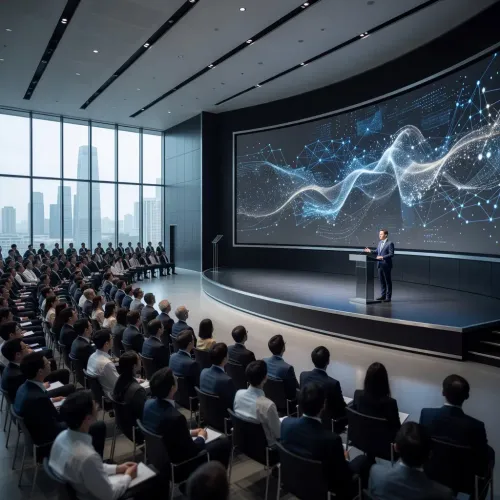
Chinese President Xi Jinping will attend the opening ceremony of the 2026 World Artificial Intelligence Conference (WAIC) in Shanghai and deliver a keynote address, the Ministry of Foreign Affairs announced on Monday, 13 July 2026. The appearance marks Xi's first in-person presence at the annual event since its launch in 2018, a signal of the elevated strategic importance Beijing now places on artificial intelligence.
A historic first for China's top leader at WAIC
Xi previously sent a congratulatory letter to the inaugural WAIC in 2018 but had not attended in person. Premier Li Qiang represented the government at the opening ceremonies in both 2024 and 2025. By stepping onto the WAIC stage himself, Xi is publicly elevating AI from a sectoral priority to a matter of national leadership.
Scale and scope of the four-day conference
The four-day conference is scheduled to begin on Friday, 18 July 2026, running alongside a high-level meeting on global AI governance. Organisers said this year's edition will feature more than 140 forums, 1,400 guests, and 1,100 exhibitors, with more than 300 products set to make their global debuts.
Why it matters: Beijing's AI governance ambitions
The conference is not purely a showcase event. It is being held in parallel with a high-level global AI governance meeting, underscoring China's intent to shape international norms around the technology. China has previously put forward its Global AI Governance Initiative as an alternative framework to Western-led regulatory approaches, and Xi's direct participation lends that effort significant diplomatic weight.
During a visit to a Shanghai start-up incubator in 2025, Xi described AI as entering a period of 'explosive development' and urged the city to take the lead in both its development and governance. China's government work report for 2026 reinforced that direction, calling for building a 'new form of intelligent economy', expanding the country's 'AI+' campaign, accelerating commercial AI adoption, and strengthening governance of the technology.
The competitive backdrop: China's AI race intensifies
The timing of Xi's attendance reflects a broader inflection point in China's AI sector. Domestic players — including those whose models have gained traction on international platforms such as OpenRouter — have demonstrated that Chinese AI is increasingly competitive on a global scale. The emergence of models like those from DeepSeek has reinforced the narrative that China can close the gap with US counterparts even under export-control constraints.
What's next
All eyes will be on Xi's keynote for policy signals: new industrial targets, governance proposals, or diplomatic overtures on global AI cooperation. The content of his address is likely to set the tone for China's AI policy posture through the remainder of 2026 and could influence how international partners engage with the World AI Cooperation Organisation. Watch for announcements on compute infrastructure investment, cross-border data governance, and any fresh 'AI+' sector targets.
Point of View
Not a ministry-level one. Mainstream coverage will focus on the spectacle, but the more consequential story is the parallel governance summit — Beijing is actively competing with the US and the EU to write the global rulebook for AI before norms calcify. The timing is deliberate: with DeepSeek and other Chinese models proving competitive despite chip-export restrictions, China now has the technical credibility to back its governance diplomacy. The real question is whether Xi's keynote will offer concrete multilateral proposals or remain aspirational — the answer will determine how seriously non-aligned nations engage with the World AI Cooperation Organisation.
NationPress
12 Oct 2026
Frequently Asked Questions
Why is Xi Jinping attending WAIC 2026?
Xi Jinping is attending the 2026 World Artificial Intelligence Conference to deliver a keynote address, marking his first in-person appearance at the annual event since it launched in 2018 . His attendance signals that Beijing is elevating AI to the highest level of national political priority, moving beyond ministerial representation.
When and where is WAIC 2026 taking place?
The 2026 World Artificial Intelligence Conference (WAIC) is a four-day event beginning on Friday, 18 July 2026 , held in Shanghai, China . It runs alongside a high-level meeting on global AI governance.
How big is WAIC 2026?
This year's WAIC is the largest edition to date, with more than 140 forums , 1,400 guests , and 1,100 exhibitors participating. More than 300 products are set to make their global debuts at the event, according to organisers.
What is China's AI governance strategy?
China has advanced the Global AI Governance Initiative as its framework for international AI rule-setting, positioning it as an alternative to Western-led regulatory models. The parallel governance summit at WAIC 2026 and the involvement of the World AI Cooperation Organisation reflect Beijing 's intent to shape global AI norms actively.
How does Xi's WAIC appearance relate to China's AI competitiveness?
Xi 's direct involvement comes as Chinese AI firms, including DeepSeek , have demonstrated globally competitive models despite US chip-export restrictions. China 's 2026 government work report explicitly called for a 'new form of intelligent economy' and an expanded 'AI+' campaign, providing the policy foundation for the country's accelerating AI push.