CM Samrat Choudhary Schedules Sahyog Grievance Hearing on 14 July
Synopsis
Bihar Chief Minister Samrat Choudhary has announced a state-level Sahyog grievance hearing on 14 July 2026 at the CM Secretariat in Patna. The monthly programme allows citizens dissatisfied with district-level redressal to escalate complaints via a dedicated portal, with hearings held every second Tuesday.
Key Takeaways
Bihar CM Samrat Choudhary announced a Sahyog programme hearing for 14 July 2026 at the Chief Minister's Secretariat, Patna .
The Sahyog scheme provides state-level grievance hearings for citizens unsatisfied with district-level resolutions.
Cases are selected from the Sahyog portal through a transparent, standards-based screening process before being admitted for hearing.
Hearings are held on the second Tuesday of every month , institutionalising a regular escalation window.
The programme is positioned as a direct dialogue channel between the Bihar government and citizens, reinforcing the administration's good-governance agenda.
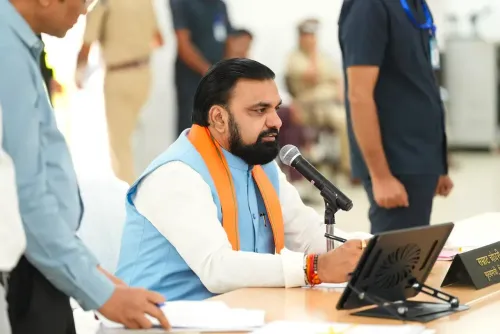
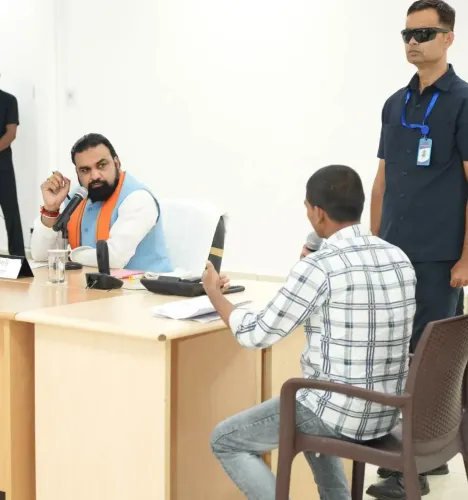
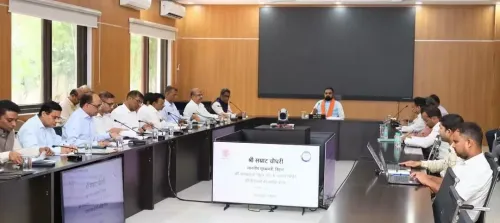
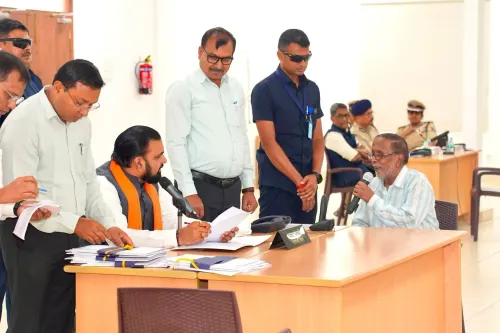
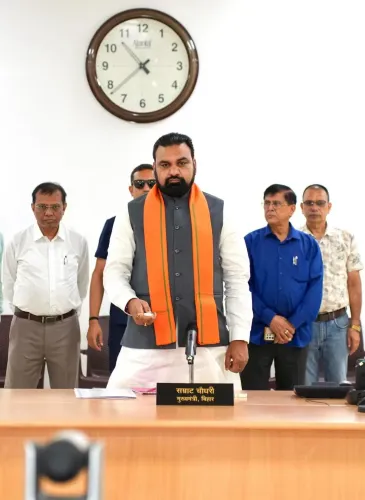
Bihar Chief Minister Samrat Choudhary announced on Monday, 13 July 2026 that the state-level 'Sahyog' grievance-redressal programme will hold its next hearing on 14 July 2026 at the Samvad Sabhagar inside the Chief Minister's Secretariat in Patna, where selected citizen complaints sourced from multiple districts will be taken up for review.
Context
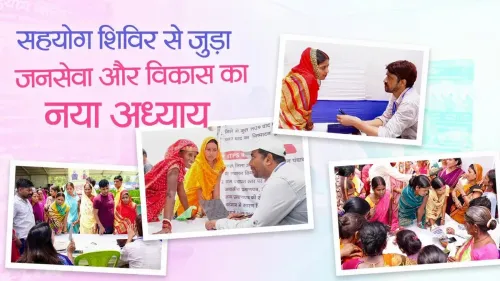
Posting in Hindi on X, CM Choudhary described the programme as a 'jan-kendrit pahal' — a citizen-centric initiative — designed to give residents who remain dissatisfied after district-level grievance processes a direct platform at the state level. His post carried the hashtags #SahyogSeSamadhan and #सहयोग_शिविर, signalling the government's branding of the scheme around the idea of 'resolution through cooperation'. The Chief Minister stated: 'Our government is committed to ensuring that every citizen's grievance is heard seriously and that a just, effective and satisfactory solution is guaranteed.'
Applications submitted on the Sahyog portal are screened against defined standards for fairness and transparency before cases are selected for the monthly hearing. Hearings are scheduled on the second Tuesday of every month, making 14 July 2026 the next scheduled date in that cycle.
Policy Backdrop
Bihar's public grievance architecture has evolved over successive administrations. Earlier district-level grievance cells and online portals — introduced during previous tenures to handle local complaints — laid the groundwork for a tiered escalation model. The Sahyog programme, launched under the BJP-led coalition government, adds a state-level appellate layer, allowing unresolved cases to move up from district offices to the Chief Minister's Secretariat itself.
Across India, state governments have progressively layered such escalation mechanisms over district grievance systems since the mid-2010s as part of broader su-shasan (good governance) agendas. The combination of a digital portal for intake and periodic high-level hearings for disposal has become a recognised model for improving citizen trust in administrative responsiveness.
Stakeholders and Impact
The primary beneficiaries are citizens who have already approached district-level authorities without satisfactory resolution. District administrations across Bihar's 38 districts are also stakeholders, as cases escalated to the state level reflect on local grievance-disposal performance. For the Bihar government, the programme serves as a visible accountability mechanism under CM Choudhary, who assumed office in 2024 with an emphasis on administrative reform.
By anchoring hearings at the Chief Minister's Secretariat, the government signals high-level ownership of citizen complaints — a design choice that distinguishes Sahyog from purely departmental redressal mechanisms. The portal-based screening is intended to ensure that only cases meeting defined criteria reach the state hearing, preventing the forum from being overwhelmed.
What's Next
The 14 July 2026 hearing will be an early test of the programme's operational capacity and the quality of case selection. Observers will watch for data on the number of cases heard, disposal rates, and whether citizens report meaningful outcomes. Future monthly hearings — each on the second Tuesday — will determine whether the Sahyog model sustains momentum or becomes a periodic formality. The government's stated commitment to 'direct dialogue between the government and the public' will ultimately be measured by the programme's track record over successive hearing cycles.
Point of View
CM Samrat Choudhary is making administrative accountability a visible, recurring event rather than an ad hoc response — a deliberate governance optic. The move fits a broader pattern among BJP-governed states of layering digital intake with high-level in-person hearings to signal responsiveness, particularly in states where public perception of bureaucratic accessibility has historically been a political vulnerability. For Bihar, where governance credibility has been a persistent electoral issue, the programme's success will depend less on its announcement and more on verifiable disposal data from successive monthly cycles. The real test is whether the portal-to-hearing pipeline translates into measurable relief for ordinary citizens or remains a well-branded procedural exercise.
NationPress
12 Oct 2026
Frequently Asked Questions
What is the Sahyog programme in Bihar?
The Sahyog programme is a Bihar government initiative that allows citizens dissatisfied with district-level grievance resolution to escalate their complaints to the state level. Selected cases from the Sahyog portal are heard at the Chief Minister's Secretariat on the second Tuesday of every month.
When is the next Sahyog grievance hearing in Bihar?
The next Sahyog hearing is scheduled for 14 July 2026 at the Samvad Sabhagar inside the Chief Minister's Secretariat in Patna , as announced by CM Samrat Choudhary on 13 July 2026.
How can citizens apply to the Sahyog portal in Bihar?
Citizens who are unsatisfied with district-level grievance redressal can submit their applications on the Sahyog portal . Applications are reviewed against defined standards for fairness and transparency, and selected cases are admitted for the monthly state-level hearing.
Who is Samrat Choudhary and what is his role in Bihar governance?
Samrat Choudhary is the Chief Minister of Bihar and a senior BJP leader who assumed office in 2024 . He has prioritised administrative reforms, including citizen-facing initiatives such as the Sahyog grievance programme.
What is the meaning of Sahyog Se Samadhan?
Sahyog Se Samadhan translates to 'Resolution through Cooperation' in English. It is the tagline of Bihar's Sahyog grievance programme, reflecting the government's stated goal of collaborative, citizen-centric problem-solving between the administration and the public.