Battery-free neural device restores natural gait in stroke survivors
Synopsis
Researchers from Hong Kong and mainland China have built a battery-free neural prosthesis that harvests energy from walking to electrically stimulate ankle muscles — potentially eliminating falls for stroke survivors without any external power source or sensors, as published in Nature Communications on September 2, 2026.
Key Takeaways
A battery-free, sensor-free neural prosthesis developed by researchers at The Hong Kong Polytechnic University , Hong Kong University of Science and Technology , and Huazhong University of Science and Technology was published in Nature Communications on September 2, 2026 .
The device converts kinetic energy from the wearer's own walking motion into electrical muscle stimulation, correcting foot drop without any battery or external sensor.
Primary beneficiaries include stroke survivors , elderly individuals , and people with mobility impairments; the team also flagged potential use by athletes during training .
Researchers Yang Zhengbao and Pan Qiqi are among the key contributors to the project.
The self-powered architecture directly addresses the two biggest barriers to real-world adoption of existing functional electrical stimulation (FES) systems: bulky power units and manual calibration .
Commercialisation and clinical trial timelines have not yet been disclosed by the research consortium.
A lightweight, battery-free neural prosthesis developed by researchers across Hong Kong and mainland China can restore natural walking patterns in stroke survivors and others with mobility impairments — without requiring external sensors or a power source. The device, detailed in the peer-reviewed journal Nature Communications on September 2, 2026, harvests energy directly from the wearer's own body movements to electrically stimulate muscles and correct foot drop, a common post-stroke condition.
How the self-powered device works
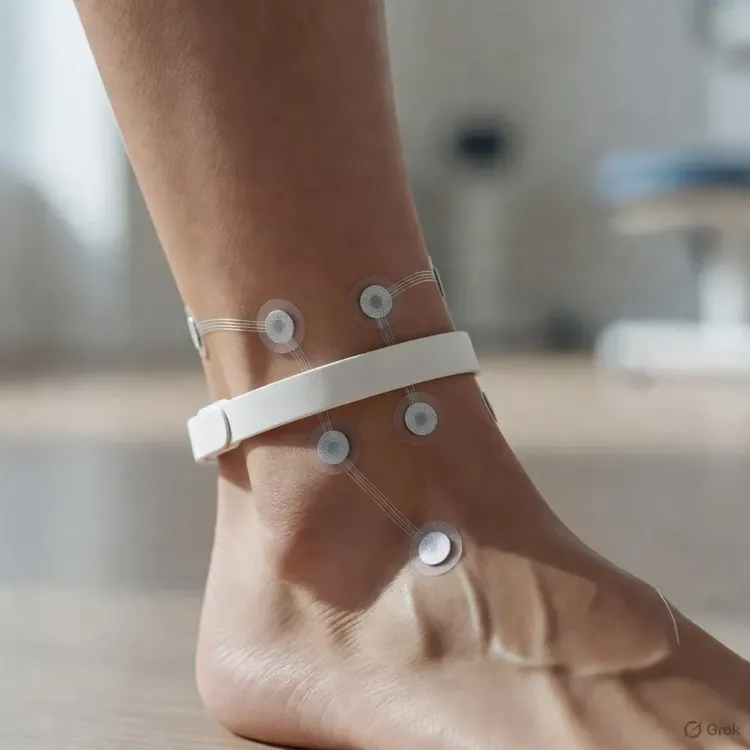
The neural prosthesis uses a mechanically coupled system that converts the kinetic energy of walking into electrical impulses, which are then delivered to the wearer's ankle muscles to trigger the correct flexion response. 'Rather than relying on external sensors or battery-powered control, the device operates automatically during walking through mechanically coupled energy harvesting and stimulation delivery,' the research team stated in their published paper. This closed-loop, self-sustaining mechanism eliminates the need for bulky battery packs or wired power supplies that have historically limited wearable neurostimulation technology.
Research team and institutional backing
The project is a cross-institutional collaboration involving researchers from The Hong Kong Polytechnic University, the Hong Kong University of Science and Technology, and the Huazhong University of Science and Technology on the mainland. Key contributors include researchers Yang Zhengbao and Pan Qiqi, according to the published findings. The breadth of the collaboration signals growing momentum behind joint Hong Kong–mainland biomedical engineering initiatives.
Who stands to benefit
The primary target population is stroke survivors, for whom foot drop significantly elevates the risk of falls and long-term disability. The research team also identified elderly individuals and people living with broader mobility impairments as prospective beneficiaries. Notably, the team said the device could even be adopted by athletes during training, pointing to a potential commercial application well beyond clinical rehabilitation settings.
Why it matters for wearable medtech
Functional electrical stimulation (FES) for gait correction is not new, but existing commercial systems typically depend on external power units and manual calibration — barriers that limit real-world adoption. This device's self-powered architecture addresses both constraints simultaneously, potentially lowering the cost and complexity of deployment at scale. Industry analysts have noted that energy-harvesting wearables represent one of the most promising frontiers in next-generation medical devices, particularly for ageing populations across Asia.
What's next
The publication in Nature Communications marks a significant validation milestone, but the path from laboratory prototype to certified medical device typically involves multi-phase clinical trials and regulatory review in each target market. Observers will be watching whether the research consortium secures commercialisation partnerships with medtech manufacturers in China, Hong Kong, or internationally. The outcome could position Hong Kong–mainland research collaborations as a serious force in the global rehabilitation technology market.
Point of View
But what mainstream coverage underplays is its geopolitical subtext: the device emerges from a deliberate Hong Kong–mainland research convergence at a time when Beijing is actively directing biomedical talent and funding toward hard-tech breakthroughs that reduce dependence on Western medtech supply chains. Energy-harvesting wearables sit at the intersection of materials science, neuroscience, and advanced manufacturing — all domains where China is racing to establish indigenous leadership. If the consortium can navigate the notoriously lengthy pathway to clinical certification in both China and major export markets, this technology could give Chinese medtech firms a rare first-mover advantage in a rehabilitation device segment currently dominated by European and American incumbents. The real test will be whether academic publication translates into a commercially viable, regulatorily approved product within a competitive window.
NationPress
16 Sept 2026
Frequently Asked Questions
What is the battery-free neural device developed by Chinese and Hong Kong researchers?
It is a lightweight neural prosthesis that uses energy harvested from the wearer's own walking movements to electrically stimulate ankle muscles, correcting foot drop without any battery or external sensor. The device was developed by researchers at The Hong Kong Polytechnic University, the Hong Kong University of Science and Technology, and Huazhong University of Science and Technology, and was published in Nature Communications on September 2, 2026.
How does the self-powered neural prosthesis help stroke survivors walk?
The device mechanically couples energy harvesting with electrical stimulation delivery, meaning it automatically activates ankle flexion at the correct moment during each stride. This restores a more natural gait pattern and reduces the fall risk associated with foot drop, a condition common among stroke survivors.
Who are the researchers behind this neural prosthesis?
Key contributors include researchers Yang Zhengbao and Pan Qiqi, working across a cross-institutional team spanning The Hong Kong Polytechnic University, the Hong Kong University of Science and Technology, and the Huazhong University of Science and Technology. The findings were peer-reviewed and published in Nature Communications.
Can the device be used by people other than stroke survivors?
Yes — the research team stated the device could benefit elderly individuals and others with mobility impairments, and also flagged potential use by athletes during training. This broader applicability suggests commercial opportunities beyond clinical rehabilitation.
When will the battery-free neural prosthesis be available commercially?
No commercialisation timeline has been disclosed by the research consortium as of the publication date. The device has cleared the peer-review milestone with its Nature Communications publication, but multi-phase clinical trials and regulatory approvals in target markets will be required before it reaches patients.