Tharoor: Britain's slavery apology must extend to colonialism
Synopsis
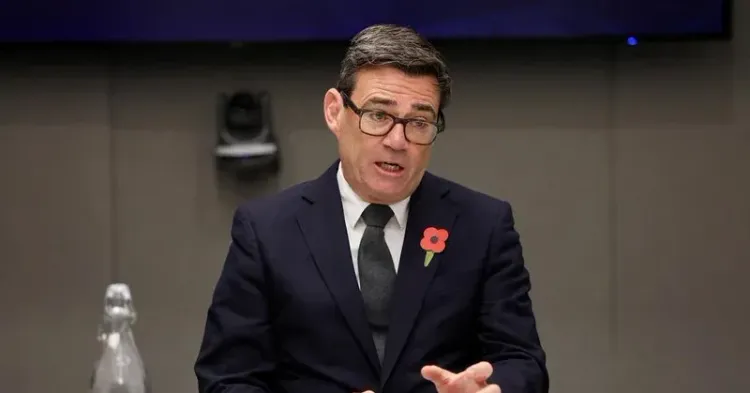
Congress MP Dr. Shashi Tharoor welcomes British PM Andy Burnham's reported readiness to apologise for slavery but argues the exclusion of colonialism from that apology is 'inexplicable and inexcusable,' renewing his long-held call for Britain to say 'sorry' for the full scale of imperial harm.
Key Takeaways
Shashi Tharoor welcomed reports that British PM Andy Burnham is prepared to offer a formal state apology for slavery.
Tharoor called the omission of colonialism from the proposed apology 'inexplicable and inexcusable.' He reiterated his position that 'no credible figure is payable and no payable figure is credible' on reparations, framing the demand as moral rather than financial.
Tharoor first made this argument globally at the Oxford Union in 2015 , a speech that went viral and re-energised the colonial accountability debate.
European governments have historically issued targeted apologies for specific colonial episodes but have avoided blanket acknowledgment of colonial governance as a systemic wrong.
Tharoor argues that India and other former colonies are owed a 'simple sorry' for 'loot, pillage, death and destruction' — a demand that remains unmet nearly 80 years after Indian independence.
A formal apology for slavery without a word about colonialism — Congress MP Dr. Shashi Tharoor says that gap is not an oversight. It is a moral failure. Writing on Saturday, 31 October 2026, Tharoor welcomed reports that British Prime Minister Andy Burnham is prepared to offer a state apology for the horrors of slavery, but immediately drew a sharp line: the silence on colonialism itself is, in his words, 'inexplicable and inexcusable.'
The distinction Tharoor insists the world must not miss
Tharoor's post restates a position he has held for over a decade: 'whatever reparations are offered by Britain, no credible figure is payable and no payable figure is credible.' The argument is not about a cheque. It is about acknowledgment. Slavery and colonialism, he argues, are not the same wound — and treating an apology for one as sufficient cover for the other lets Britain off the hook for the 'loot, pillage, death and destruction' visited on millions across its empire.
The distinction matters enormously to former colonies. The transatlantic slave trade and the machinery of colonial governance — forced de-industrialisation, engineered famines, violent suppression of uprisings — are related but distinct historical crimes. An apology that covers one and not the other is, by Tharoor's logic, half a reckoning at best.
From Oxford 2015 to a British PM's desk in 2026
Tharoor first crystallised this argument on the global stage at the Oxford Union in 2015, in a speech that went viral and forced the question of colonial accountability back into mainstream conversation. He has since carried it into Parliament, into books, and into international forums. The consistency is the point — this is not reactive commentary but a long-held, carefully constructed position from a former UN Under-Secretary-General who understands the architecture of international apology and its limits.
European governments have, over the decades, issued targeted apologies — for the Mau Mau uprising in Kenya, for specific episodes of the slave trade — but have consistently stopped short of a blanket acknowledgment of colonial governance as a systemic wrong. Britain has followed that pattern. Burnham's reported willingness to address slavery would, if confirmed, represent a significant shift. But Tharoor's point is that it would still leave the larger structure untouched.
Why India's colonial ledger sits at the centre of this debate
India, which achieved independence in 1947 after nearly two centuries of British rule, sits at the heart of the reparations conversation. Economists and historians have documented the systematic extraction of wealth from the subcontinent — disrupted textile industries, punishing land revenue systems, and famines that killed tens of millions while grain was exported. None of that is covered by an apology for slavery.
For the Indian diaspora and for former colonies across Africa and Asia, the demand is not primarily financial. It is for Britain to say, plainly and without qualification, that what was done was wrong. Tharoor's framing — 'a simple sorry' — strips the ask down to its most elemental form. The fact that it has not come, after nearly eighty years of independence, is itself the story.
What comes next in Britain's reckoning
The question now is whether the Burnham government's apparent openness on slavery signals the beginning of a broader conversation or a carefully bounded gesture designed to close one. Commonwealth Heads of Government Meetings and ongoing parliamentary debates in Westminster on historical accountability will be the next pressure points. Tharoor has put down a marker: a partial apology will not be received as progress. It will be received as a new evasion.
The moral ledger of empire, it turns out, does not balance on half-measures.
Point of View
He anchors the terms of the debate for former colonies before Britain can define them. This fits a broader pattern in which post-colonial nations are pushing back against the 'apology by instalment' approach that allows former imperial powers to claim progress while leaving the larger structure of historical denial intact. The timing — ahead of likely Commonwealth-level discussions — suggests this is as much diplomatic signalling as personal commentary.
NationPress
31 Oct 2026
Frequently Asked Questions
What did Shashi Tharoor say about Britain's apology for slavery?
Tharoor welcomed British PM Andy Burnham's reported willingness to apologise for slavery but said the exclusion of colonialism from that apology is 'inexplicable and inexcusable,' calling on Britain to also say sorry for the broader harms of colonial rule.
What is Shashi Tharoor's position on colonial reparations from Britain?
Tharoor has long argued that 'no credible figure is payable and no payable figure is credible' on monetary reparations, framing his demand instead as moral atonement — a formal acknowledgment that colonial rule caused 'loot, pillage, death and destruction.'
What did Tharoor say at the Oxford Union about colonialism?
At the Oxford Union in 2015, Tharoor delivered a widely shared speech arguing that Britain owed moral atonement for colonial exploitation, a position he has consistently maintained in Parliament and international forums since.
Has Britain ever apologised for colonialism in India?
Britain has not issued a formal apology for colonialism in India. European governments have occasionally apologised for specific colonial episodes, but a blanket acknowledgment of colonial governance as a systemic wrong has not been made.
Who is Andy Burnham and what did he say about slavery?
Andy Burnham is a British Labour politician and Mayor of Greater Manchester who has reportedly expressed openness to a formal British state apology for the horrors of slavery, though Tharoor argues this must be extended to cover colonialism as well.