CM Sukhu pays tribute to Indira Gandhi on martyrdom day
Synopsis
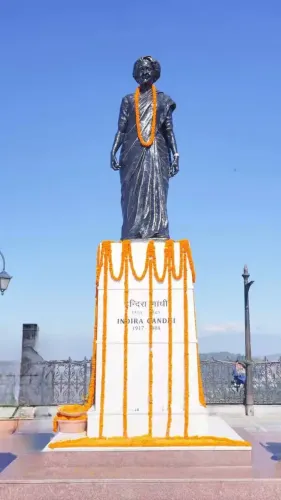
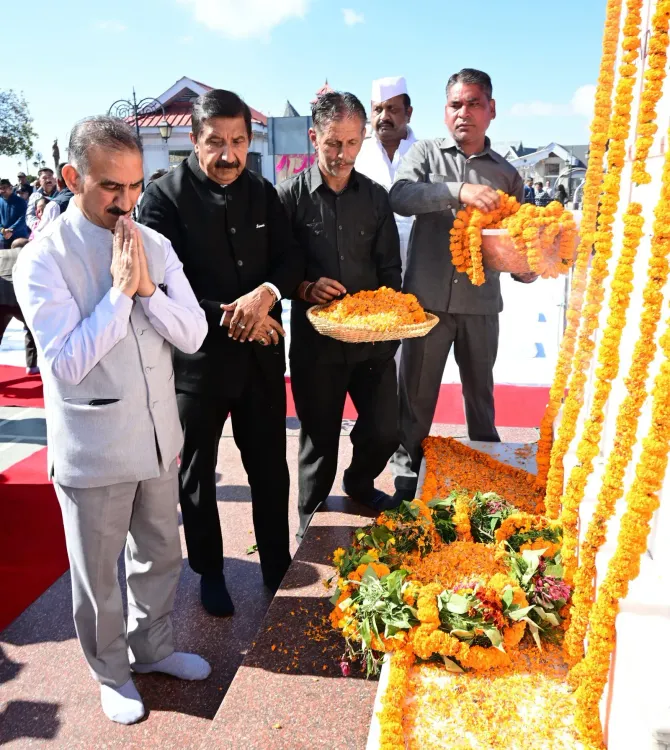
HP Chief Minister Sukhvinder Singh Sukhu paid floral tribute to former PM Indira Gandhi on her martyrdom anniversary at Ridge Maidan, Shimla, and participated in a blood donation camp held to mark the occasion.
Key Takeaways
CM Sukhvinder Singh Sukhu paid floral tribute to Indira Gandhi at Ridge Maidan, Shimla on 31 October 2026 .
The event marked Indira Gandhi's martyrdom anniversary — she was assassinated on 31 October 1984 .
CM Sukhu called her life and decisions 'an important chapter in Indian politics' that will always be discussed in Indian history.
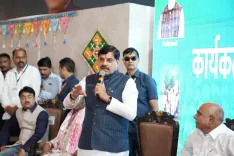
A blood donation camp was held alongside the tribute event, with CM Sukhu participating and thanking all donors.
Indian National Congress leaders routinely mark this date with commemorative and community-service events across states.
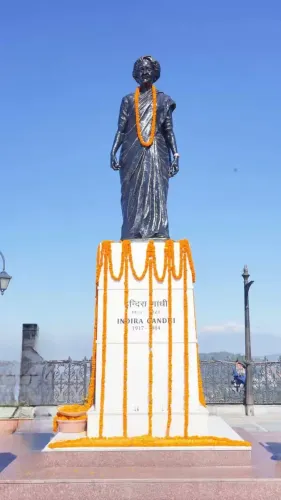
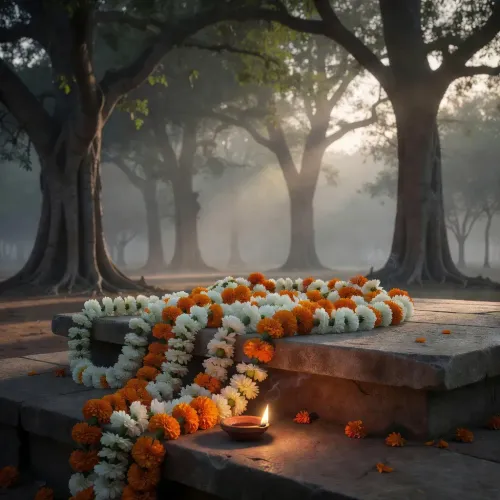
Forty-two years after her assassination, the memory of former Prime Minister Indira Gandhi drew solemn tribute at Shimla's Ridge Maidan on Saturday, 31 October 2026 — as Himachal Pradesh Chief Minister Sukhvinder Singh Sukhu laid floral offerings at a commemorative event marking her martyrdom anniversary.
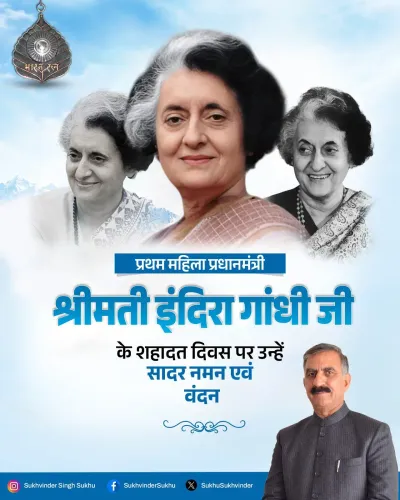
Posting on X, CM Sukhu wrote: 'आज रिज मैदान में पूर्व प्रधानमंत्री श्रीमती इंदिरा गांधी जी को उनके शहादत दिवस पर पुष्पांजलि अर्पित कर नमन किया' — 'Today at Ridge Maidan, I offered floral tributes and paid my respects to former Prime Minister Smt. Indira Gandhi ji on her martyrdom day.' He added that her life, political journey, and decisions taken in the national interest 'will always remain a subject of discussion in Indian history.'
A life that shaped modern India
Indira Gandhi served as Prime Minister of India across two tenures — 1966 to 1977 and 1980 to 1984 — making her the only woman to hold the office and one of the most consequential figures of 20th-century Indian politics. She was assassinated on 31 October 1984, a date that the Indian National Congress observes each year as her martyrdom day with tribute events across the country.
Ridge Maidan, the wide open promenade at the heart of Shimla, has long served as the stage for Himachal Pradesh's most significant public gatherings. Hosting the tribute here carries both civic weight and historical resonance for the hill state.
Blood donation camp adds a living tribute
The day's observance went beyond ceremony. CM Sukhu also participated in a blood donation camp held alongside the tribute event — a combination that has become a signature of Congress-led commemorations on this date. 'I express my heartfelt gratitude and appreciation to all blood donors who are contributing to the noble cause of saving the lives of those in need through blood donation,' he wrote.
Pairing a solemn remembrance with a community health drive reflects a wider pattern: state governments use high-visibility political anniversaries to anchor public-service campaigns, converting symbolic occasions into tangible civic action.
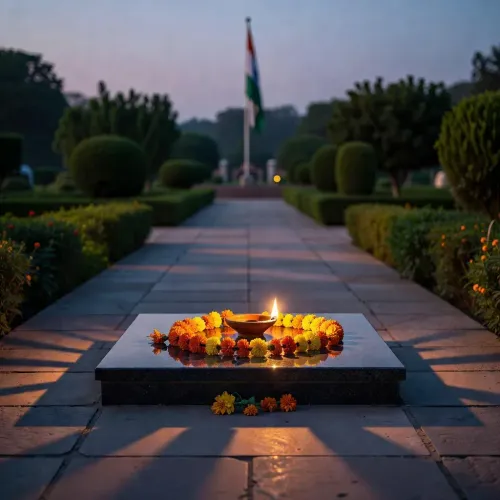
As October 31 rolls around each year, the dual ritual — flowers at the memorial, blood at the camp — quietly underscores how political memory and community service can be made to speak the same language.
Point of View
CM Sukhu follows a script designed to translate party memory into civic goodwill. For a Congress government in Himachal Pradesh, these rituals serve a dual purpose: reaffirming ideological lineage to the Nehru-Gandhi legacy while presenting the administration as service-oriented. The consistency of such events signals that political remembrance remains a deliberate, structured tool in Congress's grassroots outreach.
NationPress
31 Oct 2026
Frequently Asked Questions
When was Indira Gandhi's martyrdom day and why is it observed?
Indira Gandhi was assassinated on 31 October 1984 , and the date is observed each year as her martyrdom day, particularly by Indian National Congress leaders and state governments.
What did CM Sukhu do on Indira Gandhi's martyrdom day in 2026?
Himachal Pradesh CM Sukhvinder Singh Sukhu paid floral tribute to Indira Gandhi at Ridge Maidan, Shimla and participated in a blood donation camp held to mark the occasion.
Where is Ridge Maidan in Shimla?
Ridge Maidan is a historic open promenade in the heart of Shimla, Himachal Pradesh , and a prominent venue for official and public commemorative events in the state.
How long did Indira Gandhi serve as Prime Minister of India?
Indira Gandhi served as Prime Minister across two tenures — 1966 to 1977 and 1980 to 1984 — making her the only woman to hold the office.
Why do Congress leaders hold blood donation camps on October 31?
Indian National Congress leaders have made combining floral tributes to Indira Gandhi with blood donation camps a common practice on her martyrdom anniversary, linking political remembrance with community service.