CM Mohan Yadav Backs Mandla's Millet Farmers at Balram Krishi Mahotsav
Synopsis
Madhya Pradesh CM Dr. Mohan Yadav virtually joined the Balram Krishi Mahotsav in Mandla on 31 October 2026, calling millets the district's identity and committing to wider markets for kodo-kutki crops and continuous irrigation expansion under Krishak Kalyan Varsh 2026.
Key Takeaways
Balram Krishi Mahotsav was held in Mandla district on 31 October 2026 under the Krishak Kalyan Varsh 2026 initiative.
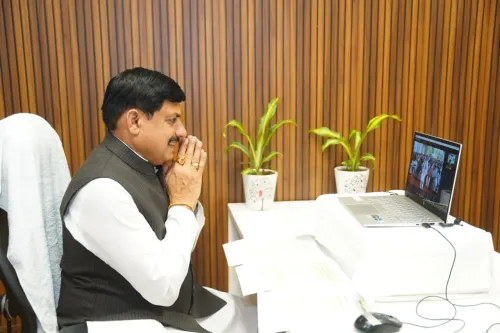
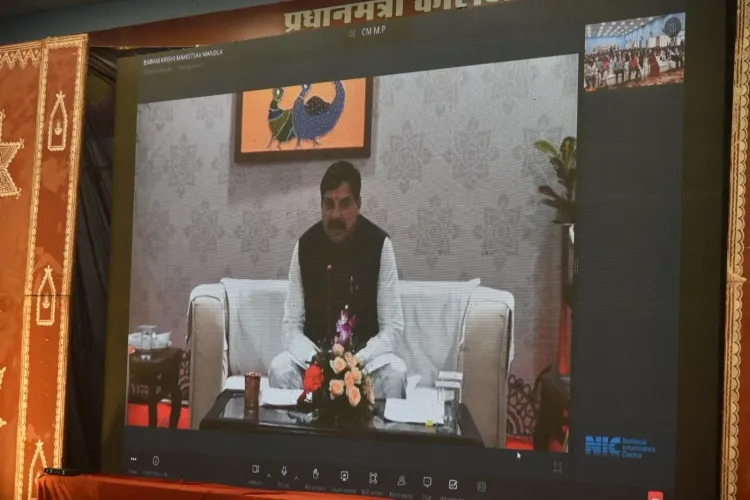
Mohan Yadav participated virtually and addressed farmers directly on crop promotion and welfare.
Traditional millets kodo and kutki were highlighted as Mandla's agricultural identity, with a pledge to expand their cultivation and market access.
The state is continuing irrigation infrastructure expansion as a core plank of farmer prosperity in tribal districts.
The initiative builds on momentum from the International Year of Millets 2023 and aligns with national nutri-cereal policy.
BJP leader Sampatiya Uikey , associated with the Mandla region, was tagged as a local political stakeholder in the effort.
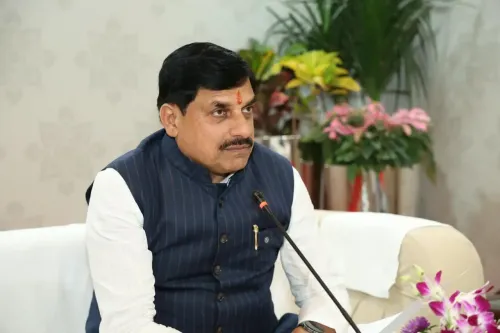
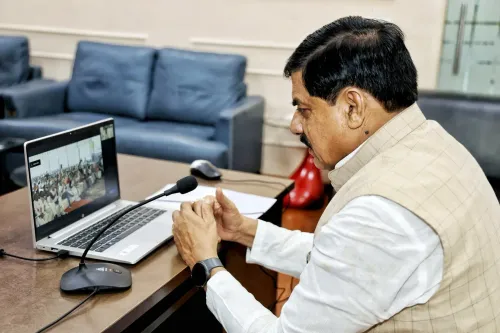
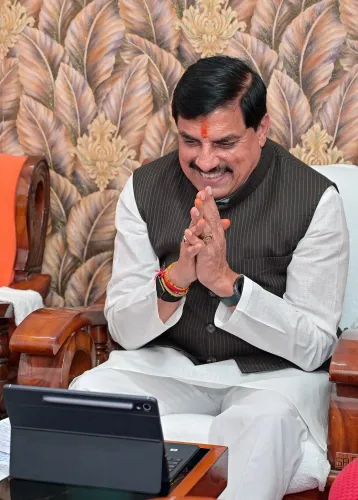
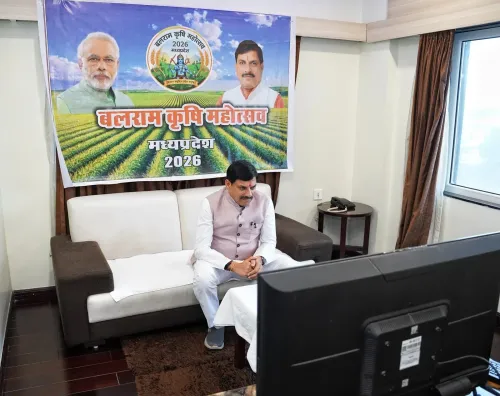
Millets are Mandla's identity — and Madhya Pradesh Chief Minister Dr. Mohan Yadav made that declaration the centrepiece of his virtual address at the Balram Krishi Mahotsav in Mandla district on Saturday, 31 October 2026, held under the state's flagship Krishak Kalyan Varsh 2026 programme. Connecting digitally with farmers from the tribal heartland of eastern Madhya Pradesh, he pledged stronger market access for traditional crops and continued expansion of irrigation infrastructure.
Kodo-Kutki at the Centre of Mandla's Agricultural Identity
Speaking directly to the farmers gathered at the festival, Dr. Yadav emphasised that Shri Anna — the honourific now widely applied to millets — is inseparable from Mandla's character. Kodo and kutki, two coarse millets cultivated for generations by tribal communities in the district, were singled out as crops deserving wider promotion. 'Our effort is that the cultivation of traditional grains like kodo-kutki gets further encouragement, and the products made from them get access to larger markets,' he said.
Mandla sits in a densely forested, largely tribal belt where smallholder farming dominates. These millets thrive on rain-fed, low-input land — making them both culturally rooted and climatically resilient. The challenge has never been growing them; it has always been selling them at a price that makes the effort worthwhile.
Krishak Kalyan Varsh 2026 and the Push for Millet Markets
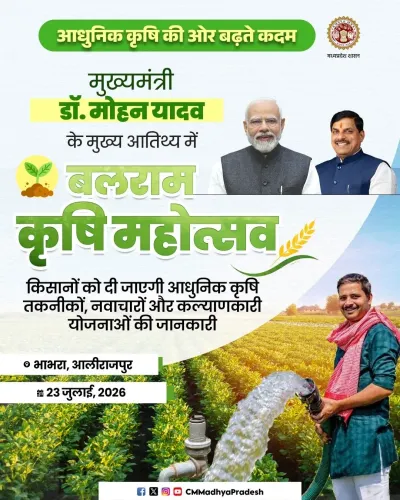
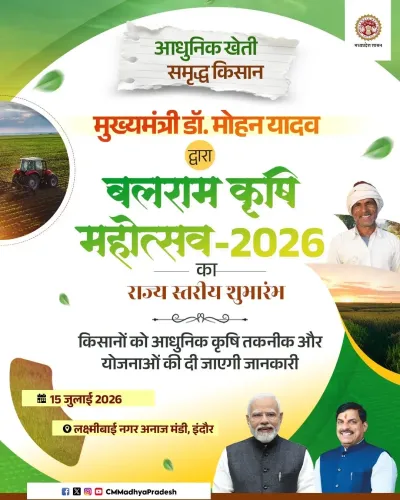
The Balram Krishi Mahotsav is one of a series of farmer-engagement events organised under Krishak Kalyan Varsh 2026, the Madhya Pradesh government's year-long initiative designed to spotlight crop promotion, welfare schemes, and agricultural development across the state. The choice of Mandla as a venue signals deliberate attention to tribal farming districts that have historically sat outside mainstream agri-supply chains.
The state's push aligns squarely with a national momentum that built through the International Year of Millets 2023, when the central government channelled attention and funding into processing, branding, and export of nutri-cereals. Madhya Pradesh, one of the country's largest millet-producing states, has continued that thrust at the state level — investing in value-addition units and buyer linkages intended to move kodo-kutki from subsistence crop to commercial opportunity.
Sampatiya Uikey, the BJP leader and former parliamentarian closely associated with the Mandla region, was tagged in the Chief Minister's post — a signal of local political ownership over the initiative.
Irrigation Expansion as the Backbone of Farmer Prosperity
Beyond millets, Dr. Yadav flagged irrigation as the structural lever that underpins everything else. 'Irrigation facilities are being continuously expanded for the prosperity of farmers,' he stated. For a district like Mandla — where rain-fed cultivation leaves smallholders exposed to erratic monsoons — reliable water access is the difference between a marginal harvest and a marketable surplus.
Madhya Pradesh has run successive irrigation and crop-diversification drives since the early 2020s, and the current government has framed those infrastructure investments as foundational to its farmer-welfare agenda. The watch now is on whether processing units and formal market linkages for Mandla's millet output follow the political promise into operational reality.
Point of View
Dr. Yadav is threading together three political imperatives: tribal outreach, the post-2023 national millet brand, and the BJP's recurring farmer-welfare narrative ahead of state governance reviews. The virtual format allows the Chief Minister to personalise engagement across geographically dispersed constituencies without the logistical weight of physical rallies — a model his administration has used consistently since 2024. The real test, however, lies in the market-linkage and processing-unit pipeline: unless kodo-kutki producers see verifiable price gains, the festival risks becoming symbolism rather than structural change. Mandla's progress will serve as a visible benchmark for whether the state's millet promises translate into rural income.
NationPress
31 Oct 2026
Frequently Asked Questions
What is Balram Krishi Mahotsav in Mandla?
Balram Krishi Mahotsav is an agricultural festival held in Mandla district under Madhya Pradesh's Krishak Kalyan Varsh 2026 programme, designed to engage farmers on local crop promotion, welfare schemes, and government support measures.
What is Krishak Kalyan Varsh 2026?
Krishak Kalyan Varsh 2026 is a state-level initiative by the Madhya Pradesh government focused on farmer welfare, crop diversification, and agricultural development through a series of events and programmes held across the state during 2026.
What are kodo and kutki millets?
Kodo and kutki are traditional coarse millets cultivated predominantly by tribal farming communities in eastern Madhya Pradesh, including Mandla district. They are nutritionally rich, climate-resilient crops that thrive on low-input, rain-fed land.
Why is Mandla significant for millet farming in Madhya Pradesh?
Mandla is a tribal-majority district in eastern Madhya Pradesh where kodo-kutki millets have been grown for generations. The district's identity is closely linked to these traditional crops, which the state government is now trying to connect to larger commercial markets.
Who is Sampatiya Uikey?
Sampatiya Uikey is a BJP leader and former parliamentarian closely associated with the Mandla region in Madhya Pradesh, tagged by CM Dr. Mohan Yadav in his post as a local stakeholder in the Balram Krishi Mahotsav initiative.