PM Modi targets Congress on poverty: 'Garibi Hatao sloganeers got richer'
Synopsis
At the Statue of Unity's home ground on National Unity Day, Modi turned the 'Garibi Hatao' slogan — Indira Gandhi's 1971 battle cry — into an indictment of Congress, backing it with a World Bank figure: 500 million Indians out of extreme poverty in a decade. The poverty rate, he claimed, has crashed from 27% to under 3%. It is a bold data point that reframes the 2024 election's welfare narrative as BJP's own.
Key Takeaways
PM Modi addressed the Rashtriya Ekta Diwas gathering at Ekta Nagar, Gujarat on 31 October 2026 , marking Sardar Patel's 151st birth anniversary .
He accused Congress of exploiting the Garibi Hatao slogan for votes while failing to improve conditions for the poor over decades.
Citing a recent World Bank report, Modi said 500 million Indians had escaped extreme poverty in the 10–12 years before 2024 .
The extreme poverty rate reportedly fell from 27 per 100 people to fewer than 3 per 100 .
Modi credited Direct Benefit Transfer (DBT) , free foodgrain, affordable housing, clean cooking fuel ( Ujjwala Yojana ), and insurance schemes for the improvement.
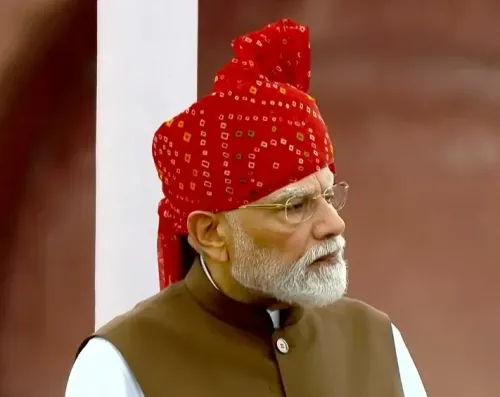
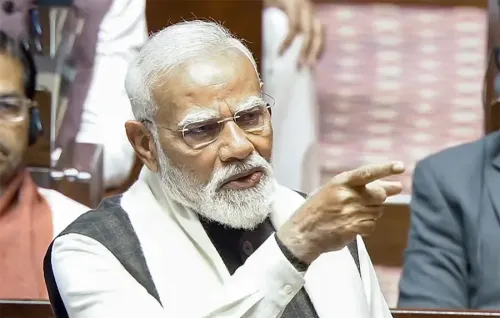
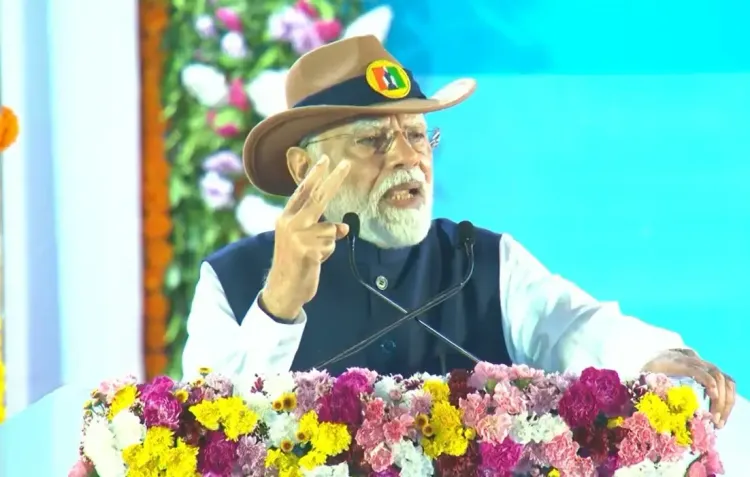
Prime Minister Narendra Modi on 31 October 2026 launched a sharp attack on previous Congress governments, accusing them of exploiting poverty as an electoral slogan while the poor saw little improvement in their lives for decades. Speaking at the Rashtriya Ekta Diwas gathering in Ekta Nagar, Gujarat, Modi cited a World Bank report to argue that meaningful poverty reduction had only gained momentum in recent years.
The Congress Charge
'Since Independence, there has been talk of removing poverty in India. Votes were sought in the name of removing poverty, but we all know the condition of poverty in the country. Those who raised the slogan of Garibi Hatao themselves kept becoming richer,' Modi said, in a pointed reference to the late Prime Minister Indira Gandhi's iconic campaign slogan from 1971.
The remarks drew an implicit contrast between what Modi framed as decades of unfulfilled Congress promises and what his government has claimed as tangible outcomes under welfare programmes rolled out since 2014.
World Bank Data and the Poverty Numbers
Referring to a recently published World Bank report, Modi stated that 500 million Indians had overcome extreme poverty in the 10–12 years before 2024. He added that the share of the population living in extreme poverty had fallen from 27 out of every 100 people to fewer than three out of every 100 — a reduction he described as a 'major achievement' that had received international recognition.
Notably, independent economists have broadly acknowledged India's poverty decline, though debates persist over methodologies and the base year used for such comparisons. The government's claim draws on the World Bank's international poverty line of $2.15 per day.
Welfare Delivery and the DBT Framework
Modi credited the improvement to structural changes in the government's delivery architecture. He said the Direct Benefit Transfer (DBT) system had made fund flows more transparent and reduced leakages, ensuring that money released by the Centre reached beneficiaries directly.
Among the specific measures he cited were free foodgrain distribution, accessible healthcare, construction of permanent houses and toilets under the Pradhan Mantri Awas Yojana and Swachh Bharat Mission, access to clean cooking fuel through the Ujjwala Yojana, and expanded insurance coverage. He said these initiatives had collectively helped poor households reduce their financial burden and build resilience during difficult periods.
National Unity Day Context
The speech was delivered during National Unity Day celebrations marking the 151st birth anniversary of Sardar Vallabhbhai Patel, held annually on 31 October at Ekta Nagar — formerly Kevadia — in Gujarat, the site of the Statue of Unity. Modi framed India's poverty-reduction record as integral to the country's broader march toward becoming a Viksit Bharat (developed India), linking economic progress with national unity and security.
What Comes Next
The remarks are likely to intensify the BJP–Congress contest over the ownership of poverty-alleviation narratives ahead of upcoming state assembly elections. Congress is expected to respond with its own data and counter-claims regarding the pace and quality of welfare delivery. How independent assessors — including the NITI Aayog and international bodies — update their poverty estimates in the coming months will shape how the public debate unfolds.
Point of View
But it requires scrutiny. The estimate depends heavily on the poverty line chosen and the base year, and India has not conducted a comprehensive consumption expenditure survey in nearly 15 years — a gap that makes any precise headcount contestable. The 'fewer than 3 per 100' figure also risks conflating extreme poverty reduction with broader economic well-being; multi-dimensional poverty — which captures nutrition, education, and healthcare access — paints a more complex picture. More significantly, framing the Garibi Hatao era as one of zero progress ignores genuine welfare expansion under UPA, creating a selective historical record. The real accountability question is not who coined the slogan but whether current schemes have durable, independently verified impact beyond the life of a political cycle.
NationPress
31 Oct 2026
Frequently Asked Questions
What did PM Modi say about Congress and poverty at Ekta Nagar?
Modi accused previous Congress governments of fighting elections on the 'Garibi Hatao' (Eradicate Poverty) slogan without improving the condition of the poor for decades. He charged that those who raised the slogan themselves grew wealthier, while real poverty reduction only gained traction in recent years.
What does the World Bank report cited by Modi say about poverty in India?
According to the World Bank report referenced by Modi, 500 million Indians escaped extreme poverty in the 10–12 years before 2024. The share of people in extreme poverty reportedly fell from 27 out of every 100 to fewer than three out of every 100.
What welfare measures did Modi credit for reducing poverty?
Modi cited the Direct Benefit Transfer (DBT) system, free foodgrain distribution, construction of permanent housing and toilets, access to clean cooking fuel under Ujjwala Yojana, expanded healthcare, and insurance coverage as key measures that reduced the financial burden on poor families.
Why was the speech delivered at Ekta Nagar?
Ekta Nagar in Gujarat is the site of the Statue of Unity and the venue for annual National Unity Day celebrations held on 31 October — the birth anniversary of Sardar Vallabhbhai Patel. Modi addressed the Rashtriya Ekta Diwas gathering there marking Patel's 151st birth anniversary.
How is 'Garibi Hatao' historically significant?
'Garibi Hatao' (Remove Poverty) was the defining campaign slogan of former Prime Minister Indira Gandhi's 1971 general election campaign, which she won by a landslide. By invoking it critically, Modi sought to frame Congress's poverty-alleviation promises as historically unfulfilled — a rhetorical move likely to sharpen the BJP–Congress debate ahead of upcoming elections.