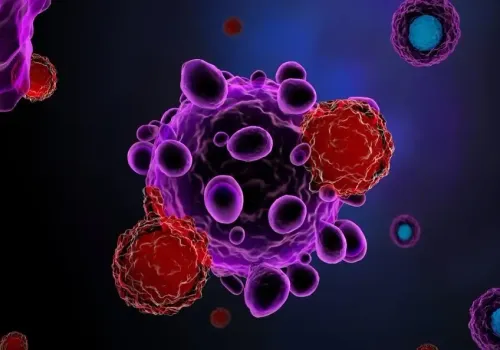
Nuwacell claims 80-90% neuron conversion rate in Parkinson's stem cell race
Synopsis
Hefei-based Nuwacell Biotechnologies claims its Parkinson's stem cell therapy converts cells into dopaminergic neurons at 80-90% efficiency — more than three times the under-25% rate published by US and Japanese rivals — a figure that, if peer-reviewed, could reshape the global race for a Parkinson's cure.
Key Takeaways
Nuwacell Biotechnologies , founded in Hefei, Anhui province , claims its Parkinson's stem cell therapy achieves a dopaminergic neuron conversion rate of 80 to 90 per cent .
Published data from competing international teams — including those from Kyoto University , Cornell University , and BlueRock Therapeutics — reportedly show conversion rates below 25 per cent .
The company was co-founded by stem cell biologists Yu Junying and Zhang Ying , both returnees from leading US research institutions.
Chief Scientist Yu Junying disclosed the efficiency figures at an academic exchange conference in Beijing in May 2026 .
The therapy is being developed in collaboration with Peking Union Medical College Hospital and has ties to the University of Science and Technology of China .
Independent peer-reviewed validation of the claimed conversion rates has not yet been published.
Nuwacell Biotechnologies, a Hefei-based stem cell company, is claiming a decisive lead over US and Japanese rivals in developing stem cell therapies for Parkinson's disease, reporting a dopaminergic neuron conversion efficiency of 80 to 90 per cent — more than three times higher than published figures from competing international teams.
The science behind the claim
Parkinson's disease is a progressive movement disorder caused by the death or dysfunction of specialised neurons that produce dopamine in the brain. Researchers globally are pursuing stem cell therapies that aim to replenish these lost dopaminergic neurons, restoring the brain's ability to regulate movement.
Nuwacell's approach centres on converting stem cells into dopaminergic neurons inside the body after transplantation. Yu Junying, the company's chief scientist, said the therapy achieves conversion rates of 80 to 90 per cent, while noting that 'published data from other teams are below 25 per cent.'
Who is behind Nuwacell
Nuwacell Biotechnologies was founded a decade ago in Hefei, Anhui province, by stem cell biologists Yu Junying and Zhang Ying after both returned to China from leading US academic institutions. The company sits within a broader wave of Chinese biotech firms built by researchers repatriated from Western universities and research centres.
Yu made the remarks at an academic exchange conference in Beijing, where she told reporters the company's clinical trial timeline was also advancing faster than international competitors, including teams affiliated with Kyoto University in Japan, Cornell University, and BlueRock Therapeutics in the US.
The competitive backdrop
The global race to treat Parkinson's with stem cells has intensified over the past five years, with institutions including Kyoto University, Cornell University, and BlueRock Therapeutics each running separate programmes at various clinical stages. BlueRock Therapeutics, backed by Bayer, has been among the most closely watched Western entrants in this space.
Nuwacell's affiliation with the University of Science and Technology of China and its clinical collaboration with Peking Union Medical College Hospital lend institutional weight to its programme, even as independent peer review of its efficiency figures remains pending.
Why it matters
Parkinson's disease affects an estimated 10 million people worldwide, with no existing therapy capable of reversing neuronal loss. A stem cell treatment achieving even a fraction of Nuwacell's claimed conversion rate could represent a fundamental shift in disease management.
The claims, if validated through peer-reviewed trials, would position China as a first-mover in a therapeutic category with multi-billion-dollar commercial potential — and raise fresh questions about the pace at which Chinese biotech is closing the gap with US and Japanese programmes.
What's next
Independent verification of Nuwacell's conversion efficiency data through peer-reviewed publication will be the critical next milestone. Regulatory progression through China's clinical trial framework and any international trial partnerships will determine how quickly the therapy can move toward patients.
Point of View
But on core scientific metrics. The broader context is a deliberate state-backed strategy to repatriate talent and compress the innovation cycle in high-value therapeutic areas, mirroring what happened in AI and semiconductors. What mainstream coverage tends to underweight is the role of China's faster and less litigious clinical trial environment, which can accelerate proof-of-concept timelines even when the underlying science remains contested. The real test for Nuwacell is whether its data holds up in international peer-reviewed journals — until then, the 80-90% figure remains a competitive claim, not an established benchmark.
NationPress
5 Oct 2026
Frequently Asked Questions
What is Nuwacell Biotechnologies and what has it claimed about Parkinson's treatment?
Nuwacell Biotechnologies is a Hefei -based Chinese stem cell company that claims its Parkinson's therapy converts stem cells into dopaminergic neurons at a rate of 80 to 90 per cent — more than three times higher than the under- 25 per cent rates published by rival teams in the US and Japan . The company was founded by returnee scientists Yu Junying and Zhang Ying .
How does Nuwacell's stem cell therapy work for Parkinson's disease?
The therapy involves introducing stem cells into the body that then convert into dopaminergic neurons — the specialised brain cells whose loss causes Parkinson's symptoms. Replenishing these neurons is intended to restore the brain's capacity to produce dopamine and improve motor function in patients.
Who are Nuwacell's main competitors in the Parkinson's stem cell race?
The key international competitors cited include Kyoto University in Japan , Cornell University in the US , and BlueRock Therapeutics , a Bayer -backed US biotech. All three are running separate stem cell programmes for Parkinson's at various clinical stages.
Has Nuwacell's claimed 80-90% conversion rate been independently verified?
No independent peer-reviewed publication confirming the 80 to 90 per cent conversion rate has been released as of May 2026 . The figures were disclosed by Chief Scientist Yu Junying at an academic conference in Beijing , and external validation remains the critical next step.
Why is China investing heavily in Parkinson's stem cell research?
Parkinson's disease affects an estimated 10 million people globally, and no existing treatment can reverse neuronal loss — making it a high-value target. China has strategically supported biotech programmes led by US-trained returnee scientists, aiming to establish leadership in next-generation therapeutic categories with significant commercial and geopolitical implications.