Bihar CM Samrat Choudhary announces state's tallest Sardar Patel statue on National Unity Day
Synopsis
Bihar CM Samrat Choudhary used National Unity Day in Patna to announce the country's tallest Sardar Patel statue, publicly embrace Health Minister Nishant Kumar as a 'brother' in a politically loaded moment, and lay out a healthcare overhaul targeting one lakh district-level surgeries per month — turning a ceremonial occasion into a full-spectrum political statement.
Key Takeaways
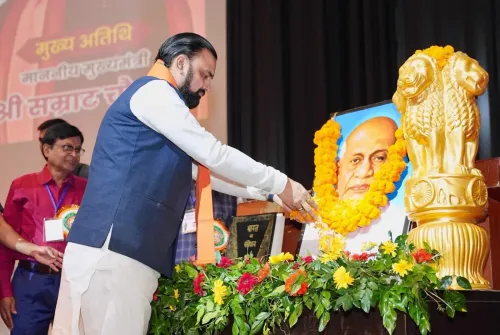
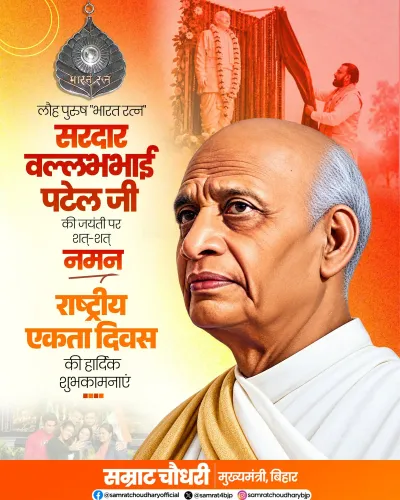
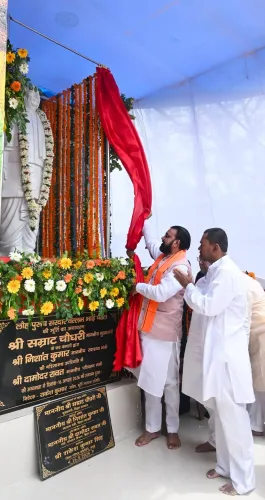
Bihar CM Samrat Choudhary announced the country's tallest Sardar Patel statue at Bapu Sabhagar, Patna on 31 October .
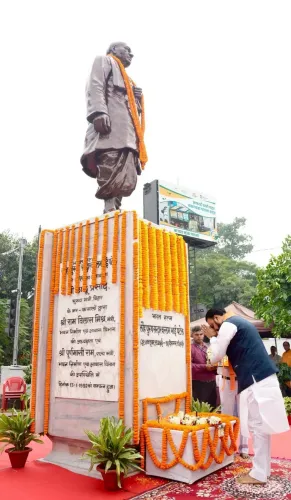
The event marked Patel's 151st birth anniversary , observed nationally as National Unity Day .
Samrat publicly called Health Minister Nishant Kumar his 'brother', a remark seen as politically significant given ongoing discussions about Kumar's standing.
The government targets one lakh surgeries per month at district and sub-divisional hospitals within four years .
Samrat reiterated the promise of one crore jobs and paid tribute to absent former CM Nitish Kumar and former Deputy CM Sushil Kumar Modi .
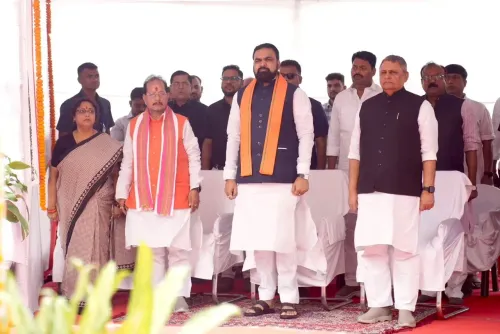
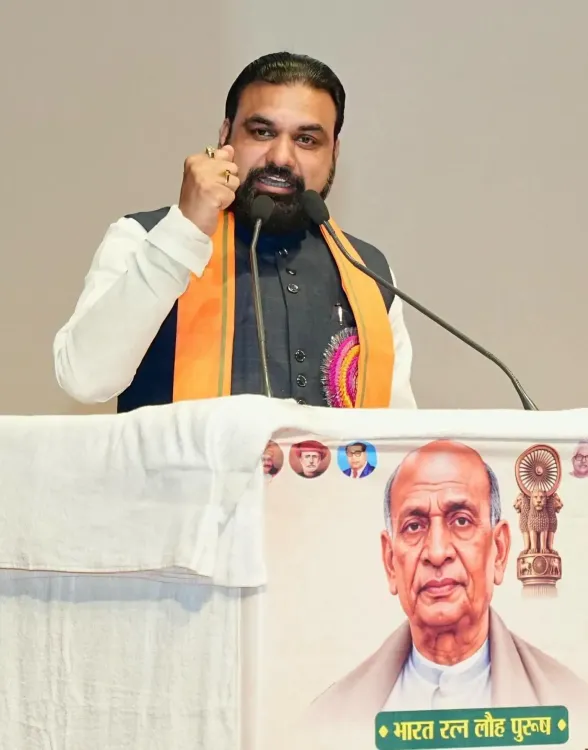
Bihar Chief Minister Samrat Choudhary on 31 October announced that the state would erect the country's tallest statue of Sardar Vallabhbhai Patel, marking the Iron Man of India's 151st birth anniversary at a function held at Bapu Sabhagar in Patna. The event, observed as National Unity Day, combined a formal tribute to Patel with a wide-ranging outline of the Bihar government's development and healthcare agenda.
The Sardar Patel Statue Announcement
Addressing the gathering, Chief Minister Samrat said Bihar's planned statue would surpass every existing Sardar Patel installation in the country in height, positioning it as a landmark tribute to Patel's role in forging a united India. "After Independence, he undertook the historic task of integrating the princely states and binding India together. Had it not been for Sardar Patel, the creation of today's vast and united India would have been difficult," Samrat said. He also drew a line from Patel's legacy to the present, asserting that Prime Minister Narendra Modi was carrying forward that vision through his resolve to build a developed India.
CM Calls Nishant Kumar 'Brother' — A Remark With Political Weight
A moment that drew particular attention came when the Chief Minister addressed Health Minister Nishant Kumar directly, making a light-hearted remark advising him to eat properly and gain some weight. Samrat added that the two would work together as 'brothers' to take Bihar forward. The remark, though conversational in tone, carries political significance: Nishant Kumar has been a subject of discussion regarding his standing and influence since assuming charge of the Health Department. Observers noted that a public display of camaraderie from the Chief Minister amounts to an implicit endorsement of his political position.
Bihar's Healthcare Overhaul: One Lakh Surgeries a Month
A substantial portion of the Chief Minister's address was devoted to healthcare reform. Samrat said Bihar aimed to become one of the country's leading states in healthcare within the next four years. To achieve this, district and sub-divisional hospitals would be upgraded so that patients could receive treatment and undergo surgeries closer to home, reducing unnecessary referrals to major centres. He cited the earlier burden on institutions such as PMCH and IGIMS, where heavy patient loads forced people to struggle for admission. The government's stated target is to scale surgical capacity at district and sub-divisional hospitals to one lakh operations per month.
Jobs Promise and Tribute to Nitish Kumar
Samrat also reiterated the government's commitment to generating one crore jobs in the state. Notably, a significant portion of his address was devoted to former Chief Minister Nitish Kumar, who was absent from the programme. Samrat praised Nitish's contribution to Bihar's transformation after 2005, particularly in roads, electricity, healthcare, and education. He also acknowledged the role of former Deputy Chief Minister Sushil Kumar Modi in the state's development. Health Minister Nishant Kumar, who also addressed the gathering, echoed praise for Nitish Kumar's tenure.
What the Event Signals for Bihar's Political Landscape
The National Unity Day function at Bapu Sabhagar served as more than a ceremonial occasion. By publicly invoking brotherhood with Nishant Kumar, outlining ambitious healthcare targets, reiterating a crore-jobs pledge, and paying tribute to both the current dispensation's allies and absent senior leaders, the Bihar government used the platform to project internal cohesion and signal its development priorities ahead of the coming years. The statue announcement, in particular, plants a visible, long-term marker of the government's intent to align with the national narrative around Sardar Patel's legacy.
Point of View
But it deserves closer reading: public affirmations of solidarity from a Chief Minister rarely happen without purpose, and this one lands at a moment when Kumar's political weight within the Bihar cabinet is actively being assessed. The statue announcement, meanwhile, follows a well-established national template of Sardar Patel memorialisation as political branding — the question is whether Bihar's fiscal space can support a record-breaking monument alongside its far more consequential pledge of one lakh district-level surgeries a month, a target that would require substantial infrastructure investment and trained manpower that the state currently lacks at scale.
NationPress
31 Oct 2026
Frequently Asked Questions
What did Bihar CM Samrat Choudhary announce on National Unity Day 2024?
Chief Minister Samrat Choudhary announced that Bihar would install the country's tallest statue of Sardar Vallabhbhai Patel, as a tribute to the leader's role in unifying India. He also outlined healthcare reform targets and reiterated the government's pledge of one crore jobs.
Why is Samrat Choudhary calling Nishant Kumar 'brother' politically significant?
The public declaration of brotherhood towards Health Minister Nishant Kumar carries weight because Kumar's political standing and influence within the Bihar cabinet have been a subject of discussion since he took charge of the Health Department. A visible endorsement from the Chief Minister signals internal alignment within the ruling dispensation.
What is Bihar's healthcare target announced at the National Unity Day event?
The Bihar government aims to scale surgical capacity at district and sub-divisional hospitals to one lakh operations per month, with the goal of making Bihar a leading state in healthcare within four years. The plan involves strengthening local hospitals to reduce dependence on major centres like PMCH and IGIMS.
Why was Nitish Kumar praised at the event despite being absent?
Former Chief Minister Nitish Kumar, who could not attend the programme, was praised by both CM Samrat Choudhary and Health Minister Nishant Kumar for Bihar's transformation after 2005, particularly in roads, electricity, healthcare, and education. The tribute reflects the coalition dynamics underpinning the current Bihar government.
Where was the National Unity Day event held in Bihar?
The event was held at Bapu Sabhagar in Patna on 31 October, coinciding with the 151st birth anniversary of Sardar Vallabhbhai Patel, which is observed as National Unity Day across India.