China surgeons achieve world-first double-thigh replantation, patient walks

Synopsis
Surgeons in Suzhou, China, have achieved what is claimed to be a global first: reattaching both severed thighs of a patient who can now walk indoors with a frame after 20 months of recovery — a case documented in a peer-reviewed journal and hailed as evidence of China's world-leading microsurgical expertise.
Key Takeaways
Suzhou Ruihua Orthopaedic Hospital performed the world's first documented bilateral thigh replantation resulting in the patient walking again.
After nearly 20 months of post-operative recovery, the patient can walk indoors with a frame and perform most daily tasks unassisted.
Sensation has returned to the patient's lower legs down to his ankles , indicating significant nerve recovery.
The Jiangsu Trauma and Treatment Association confirmed on August 14 that no prior documented case of complete bilateral thigh reattachment with ambulation existed.
The case was published in the peer-reviewed China Journal of Trauma in July 2026 .
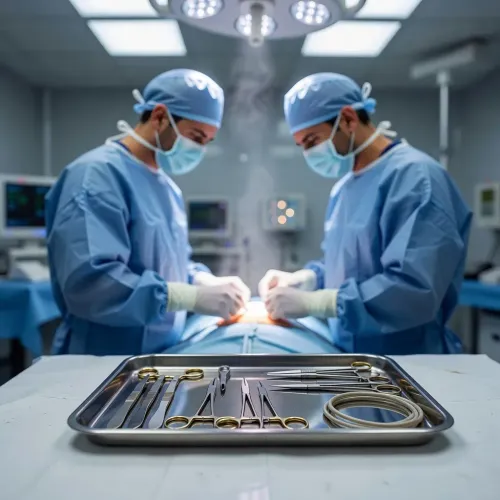
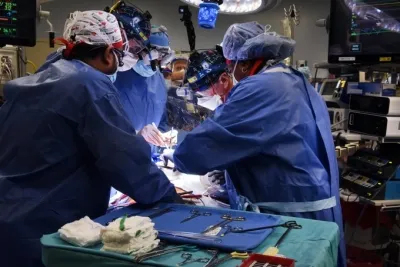
Surgeons at Suzhou Ruihua Orthopaedic Hospital in eastern China have accomplished a global medical first: successfully reattaching both severed thighs of a patient following a traumatic accident, enabling him to walk again. The procedure, confirmed by the Jiangsu Trauma and Treatment Association, stands as the first documented case of a complete bilateral thigh reattachment resulting in restored ambulation.
The Procedure and Recovery
After nearly 20 months of intensive post-operative rehabilitation, the patient is reportedly able to walk indoors using a frame and manage most daily activities without assistance. Crucially, sensation has returned to his lower legs down to his ankles — a significant neurological milestone in limb replantation outcomes.
The case was formally documented in an academic paper published in the peer-reviewed China Journal of Trauma in July, lending the claim institutional scientific credibility beyond a single hospital's announcement.
Why It Matters
While single-thigh replantations have been performed successfully in the past, the Jiangsu Trauma and Treatment Association noted on August 14 that no prior documented case existed of a patient undergoing complete bilateral thigh reattachment and subsequently walking. The complexity of reconnecting major blood vessels, nerves, and bone structures simultaneously across both limbs makes this outcome extraordinarily rare.
'The success of this case demonstrates that China's microsurgical trauma expertise has reached a world-leading level,' the association stated in a post on its official social media account.
The Competitive Backdrop
China has invested heavily in microsurgical capabilities over the past two decades, with institutions in Jiangsu and Shandong provinces developing specialised trauma networks. Replantation surgery — reattaching completely severed limbs — demands elite microsurgical teams capable of working under extreme time pressure to restore blood flow before tissue death occurs. Bilateral thigh-level cases are considered among the most demanding, given the volume of tissue involved and the complexity of vascular reconstruction.
What's Next
The publication of this case in a peer-reviewed journal is expected to draw international scrutiny and potential replication attempts at major trauma centres globally. Independent verification by international microsurgical bodies will be key to establishing this outcome as a reproducible benchmark rather than a singular event.
As China's medical institutions continue publishing high-impact trauma cases, the global reconstructive surgery community will be watching whether this outcome can be replicated — and whether the techniques involved can be standardised for broader clinical application.
Point of View
Rather than a high-impact international journal, means independent global validation is still pending. The framing by a regional hospital association as proof of 'world-leading' capability is notable: it mirrors a broader institutional pattern of using singular clinical achievements to signal systemic excellence. International microsurgical bodies will need to scrutinise the full case data before this can be treated as a replicable benchmark rather than an extraordinary outlier.
NationPress
3 Oct 2026
Frequently Asked Questions
What is bilateral thigh replantation and why is this case significant?
Bilateral thigh replantation is the surgical reattachment of both legs severed at the thigh level. This case at Suzhou Ruihua Orthopaedic Hospital is significant because it is the first documented instance globally where a patient underwent complete bilateral thigh reattachment and subsequently regained the ability to walk.
How long did recovery take after the double-thigh surgery?
Recovery took nearly 20 months of intensive post-operative rehabilitation. By the end of that period, the patient could walk indoors with a frame, handle most daily tasks unassisted, and had regained sensation in his lower legs down to his ankles.
Where was the surgery performed and who confirmed it as a world first?
The surgery was performed at Suzhou Ruihua Orthopaedic Hospital in eastern China . The Jiangsu Trauma and Treatment Association confirmed on August 14 that no prior documented case of a patient walking after complete bilateral thigh reattachment existed worldwide.
Has this case been published in a scientific journal?
Yes. Details of the case were published in the peer-reviewed China Journal of Trauma in July 2026 , providing an academic record of the procedure and its outcomes beyond the hospital's own claims.
What does this mean for the future of reconstructive microsurgery?
If independently verified by international microsurgical bodies, this case could establish a new clinical benchmark for bilateral limb replantation. It is expected to prompt scrutiny from global trauma centres and raise questions about whether the techniques used at Suzhou Ruihua Orthopaedic Hospital can be standardised for broader application.