China's Toumai surgical robot wins EU CE mark, enters global market
Synopsis
Shanghai MicroPort MedBot's Toumai robot has become the world's first teleoperated surgical system to earn the EU's CE mark — clearing it for sale across Europe after a landmark 5G-powered surgery that connected a London surgeon to a patient in Gibraltar, 2,400 km away.
Key Takeaways
Shanghai MicroPort MedBot announced on Monday, 23 June 2026 that its Toumai Remote robot received the EU CE mark , the bloc's mandatory market-entry certification.
The Toumai system is described by the company as 'the first remote surgical robot to obtain the CE mark' , giving it unrestricted access to sell across all EU member states.
In March 2026 , a London surgeon used Toumai to remotely remove a prostate from a cancer patient in Gibraltar , roughly 2,400 kilometres (1,490 miles) away — the UK 's first robotic telesurgery.
MedBot has shipped more than 300 Toumai units to over 60 markets worldwide, according to the company's WeChat account.
The robot uses integrated 5G technology and covers urology, general surgery, thoracic surgery, and gynaecology procedures.
Shanghai MicroPort MedBot's Toumai Remote surgical robot has become the first teleoperated surgical system to receive the CE mark from the European Union, clearing it for free movement and sale across the bloc — a landmark regulatory milestone for China's medical robotics sector. The approval, disclosed in a Hong Kong Stock Exchange filing on Monday, 23 June 2026, positions MedBot as a serious contender in the global surgical robotics market.
What the CE Mark Means
The CE mark is a mandatory certification under EU regulations, confirming that a product meets the bloc's safety, health, and environmental standards. Crucially, it allows products to be 'moved and marketed freely in the EU' regardless of their country of manufacture, according to the EU's own guidelines. For a Chinese medical device company, securing this certification represents one of the most demanding regulatory hurdles in the global healthcare market.How the Toumai System Works
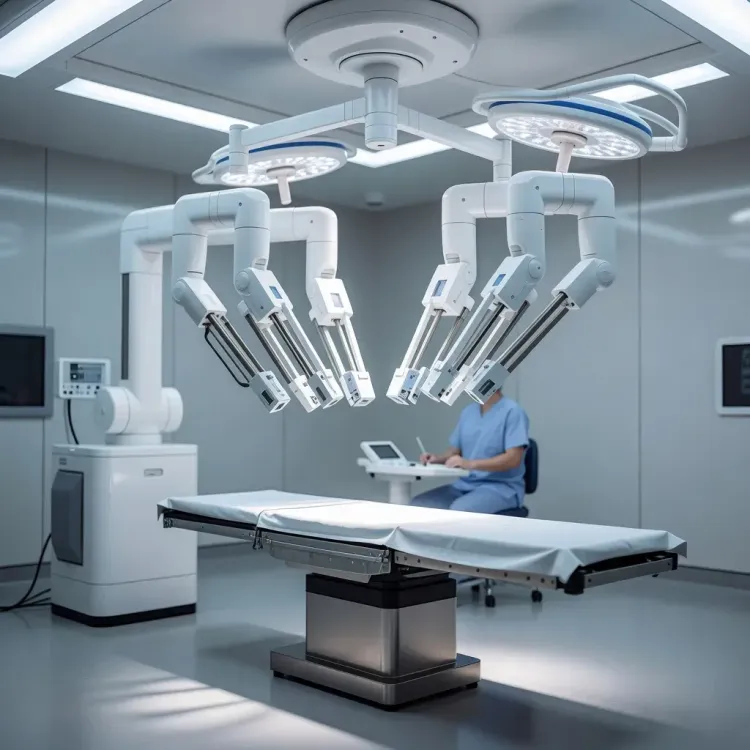
According to MedBot, the Toumai robot comprises three core components — a surgeon console, a patient cart, and a vision cart. By integrating 5G connectivity, the system enables surgeons to perform remote laparoscopic procedures across specialties including urology, general surgery, thoracic surgery, and gynaecology. The platform is designed to eliminate geographic barriers between surgeon and patient.Why It Matters: The Gibraltar Precedent
Before securing EU approval, the Toumai system had already demonstrated its capabilities in a high-profile real-world deployment. In March 2026, a London-based surgeon used the robot to remotely perform a prostate removal on a cancer patient in Gibraltar — a distance of approximately 2,400 kilometres (1,490 miles) — marking the UK's first robotic telesurgery, according to a BBC report. The procedure underscored the system's clinical readiness ahead of the regulatory green light.Global Footprint
According to a post on MedBot's official WeChat account, the company has delivered over 300 Toumai units across more than 60 markets worldwide. The EU certification now opens the bloc's member states as an addressable market, potentially accelerating deployment across Europe's well-funded hospital networks.What's Next
With EU market access secured and a growing installed base across 60-plus countries, MedBot is well-positioned to challenge established Western surgical robotics players. The next test will be commercial traction within Europe itself — whether hospital procurement cycles and reimbursement frameworks can absorb a Chinese-origin platform at scale. Regulatory clearance in the United States, where FDA approval remains the ultimate prize in surgical robotics, is the milestone the industry will be watching.Point of View
Not just in price-sensitive emerging markets. This mirrors the broader pattern seen in Chinese EV and solar manufacturers: domestic scale funds the R&D that eventually clears Western regulatory bars. What mainstream coverage underplays is the geopolitical dimension: as US-China tech decoupling intensifies, European hospital systems acquiring Chinese surgical robots could face future procurement scrutiny similar to that applied to telecoms equipment. The real test is not regulatory — it is whether MedBot can build the service infrastructure, clinical training networks, and reimbursement relationships inside Europe that sustain long-term market share against entrenched incumbents.
NationPress
23 Sept 2026
Frequently Asked Questions
What is the Toumai surgical robot and who makes it?
The Toumai Remote is a teleoperated surgical robot developed by Shanghai MicroPort MedBot , a Shanghai -based medical device company. It uses 5G connectivity to allow surgeons to perform laparoscopic procedures remotely, covering urology, general surgery, thoracic surgery, and gynaecology.
What does the EU CE mark mean for the Toumai robot?
The CE mark is a mandatory EU certification confirming a product meets European safety and regulatory standards, allowing it to be sold and marketed freely across all EU member states regardless of where it was manufactured. MedBot says Toumai is the first remote surgical robot in the world to receive this certification.
Has the Toumai robot been used in real surgeries?
Yes. In March 2026 , the Toumai system enabled a London -based surgeon to remotely perform a prostate removal on a cancer patient located in Gibraltar , approximately 2,400 kilometres (1,490 miles) away — recorded as the UK 's first robotic telesurgery, according to a BBC report.
How widely is the Toumai robot deployed globally?
MedBot has delivered over 300 Toumai units across more than 60 markets worldwide, according to the company's official WeChat account post on Monday, 23 June 2026 . The EU certification now adds the entire European Union bloc as a formally accessible market.
Who are the main competitors of the Toumai surgical robot?
The global surgical robotics market is dominated by established Western players, most notably Intuitive Surgical , maker of the widely used da Vinci system. MedBot 's EU entry positions Toumai as a direct challenger in the premium hospital segment, competing on 5G-enabled remote capabilities that incumbent systems do not yet offer at commercial scale.