Pilot demands high-level probe into Ajmer jail video-call scandal

Synopsis
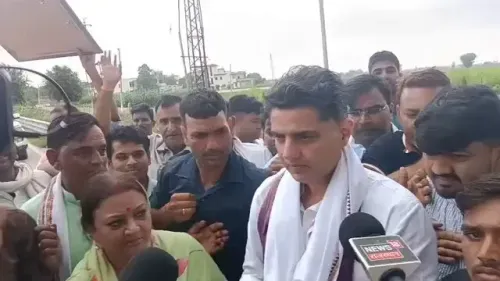
Congress leader Sachin Pilot on 8 August 2026 called out the Rajasthan government over an alleged video-call incident from inside Ajmer Jail, demanding a high-level impartial inquiry, clear fixing of responsibility, and strict action against those found culpable.
Key Takeaways
Congress general secretary Sachin Pilot flagged an alleged video-call incident from inside Ajmer Central Jail on 8 August 2026 .
Pilot stated that if criminals are making video calls from prison, the credibility of the jail's security and surveillance system is fundamentally in question.
He demanded a high-level, impartial inquiry into how mobile phones and video-call access reached inmates inside the facility.
He called for clear fixing of responsibility and 'strict action' against all those found to have played a role.
The Rajasthan home department, which administers central prisons under the Prisons Act, 1894 , is directly accountable for custodial security protocols.
Unauthorised mobile phones in Indian prisons have been a recurring governance concern across multiple states, often triggering opposition scrutiny of ruling dispensations.
A video call made from inside a prison should be impossible. That it allegedly happened at Ajmer Central Jail is now a full-blown political flashpoint — and Congress leader Sachin Pilot is demanding answers the Rajasthan government cannot afford to ignore.
Posting on Saturday, 8 August 2026, Pilot wrote that the Ajmer jail incident has raised 'serious questions' about the credibility of the state's prison security and surveillance system. 'If video calls are being made by criminals from inside the jail, then serious question marks on the security and monitoring system in place there are natural,' he said. 'The government cannot wash its hands of this.'
How a phone got past the prison gates
At the heart of Pilot's demand is a deceptively simple question: how did a mobile phone — and the ability to make video calls — reach an inmate inside a high-security facility? Ajmer Jail is a central prison administered by the Rajasthan home department, subject to protocols derived from the Prisons Act, 1894 and state-level surveillance manuals that explicitly prohibit inmate access to communication devices.
The presence of contraband phones in Indian prisons is not new — similar episodes have surfaced across multiple states over the years, each time exposing gaps between written protocol and ground reality. What makes the Ajmer case politically charged is the allegation that the device was used for a video call, suggesting not just possession but active, undetected use over time.
Pilot's three-point accountability test
Pilot's post lays out a clear sequence of demands: an impartial, high-level inquiry into how the mobile and video-call facility reached the jail; clear fixing of responsibility; and 'strict action' against those whose role is established. The framing is deliberate — he is not merely criticising the incident but setting a public accountability benchmark the ruling dispensation must now either meet or explain away.
As Congress general secretary and the party's former deputy chief minister of Rajasthan, Pilot carries institutional weight on state governance questions. His intervention signals that the opposition intends to press the issue in the public domain and, potentially, on the floor of the state assembly.
What the Rajasthan home department must answer
The immediate watch point is whether the Rajasthan government announces a magisterial or CID-level inquiry — the standard administrative response to custodial security breaches. Absent that, the political pressure will only build. Prison security in India remains a state subject, meaning accountability rests squarely with the ruling dispensation in Jaipur.
If a formal inquiry is ordered and its terms of reference are made public, the focus will shift to whether it covers the full supply chain — from whoever smuggled the device in, to the jail staff who failed to detect it, to supervisory officers who signed off on security audits.
A prison cell is meant to be the state's most controlled environment. When a video call breaks that control, the question is not just about one phone — it is about who was looking the other way, and for how long.
Point of View
Impartial' inquiry raises the political stakes beyond routine criticism. If the Rajasthan government responds with only a departmental inquiry, the opposition will likely argue it amounts to the administration investigating itself. The episode also fits a broader national pattern of contraband phones inside prisons exposing the gap between statutory prison rules and on-ground enforcement, a systemic failure that no single state government has fully resolved. For Pilot, who retains significant political capital in Rajasthan despite being in opposition, this is also a signal that he intends to remain a vocal accountability voice on state governance issues.
NationPress
8 Aug 2026
Frequently Asked Questions
What happened at Ajmer Jail that Sachin Pilot is talking about?
An incident allegedly involving inmates at Ajmer Central Jail making video calls using mobile phones surfaced in early August 2026, raising questions about how communication devices entered the high-security facility. Pilot demanded a high-level inquiry into the matter.
What did Sachin Pilot demand over the Ajmer jail incident?
Pilot demanded an impartial, high-level investigation into how mobile phones and video-call access reached inmates inside Ajmer Jail, clear fixing of responsibility, and strict action against everyone found culpable.
Are mobile phones allowed inside Indian prisons?
No. Mobile phones are prohibited inside Indian prisons under the Prisons Act, 1894 and state-level prison manuals. Possession of a mobile phone by an inmate is a punishable offence and a serious security violation.
Who is responsible for jail security in Rajasthan?
Prison administration in Rajasthan falls under the state home department. Central prisons like Ajmer Jail are governed by state rules derived from the Prisons Act, 1894, and the state's own prison surveillance manuals.
Is Sachin Pilot in the Rajasthan government?
No. Sachin Pilot is currently in the opposition as a Congress general secretary and Chhattisgarh in-charge. He previously served as Deputy Chief Minister of Rajasthan when the Congress was in power in the state.