US scientists use Chinese humanoid robot for keyhole surgery

Synopsis
UCSD scientists used a Unitree Robotics G1 humanoid — a general-purpose Chinese-made robot, not a specialised surgical system — to remotely perform laparoscopic gallbladder removal on a pig, with findings published in Nature. It is the first known use of an off-the-shelf humanoid in keyhole surgery.
Key Takeaways
University of California San Diego (UCSD) researchers performed laparoscopic gallbladder surgery on a pig using a Unitree Robotics G1 humanoid robot on July 10, 2026 .
The robot was remotely controlled by two human surgeons ; a second robot managed the endoscope and tissue retraction.
The experiment used a general-purpose humanoid rather than a dedicated surgical platform such as the Da Vinci Surgical System .
Findings were published in the journal Nature , co-authored by Michael Yip , Liang Zekai , and Liu Shanglei , among others.
The UCSD team developed a surgical framework called Surgie to enable the humanoid to perform the procedure.
Researchers say the technology could expand access to critical surgeries in underserved regions globally.
University of California San Diego (UCSD) researchers have successfully performed keyhole surgery using a general-purpose humanoid robot manufactured by Chinese robotics firm Unitree Robotics, marking a significant step toward autonomous surgical systems. The procedure, conducted on July 10, 2026, saw the robot remove a pig's gallbladder under remote human control — a milestone that researchers say could reshape global access to complex surgical care.
What happened in the operating room
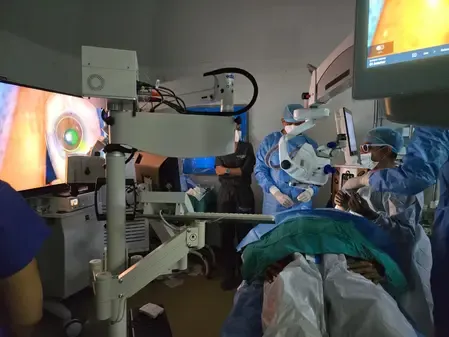
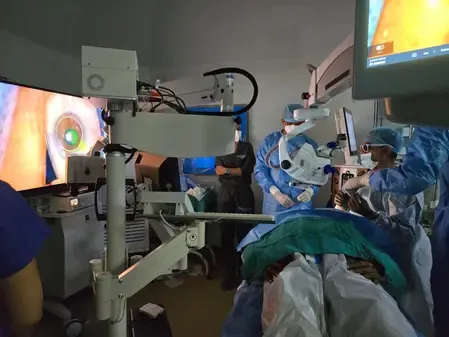
The Unitree Robotics G1 humanoid robot was remotely operated by two human surgeons as it performed a laparoscopic cholecystectomy — the technical term for keyhole gallbladder removal — on a pig at the UCSD campus. A second robot supported the procedure by controlling the endoscope used to visualise the surgical field and retracting tissue as needed. The results were documented in a paper published in Nature.
Why it matters
'Remotely operated and autonomous humanoid robots have real potential for expanding access to critical surgeries that patients might otherwise go without,' said Michael Yip, a professor in UCSD's Department of Electrical and Computer Engineering and senior author of the paper. Yip added: 'This could help address healthcare crises not only in the US, but worldwide.' The use of a general-purpose humanoid — rather than a purpose-built surgical system like the Da Vinci Surgical System — is what sets this experiment apart from prior robotic surgery milestones.
The competitive backdrop
Surgical robotics has long been dominated by specialised platforms, with Intuitive Surgical's Da Vinci system holding a commanding market position. The UCSD experiment, using an off-the-shelf humanoid from Unitree Robotics, signals that general-purpose robots — originally designed for industrial and research applications — may be approaching the precision threshold required for medical use. Researchers involved in the project, including Liang Zekai and Liu Shanglei, are named as contributors to the published work.
What's next
The research team's paper, published in Nature, is expected to draw attention from both the medical robotics industry and regulatory bodies overseeing autonomous surgical systems. The experiment used the codename Surgie for the robotic surgical framework developed at UCSD. Whether this approach can be validated in human trials and cleared by regulators will determine how quickly the technology moves from laboratory to operating theatre.
As humanoid robot capabilities accelerate globally, the race to qualify these platforms for high-stakes medical applications is likely to intensify — with both hardware makers and hospital systems watching closely.
Point of View
A Chinese firm. At a moment when US-China technology decoupling is accelerating, American academic institutions are demonstrating that Chinese-manufactured humanoids can perform sensitive, high-precision tasks on US soil — a tension mainstream coverage largely sidesteps. If general-purpose humanoids can be qualified for surgery, the addressable market for platforms like the Da Vinci faces disruption from commodity hardware at a fraction of the cost. Regulatory agencies, not engineers, are now the critical bottleneck.
NationPress
9 Oct 2026
Frequently Asked Questions
What surgery did the Chinese humanoid robot perform at UCSD?
The Unitree Robotics G1 humanoid robot performed a laparoscopic cholecystectomy — keyhole removal of a gallbladder — on a pig at the University of California San Diego on July 10, 2026 . The robot was remotely controlled by two human surgeons throughout the procedure.
Who made the robot used in the UCSD surgery experiment?
Unitree Robotics , a Chinese robotics company, manufactured the G1 humanoid robot used in the experiment. Unlike purpose-built surgical systems, the G1 is a general-purpose humanoid originally designed for research and industrial applications.
How does this differ from existing surgical robots like Da Vinci?
The Da Vinci Surgical System by Intuitive Surgical is a dedicated, purpose-built platform designed exclusively for surgery. The UCSD experiment used an off-the-shelf general-purpose humanoid, suggesting that specialised surgical hardware may face competition from lower-cost, versatile robots in the future.
What is Surgie and where were the findings published?
Surgie is the name of the robotic surgical framework developed by the UCSD research team to enable the humanoid to carry out the procedure. The findings were published in the peer-reviewed journal Nature , with Professor Michael Yip as senior author.
Could humanoid robots replace surgeons in the future?
According to Professor Michael Yip , the goal is not replacement but access — 'remotely operated and autonomous humanoid robots have real potential for expanding access to critical surgeries that patients might otherwise go without.' Human trials and regulatory clearance remain significant hurdles before clinical deployment.