Jaishankar Meets Kishida in Tokyo, Reviews India-Japan Ties
Synopsis
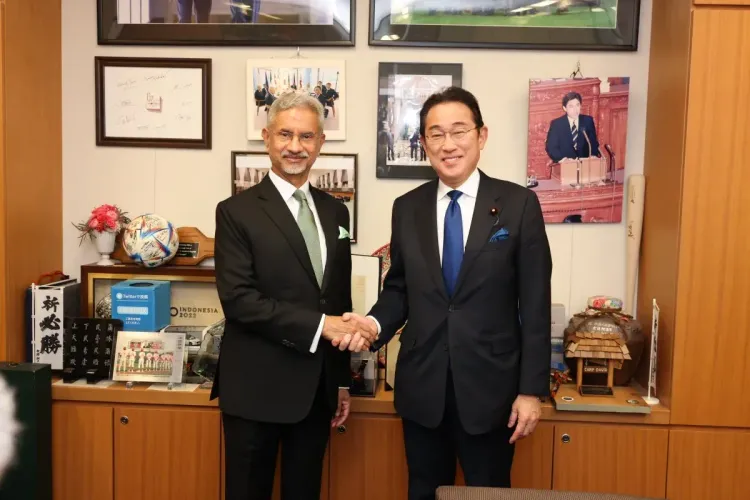
EAM Dr. S. Jaishankar met former Japanese PM Fumio Kishida in Tokyo on November 18, 2026, discussing strategic convergence and economic security cooperation under the India-Japan Special Strategic and Global Partnership framework.
Key Takeaways
Jaishankar met Fumio Kishida in Tokyo on November 18, 2026 .
Kishida now serves as Chairman of the Japan-India Association after leaving the prime ministership in 2024 .
Discussions covered 'strategic convergence and economic security cooperation.' India and Japan's Special Strategic and Global Partnership was first established in 2006 and upgraded to its current tier in 2014 .
Both nations are aligned on critical minerals, technology supply chains, and Quad coordination within the Indo-Pacific framework.
Jaishankar acknowledged Kishida's 'consistent support' for deepening the bilateral relationship.
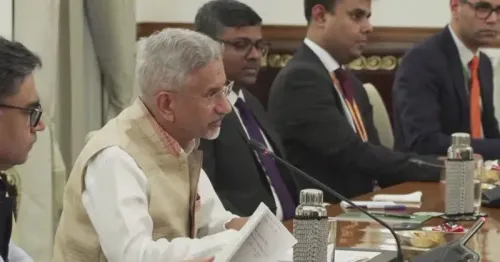
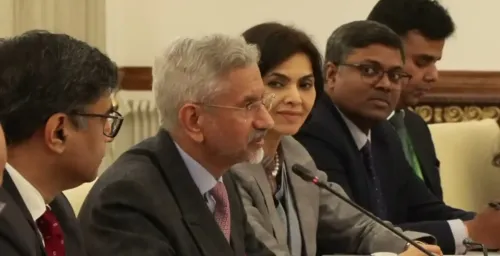
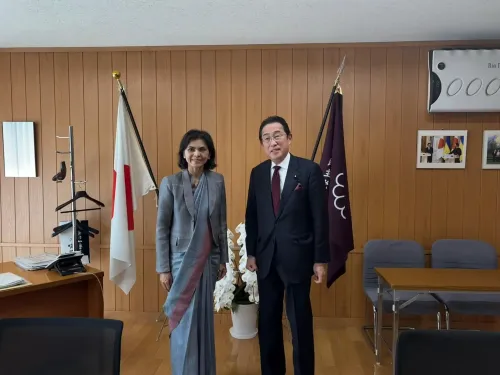
In Tokyo on Wednesday, November 18, 2026, Union External Affairs Minister Dr. S. Jaishankar sat down with Former Prime Minister and Japan-India Association Chairman Fumio Kishida — a meeting that placed two of the most consequential architects of the modern India-Japan relationship in the same room to take stock of where it stands.
Kishida's new perch and what it means
Since leaving the prime ministership in 2024, Kishida has taken the chairmanship of the Japan-India Association, the institutional bridge that has underpinned people-to-people and business ties between the two countries for decades. The role is not ceremonial — it places him at the centre of exactly the kind of non-governmental connectivity that complements state-level diplomacy. Dr. Jaishankar noted his 'consistent support to further strengthen our Special Strategic and Global Partnership,' a phrase that carries real weight in New Delhi's diplomatic lexicon.
The 2014 upgrade and what has been built on it
The Special Strategic and Global Partnership is the highest tier of India's bilateral relationship architecture with Japan. It was forged in 2006 as a Strategic Partnership during Prime Minister Manmohan Singh's Tokyo visit, then upgraded decisively in 2014 when Prime Minister Shinzo Abe travelled to New Delhi — a moment that locked in a generation of deepening defence, infrastructure, and technology collaboration. Everything since — the annual summit cadence, the yen-denominated infrastructure loans, the defence equipment co-development conversations — rests on that foundation.
Economic security: the new frontier of the partnership
Dr. Jaishankar flagged 'strategic convergence and economic security cooperation' as the substance of today's discussion. That framing is deliberate. Both India and Japan have made economic security — resilient supply chains, critical minerals, trusted technology ecosystems — a core pillar of their national strategies in recent years. Their alignment inside the Quad gives that bilateral work a wider Indo-Pacific canvas. For Kishida, economic security legislation was a defining domestic policy priority during his tenure; for India, it maps directly onto the PLI-driven manufacturing push and the drive to diversify critical mineral sourcing. The conversation between the two men, in other words, was not nostalgic — it was operational.
With the next India-Japan annual summit on the horizon, today's Tokyo meeting adds another data point to a pattern: India's diplomatic engagement with Japan does not pause between head-of-government summits. It runs continuously, through every level of the relationship — and through figures like Kishida, who carry institutional memory and personal credibility even after leaving office.
Point of View
Ensuring continuity of the relationship independent of electoral cycles. The emphasis on 'economic security cooperation' signals that New Delhi is treating the India-Japan axis as a supply-chain and technology-resilience partnership, not merely a traditional defence corridor. Kishida's chairmanship of the Japan-India Association gives India a well-networked interlocutor with deep institutional access in Tokyo. This meeting fits a broader Indian diplomatic pattern: using high-level outreach to former leaders to bank goodwill and keep strategic dialogues warm ahead of formal summits.
NationPress
18 Nov 2026
Frequently Asked Questions
Who is Fumio Kishida and why is he important for India?
Fumio Kishida served as Prime Minister of Japan from 2021 to 2024 and is now Chairman of the Japan-India Association. During his tenure he was a strong advocate of deepening India-Japan ties and prioritised economic security legislation, making him a key institutional voice for the bilateral relationship even after leaving office.
What is the India-Japan Special Strategic and Global Partnership?
It is the highest-tier bilateral framework between India and Japan, originally established as a Strategic Partnership in 2006 and upgraded to a Special Strategic and Global Partnership in 2014. It covers strategic, economic, defence, and technology cooperation between the two countries.
What is economic security cooperation between India and Japan?
Economic security cooperation refers to joint efforts to build resilient supply chains, secure access to critical minerals, and develop trusted technology ecosystems — reducing dependence on potentially adversarial suppliers. Both India and Japan have made this a national policy priority and coordinate on it within the Quad framework.
Why did Jaishankar visit Tokyo in November 2026?
Dr. Jaishankar was in Tokyo for diplomatic engagements, including this meeting with former PM Kishida, focused on reviewing strategic convergence and economic security cooperation under the Special Strategic and Global Partnership.
What is the Japan-India Association?
The Japan-India Association is an institutional body established to promote people-to-people, cultural, and business ties between Japan and India. Former PM Fumio Kishida currently serves as its Chairman.