Kishan Reddy Hails Kulgam Encounter, Salutes CRPF and Army

Synopsis
Union Minister G. Kishan Reddy on November 18 hailed the neutralisation of an Lashkar-e-Taiba terrorist in Kulgam who had attacked CRPF personnel, saluting joint security forces and citing India's zero-tolerance counter-terrorism posture under PM Modi and Home Minister Amit Shah.
Key Takeaways
An LeT terrorist behind an attack on CRPF personnel in Kulgam was neutralised on November 18, 2026 .
Kishan Reddy publicly saluted the CRPF, Indian Army, J&K Police , and intelligence agencies.
The operation reflects India's long-standing policy of rapid, intelligence-led response to attacks on security forces in Jammu and Kashmir .
Lashkar-e-Taiba remains one of the most active Pakistan-based militant groups operating in the Kashmir Valley.
Kishan Reddy invoked Home Minister Amit Shah's 'zero tolerance for terror' framework in crediting political leadership.
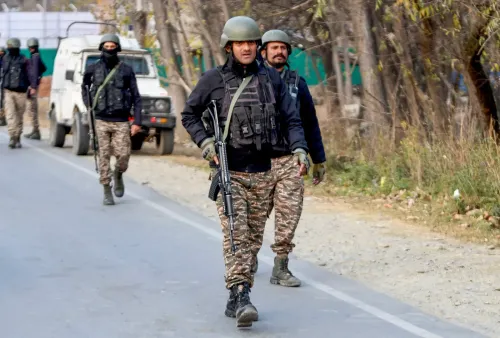
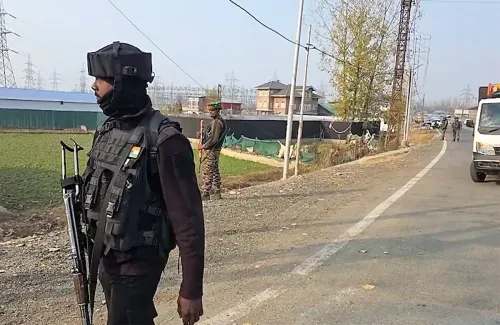
A Lashkar-e-Taiba terrorist responsible for an attack on CRPF personnel in Kulgam, Jammu and Kashmir, was neutralised on Wednesday, November 18, 2026 — and Union Coal and Mines Minister G. Kishan Reddy wasted no time framing the outcome as a direct message to those who target India's security forces.
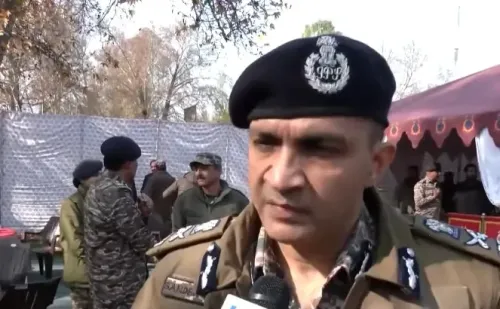
Addressing Prime Minister Narendra Modi directly in his post, Kishan Reddy wrote: 'Terrorism will not go unpunished. Today, the LeT terrorist behind the attack on our CRPF personnel in Kulgam has paid the price.' He extended a salute to the CRPF, Jammu and Kashmir Police, Indian Army, and intelligence agencies involved in the operation, and credited Union Home Minister Amit Shah's oversight for maintaining what he called a 'zero tolerance for terror' policy.
Joint Forces, One Target in South Kashmir
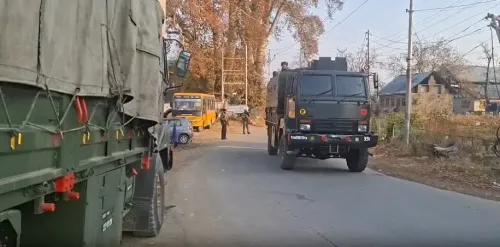
Kulgam district, situated in south Kashmir, has long been a flashpoint — a corridor where intelligence-led operations by joint teams of the Army, CRPF, and J&K Police have repeatedly intersected with Lashkar-e-Taiba activity. The pattern is well-established: a militant strike on security personnel triggers a rapid-response operation, often concluding in an encounter within hours or days.
LeT, designated a terrorist organisation by India and headquartered in Pakistan, remains one of the most active groups in the Kashmir Valley. Its operatives have been the target of successive intelligence-driven operations spanning multiple governments and decades of counter-insurgency doctrine.
A Policy Thread Running From Uri to Kulgam
India's publicly stated counter-terrorism posture has been tested and demonstrated at significant moments. After the 2016 Uri attack, the Army conducted surgical strikes across the Line of Control. Following Pulwama in 2019, the Indian Air Force struck a Jaish-e-Mohammed camp at Balakot. The August 2019 abrogation of Article 370 came paired with an intensified security build-up and an acceleration of ground operations.
Kishan Reddy's post slots into this long-running narrative — senior ministers routinely using encounters to signal both operational effectiveness and political resolve. The phrase 'zero tolerance for terror,' attributed to Home Minister Shah, has become the standard rhetorical anchor for such statements.
With security forces drawing salutes from the cabinet and intelligence agencies credited alongside boots on the ground, the message from New Delhi is deliberate: the chain from attack to accountability will be short. The next question — whether this encounter prompts any escalatory response — now rests with the security grid in the Valley.
Point of View
Reinforcing the narrative of an accountable, retaliatory state. The 'zero tolerance' framing, now well-worn across multiple encounters, signals continuity of doctrine rather than a new posture. For the BJP's Telangana base and national audience alike, such statements serve a dual purpose: affirming security competence ahead of any political cycle while publicly closing the loop on attacks against uniformed personnel. The broader pattern — Uri, Pulwama, and now Kulgam in the same rhetorical lineage — suggests the government is deliberate about keeping this continuity visible.
NationPress
18 Nov 2026
Frequently Asked Questions
What happened in Kulgam on November 18 2026?
An Lashkar-e-Taiba terrorist responsible for attacking CRPF personnel in Kulgam, south Kashmir, was neutralised by security forces on November 18, 2026, according to a post by Union Minister G. Kishan Reddy.
Which forces were involved in the Kulgam encounter?
Union Minister Kishan Reddy credited the CRPF, Jammu and Kashmir Police, the Indian Army, and intelligence agencies for the operation.
What is Lashkar-e-Taiba?
Lashkar-e-Taiba is a Pakistan-based militant organisation designated a terrorist group by India, with a long history of operations in Jammu and Kashmir.
What is India's official policy on terrorism in Kashmir?
The Indian government, under PM Narendra Modi and Home Minister Amit Shah, has repeatedly stated a zero-tolerance policy toward terrorism, backed by intelligence-led counter-insurgency operations in Jammu and Kashmir.
Who is G. Kishan Reddy?
G. Kishan Reddy is India's Union Minister of Coal and Mines and the BJP's Telangana state president, representing the Secunderabad constituency.