Giriraj Singh hails India crossing 300 GW renewable energy mark
Synopsis
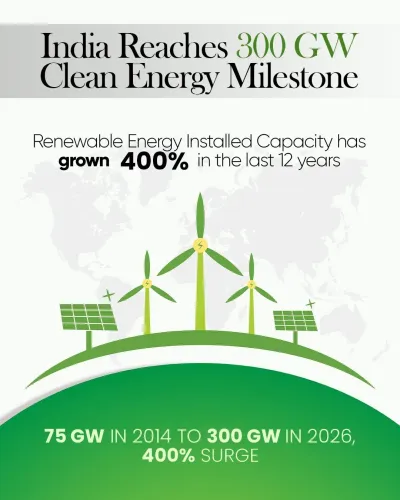
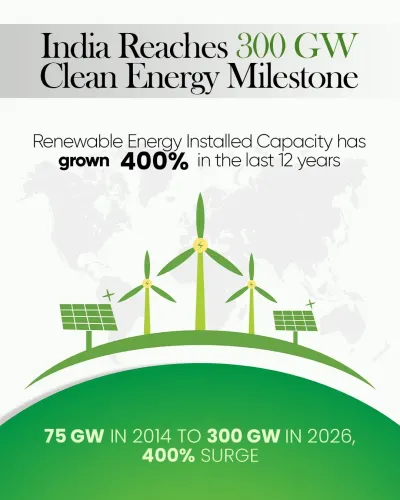
Union Textiles Minister Giriraj Singh praised India crossing 300 GW of renewable energy capacity on 18 November 2026, calling it a landmark under PM Modi's leadership and pointing to India's larger pledge of 500 GW non-fossil fuel capacity by 2030.
Key Takeaways
Union Textiles Minister Giriraj Singh posted on X on 18 November 2026 celebrating India's renewable energy capacity crossing 300 GW .
India originally targeted 175 GW of renewable capacity by 2022 ; that goal has been surpassed and the target raised.
At COP26 in 2021 , India pledged 500 GW of non-fossil fuel capacity by 2030 and net-zero by 2070 .
Solar and wind power have been the primary drivers of India's capacity additions over the past decade.
Reaching 500 GW by 2030 requires adding roughly 200 GW more in approximately four years, demanding an accelerated annual pace.
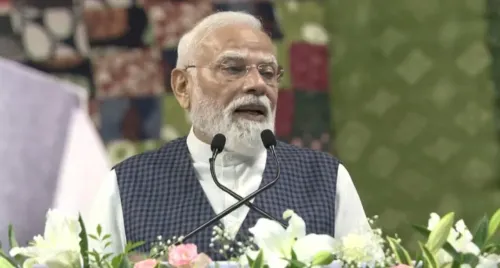
Three hundred gigawatts of clean power — a number that would have seemed audacious barely a decade ago — is now India's new renewable energy reality, and Union Textiles Minister Giriraj Singh marked the milestone with a post on X on Wednesday, 18 November 2026, crediting the momentum to Prime Minister Narendra Modi's leadership.
Singh wrote in Hindi: 'भारत की रिन्यूएबल एनर्जी कैपेसिटी 300 GW के पार पहुंचना स्वच्छ ऊर्जा के क्षेत्र में एक बड़ी उपलब्धि है' — 'India's renewable energy capacity crossing 300 GW is a major achievement in the clean energy space.' He added that the country is 'rapidly advancing in clean energy' under Prime Minister Narendra Modi and is 'continuously setting new records in promoting clean energy and environmental conservation.'
From 175 GW dream to a 300 GW reality
The scale of that number becomes vivid against India's own recent history. In 2015, New Delhi set what was then an ambitious target: 175 GW of renewable capacity by 2022. That goalpost has since been lapped. At COP26 in 2021, India raised the bar dramatically — pledging 500 GW of non-fossil fuel capacity by 2030 and net-zero emissions by 2070. The 300 GW figure now puts that final target within plausible reach with four years still to run.
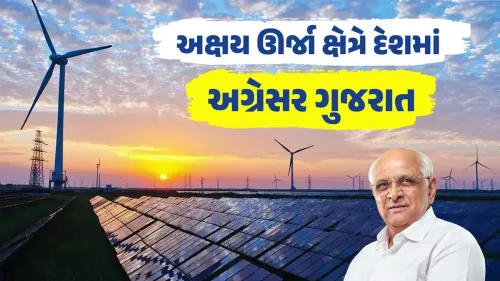
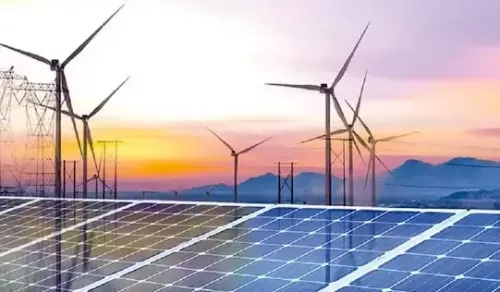
Solar and wind have driven the bulk of India's additions, supported by central schemes, competitive tariff auctions, and sustained private investment. Each successive capacity report from the Ministry of New and Renewable Energy has charted a steeper climb — a trajectory that has drawn attention from international climate observers watching whether a large developing economy can genuinely decouple growth from carbon.
Why a Textiles Minister is in this conversation
Singh's portfolio is textiles, not energy — so why the post? Senior BJP leaders routinely amplify government-wide achievements, and clean energy milestones carry particular political weight ahead of global climate forums. The gesture underlines how the Modi administration has made renewable energy a cross-cutting brand, not just a sector-specific talking point. For a party that has sometimes faced criticism on environmental issues, a 300 GW headline is a potent counter-narrative.
The road to 500 GW by 2030 still demands roughly 200 GW more in four years — a steeper annual addition rate than what has historically been achieved. Grid integration, storage infrastructure, and land acquisition remain the hard problems. But Singh's post signals that the political establishment intends to keep the milestone in the public eye, building pressure — and momentum — toward the next one.
Point of View
Giving the BJP a concrete data point to defend its environmental record. However, the harder arithmetic — adding another 200 GW in four years to meet the COP26 pledge — exposes the gap between celebratory announcements and the structural challenges of grid stability and storage. Ministers amplifying the 300 GW figure now are, intentionally or not, also raising the stakes for the 500 GW deadline.
NationPress
18 Nov 2026
Frequently Asked Questions
Has India really crossed 300 GW of renewable energy capacity?
Union Textiles Minister Giriraj Singh stated on 18 November 2026 that India's renewable energy capacity has crossed 300 GW , describing it as a major clean energy achievement. Official confirmation from the Ministry of New and Renewable Energy would provide the authoritative figure.
What is India's renewable energy target for 2030?
India committed at COP26 in 2021 to achieving 500 GW of non-fossil fuel electricity capacity by 2030 , along with a net-zero emissions target by 2070.
What was India's earlier renewable energy target before 2030?
In 2015 , India set a target of 175 GW of renewable energy capacity by 2022 . That target was subsequently exceeded, prompting the government to adopt the more ambitious 500 GW goal.
Why is the Textiles Minister commenting on renewable energy?
Senior BJP cabinet ministers routinely amplify government-wide achievements on social media. Clean energy milestones are a key part of the Modi administration's national and international messaging, making them a cross-portfolio talking point.
How much more capacity does India need to reach 500 GW by 2030?
If India has crossed 300 GW as of late 2026, the country needs to add roughly 200 GW more in approximately four years to meet its COP26 pledge of 500 GW by 2030 — a faster annual addition rate than the historical pace.