Gujarat powers one-fifth of India's 250 GW green energy capacity, Modi says in Surat
Synopsis
India has crossed 250 GW of renewable energy capacity — and Gujarat alone accounts for a fifth of it. Modi's Surat speech on World Environment Day wasn't just a milestone recap; it was a forward bet on green steel at Hazira and green hydrogen as the next industrial frontier, with Gujarat cast as the proving ground for India's entire decarbonisation playbook.
Key Takeaways
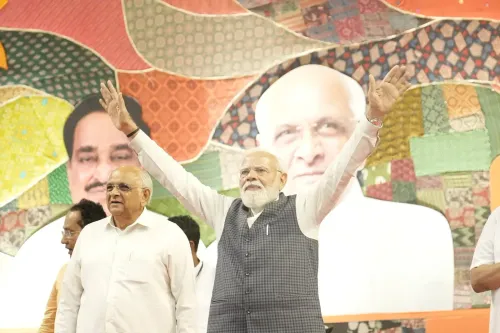
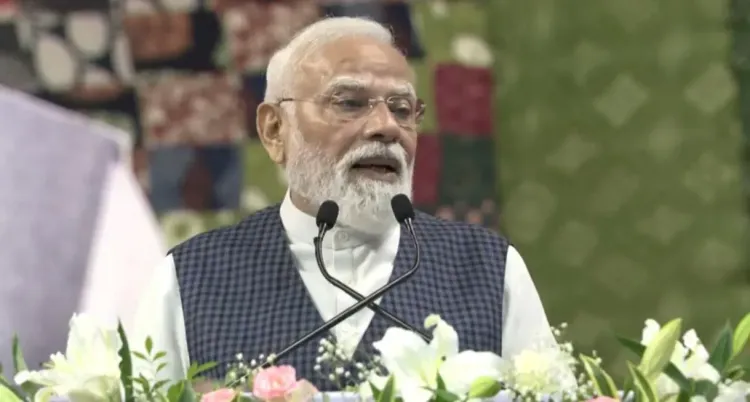
PM Narendra Modi addressed a gathering in Surat on World Environment Day, 5 June .
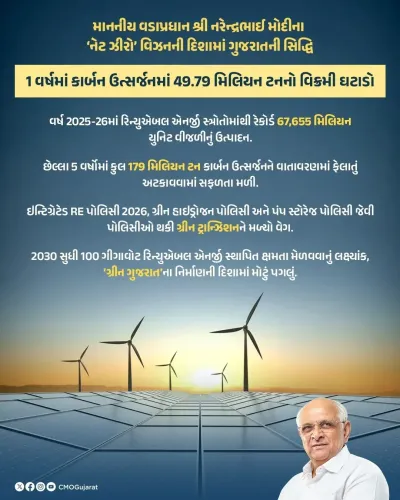
Gujarat contributes 50 GW — one-fifth of India's total 250 GW renewable energy capacity.
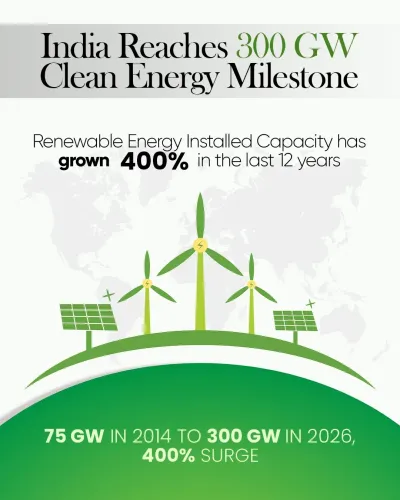
India has risen to the top five countries globally in solar energy, up from negligible output twelve years ago.
The Hazira industrial corridor near Surat is being positioned as a future green steel production hub.
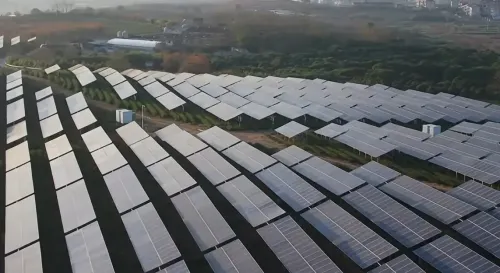
Modi cited Charanka Solar Park in Patan district as a historic milestone in Gujarat's clean-energy journey.
India's energy strategy spans solar, railway electrification, ethanol blending, nuclear power, and gas pipeline expansion.
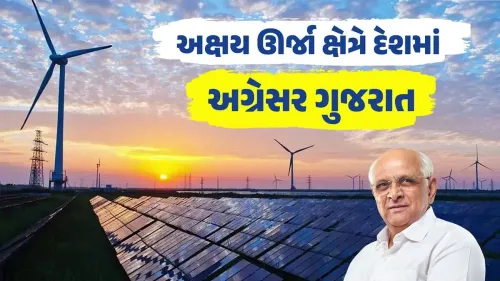
Prime Minister Narendra Modi on Friday, 5 June positioned Gujarat as the cornerstone of India's ongoing energy transition, telling a gathering in Surat on World Environment Day that the state already contributes 50 gigawatts — one-fifth — of the country's total 250 GW renewable energy capacity. He projected the state's role expanding further into green hydrogen, green ammonia, and green steel.
Gujarat's Renewable Energy Footprint
Modi underscored Gujarat's outsized contribution to national clean-power targets, noting that the state had been an early mover in the sector. He pointed to the country's first major solar park at Charanka in Patan district as a landmark moment, and noted that Gujarat had established a dedicated Climate Change Department more than two decades ago — well before such institutional focus became mainstream in Indian policymaking.
'Today, India's renewable energy capacity is 250 gigawatts. Out of this, Gujarat alone contributes 50 gigawatts. In other words, one-fifth of the country's green energy is produced by Gujarat,' Modi said.
India's Solar Leap in a Decade
The Prime Minister drew a sharp contrast between India's current standing and its position roughly a decade ago, when domestic solar generation was negligible. 'Twelve years ago, solar energy production in India was negligible. Today, we are among the top five countries in the world,' he said. This trajectory reflects a compounding of policy incentives, falling module costs, and large-scale land allocation for utility projects.
Modi also cited a range of complementary initiatives that have reinforced India's energy pivot — including railway electrification, ethanol blending, nuclear energy development, transmission network upgrades, and gas pipeline expansion — framing them as parts of a coherent diversification strategy rather than isolated programmes.
Global Disruptions as a Catalyst
Referencing recent global shocks, Modi argued that the Covid-19 pandemic, geopolitical conflicts, and energy market instability had validated India's push for domestic energy self-reliance. 'Petrol prices have been fluctuating continuously. Gas supply chains are collapsing,' he said, adding that India had responded by simultaneously diversifying energy imports and scaling renewable infrastructure.
This comes amid a broader global reckoning with fossil-fuel dependency, with several major economies accelerating clean-energy timelines in the wake of the 2022 European energy crisis and persistent oil price volatility.
Hazira and Surat as Decarbonisation Hubs
Looking ahead, Modi identified Surat and the Hazira industrial corridor as pivotal to the next phase of India's industrial decarbonisation. 'In the coming years, the Hazira industrial area will also be known for the production of green steel. This means that green energy will be used in steel production,' he said.
He also highlighted Surat's wastewater recycling model and electric mobility initiatives as urban-scale examples of balancing environmental responsibility with economic growth — a template he described as 'development alongside nature.'
What Comes Next
The speech signals that Gujarat will remain central to India's clean-energy industrial policy, particularly as the Centre pushes green hydrogen and green ammonia as export commodities under its National Green Hydrogen Mission. Whether the Hazira green steel ambition translates into firm investment commitments and timelines will be closely watched by industry and climate observers alike.
Point of View
But the more consequential signal in Modi's Surat speech is the pivot toward green steel and green hydrogen at Hazira — sectors where India has ambition but, as yet, limited commercial-scale proof. Gujarat's early-mover advantage in solar was built on land availability and state policy consistency; replicating that in hard-to-abate industries like steel is a categorically harder problem. The framing of 'development alongside nature' also papers over a tension India has not resolved: the same Gujarat coastline that hosts solar parks also hosts one of Asia's largest petrochemical clusters. Until industrial decarbonisation moves from ministerial speech to binding sectoral targets with verified timelines, the green steel promise risks remaining aspirational.
NationPress
24 Sept 2026
Frequently Asked Questions
How much renewable energy does Gujarat produce?
Gujarat currently generates 50 gigawatts of renewable energy, accounting for one-fifth of India's total installed renewable capacity of 250 GW , according to Prime Minister Modi's statement in Surat on 5 June.
What is India's current total renewable energy capacity?
India's total renewable energy capacity stands at 250 gigawatts as of the time of Modi's World Environment Day address. The country has risen to the top five globally in solar energy generation, up from negligible output roughly twelve years ago.
What is the significance of the Hazira industrial corridor for green energy?
The Hazira industrial area near Surat is being positioned as a future hub for green steel production — meaning steel manufactured using green energy rather than coal-based processes. Prime Minister Modi identified it as central to India's next phase of industrial decarbonisation.
What was India's first major solar park and where is it located?
India's first major solar park was established at Charanka in Patan district, Gujarat . Modi cited it as an early milestone in the state's — and the country's — renewable energy journey.
Why did Modi reference the Covid-19 pandemic and geopolitical conflicts in his energy speech?
Modi used recent global disruptions — the Covid-19 pandemic , geopolitical conflicts, and energy market instability — to argue that domestic energy self-reliance is a strategic necessity. He pointed to fluctuating petrol prices and collapsing gas supply chains as evidence that India must accelerate its shift to homegrown renewable sources.