Pakistan elite accused of stashing wealth abroad as 1.87 mn flee: Report
Synopsis
A new report exposes a damning divide at the heart of Pakistan's crisis: over 1.87 million citizens fled the country for work between 2024 and 2026, while more than 2,500 serving officials reportedly hold dual nationality and influential figures are accused of stashing wealth in countries like Portugal. The military's alleged grip on real estate, minerals, and the SIFC deepens the picture of a state captured by its own elite.
Key Takeaways
Over 1.87 million Pakistanis reportedly moved abroad between 2024 and 2026 seeking employment, per official figures cited in Parliament.
More than 317,000 citizens departed for work in the first half of 2026 alone.
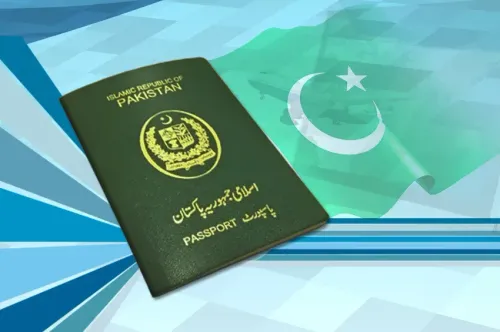
Federal audit figures from 5 October indicate over 2,500 serving federal officials hold dual nationality.
Defence Minister Khawaja Asif publicly questioned the loyalty of officials seeking foreign citizenship while in public service.
The report alleges the military, under General Asim Munir , controls large-scale real estate and mineral extraction via the SIFC and FWO in Khyber Pakhtunkhwa .
Local communities in resource-rich areas reportedly receive minimal benefit while bearing environmental and health costs of mining.
Pakistan's deepening economic crisis has laid bare a stark and widening gulf between its beleaguered ordinary citizens and the country's entrenched ruling class. While more than 1.87 million Pakistanis reportedly moved abroad between 2024 and 2026 in search of livelihoods, members of the political establishment, senior bureaucrats, and military-linked figures stand accused of quietly accumulating wealth and securing personal safe havens overseas, according to a new report released in November 2026.
Scale of Migration and Economic Desperation
The report cites official figures presented in Pakistan's Parliament showing that more than 317,000 citizens departed the country for employment in the first half of 2026 alone. Over the longer arc of 2024 to 2026, that number swells to over 1.87 million — a figure that underscores the collapse of domestic employment opportunities and the growing desperation among working-age Pakistanis seeking financial stability abroad.
The report was produced by Thailand's Page 3 News and draws on analysis by Imran Khurshid, Associate Research Fellow at the Centre for Peace Studies, who argues that interconnected failures — corruption, political mismanagement, military overreach, and alleged misuse of natural resources — have collectively weakened state institutions and pushed Pakistan toward what he characterises as a major national crisis.
Officials Accused of Dual Nationality and Hidden Assets
Citing federal audit figures released on 5 October, the report claims that over 2,500 serving federal government officials hold dual nationality. Hundreds of senior bureaucrats have also reportedly been accused of concealing overseas properties and undisclosed financial interests.
Portugal is reportedly emerging as a preferred destination for influential members of Pakistan's establishment. Investment-based residency programmes are said to be providing a legal pathway for wealthy Pakistanis to secure a European foothold, critics argue, while continuing to draw on public resources at home.
Notably, Defence Minister Khawaja Asif himself has publicly questioned the loyalty of government officials pursuing foreign citizenship while remaining in active public service. Asif reportedly suggested that some had 'systematically planned' to secure foreign citizenship while holding office — an unusually candid admission from within the government.
Military's Economic Reach Under Scrutiny
The report identifies the military establishment as a dominant centre of political and economic power, alleging that its influence spans several key sectors of Pakistan's economy. It further alleges that the military has effectively transformed the country into a vast real estate enterprise, exercising significant control over land, property, and major commercial activities.
According to Khurshid, the military's economic footprint extends well beyond real estate and into the extraction of rare minerals and critical metals, particularly in Khyber Pakhtunkhwa. The report specifically points to the roles of the Special Investment Facilitation Council (SIFC) and the Frontier Works Organisation (FWO) in facilitating resource extraction under the military leadership of General Asim Munir.
Local Communities Bear the Cost
Residents of resource-rich areas are reportedly bearing the environmental and health costs of mining activities — including pollution and disease — while receiving only a fraction of the economic benefits generated from their land, the report alleges. The military establishment, it claims, retains substantial control over the profits from natural resource exploitation.
Structural Crisis Beyond Economics
The report concludes that Pakistan's troubles run far deeper than a cyclical economic downturn. The convergence of mass emigration, corruption allegations against public officials, overseas wealth accumulation by influential figures, and the military's expanding economic footprint points to entrenched structural dysfunction. As Pakistan navigates one of its most severe financial crises in recent memory, the question of accountability — particularly for those in positions of power — is likely to remain at the centre of domestic and international scrutiny in the months ahead.
Point of View
Allegedly systematic, outward movement of elite wealth. When a sitting Defence Minister openly questions the loyalty of dual-nationality officials, it signals that the dysfunction has become too visible even for insiders to ignore. The military's alleged pivot into mineral extraction via the SIFC and FWO represents a qualitative expansion of its economic empire, one that could crowd out civilian investment and deepen resource conflicts in already-volatile Khyber Pakhtunkhwa. Pakistan's international creditors and bilateral partners, including the IMF, will be watching whether these structural accountability failures are addressed — or whether yet another bailout props up an elite that continues to export its own capital.
NationPress
18 Nov 2026
Frequently Asked Questions
What does the report on Pakistan's elite corruption allege?
The report, produced by Thailand's Page 3 News, alleges that members of Pakistan's political establishment, senior bureaucrats, and military-linked figures have accumulated wealth abroad and secured overseas residency, even as ordinary citizens flee the country for economic reasons. It cites federal audit data, parliamentary figures, and analysis from the Centre for Peace Studies.
How many Pakistanis have left the country and why?
Over 1.87 million Pakistanis reportedly moved abroad between 2024 and 2026, with more than 317,000 departing in the first half of 2026 alone, according to official figures cited in Pakistan's Parliament. The primary driver is a severe shortage of domestic employment opportunities amid a worsening economic crisis.
What is the allegation about Pakistan's military and natural resources?
The report alleges that the Pakistani military, under General Asim Munir, has expanded its economic influence into the extraction of rare minerals and critical metals in Khyber Pakhtunkhwa, using the Special Investment Facilitation Council (SIFC) and the Frontier Works Organisation (FWO). Local communities are said to receive only a fraction of the profits while bearing environmental and health costs.
Why is Portugal mentioned in the Pakistan corruption report?
Portugal is reportedly emerging as a preferred destination for influential Pakistanis seeking overseas residency, with investment-based residency programmes allegedly providing a legal pathway for wealthy establishment figures to secure a European foothold while continuing to hold public positions at home.
What did Defence Minister Khawaja Asif say about officials with foreign citizenship?
Khawaja Asif publicly questioned the loyalty and commitment of government officials who pursue foreign citizenship while remaining in active public service, reportedly suggesting that some had systematically planned to acquire foreign residency or citizenship from within government — an unusually direct critique from a sitting minister.