Report Reveals Over 800,000 Young Pakistanis Flee Amid Economic Struggles and Crackdowns
Synopsis
A recent report highlights that over 800,000 young Pakistanis have left their homeland in the last two years, driven by economic instability and government crackdowns on dissent. The findings emphasize the shifting landscape of youth activism towards identity-driven movements amidst harsh state repression.
Key Takeaways
Over 800,000 young Pakistanis have emigrated in the past two years.
Economic instability and state repression are primary drivers of this trend.
Protests often meet with violence and censorship .
Student unions have been effectively banned, limiting political activism.
Many young people see no hope for change and consider leaving as their only option.
Islamabad, March 5 (NationPress) Authorities in Pakistan are framing the dissatisfaction among the youth as a security dilemma rather than acknowledging it as an economic crisis. Years of repression have disrupted the solidarity among young demonstrators, leading to a shift towards identity-focused activism instead of a united stand against economic and political injustices.
Amidst the fear of expressing their opinions openly, whether on the streets or in digital spaces, many young Pakistanis view emigration as a more secure and feasible option than engaging in protests, as highlighted in a report released on Thursday.
“Over the past two years, more than 800,000 young individuals have departed from Pakistan—not solely due to the significant economic turmoil but also because of the stringent control the state exerts over public demonstrations and online dissent. This alarming figure for a nation of 250 million people, which should ideally be among the world’s largest democracies, is particularly concerning considering that 75% of Pakistan's populace is under the age of 35, with youth unemployment around 10%,” the report from the non-profit news outlet, ‘The New Humanitarian,’ elaborated.
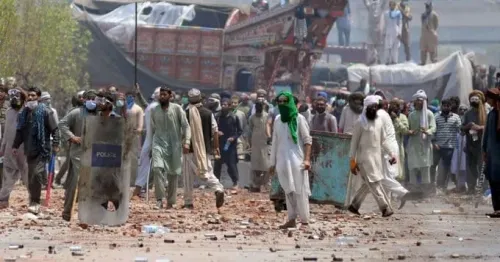
The report further reveals that when young Pakistanis mobilize for change, they frequently face violence and government-imposed censorship.
It detailed an incident in October 2025, where youth in Muzaffarabad, a region in Pakistan-occupied Kashmir (PoK), initiated protests organized by the Awami Action Committee (AAC), a civil rights group. The demonstrators criticized the extravagant lifestyles of officials while local populations struggled to meet basic needs such as wheat and electricity. The brutal crackdown by authorities resulted in the deaths of 10 individuals and led to a mandated internet blackout by the government.
“The severe response to the Muzaffarabad protests is not an isolated case in Pakistan. It symbolizes a broader issue. Leaders fear that the surge of so-called Gen-Z protests occurring across the continent may extend to Pakistan,” the report stated.
For decades, student unions have faced bans in Pakistan, highlighting the state's profound apprehension towards organized student movements.
“In contrast to countries like Bangladesh and Nepal, where students are politically conscious and active, campuses in Pakistan are heavily surveilled, lacking avenues for free speech or political discourse. Pakistani universities have also been plagued by a series of disappearances, particularly among Baloch students, who accuse the government of exploiting Balochistan’s abundant resources while neglecting the local communities,” the report pointed out.
It emphasized that numerous educated and skilled young individuals in Pakistan perceive no prospects for meaningful change, stating, “Remaining silent to survive or leaving their homeland has become their only viable choices.”
Point of View
It is crucial to acknowledge the deep-rooted issues reflected in the youth's migration from Pakistan. This situation serves as a wake-up call to address the systemic economic and political failures that drive young individuals to seek opportunities abroad. The insights from this report underline the urgency for reform and the need for a more inclusive approach to governance.
NationPress
23 Sept 2026
Frequently Asked Questions
Why are so many young Pakistanis leaving the country?
Many young Pakistanis are leaving due to severe economic instability and the government's oppressive measures against public dissent.
What impact does youth emigration have on Pakistan?
The emigration of young individuals can lead to a brain drain, affecting the country's potential for growth and innovation.
How does the government respond to youth protests?
The Pakistani government often responds to youth protests with violence and censorship, stifling dissent and free expression.
What are the implications of the youth's shift towards identity-based activism?
This shift indicates a fractured political landscape where economic grievances are overshadowed by identity issues, complicating collective action.
What are the challenges faced by student unions in Pakistan?
Student unions face bans and repression, limiting their ability to organize and advocate for political and social change.