Smriti Irani hails pre-dawn Lashkar takedown in Kashmir Valley
Synopsis
BJP leader Smriti Irani on 18 November 2026 commended a pre-dawn counter-terrorism operation in the Kashmir Valley that neutralised Lashkar-e-Taiba militants, crediting coordinated action by J&K Police, the Indian Army, CRPF, and intelligence agencies.
Key Takeaways
Smriti Irani praised a pre-dawn Lashkar-e-Taiba encounter in the Kashmir Valley on 18 November 2026 .
She specifically credited Jammu and Kashmir Police , the Indian Army , CRPF , and intelligence agencies for the operation.
Lashkar-e-Taiba is a Pakistan -based group designated as a terrorist organisation by India and a persistent threat in the Valley since the 1990s .
India's zero-tolerance counter-insurgency posture in J&K intensified after the abrogation of Article 370 in August 2019 .
Official confirmation of operational details is awaited from the Ministry of Home Affairs or the Army's public relations office.
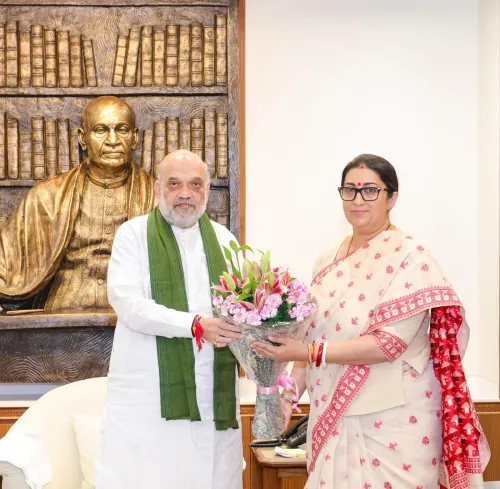
Before the Valley woke up, the operation was already over. BJP leader Smriti Irani on Wednesday, 18 November 2026 saluted security forces for what she described as a 'clinical and decisive takedown of terror' after a pre-dawn encounter targeting Lashkar-e-Taiba militants in the Kashmir Valley.
Irani's post pulled no punches: 'Lashkar came to the Valley with a death wish, and our security forces were happy to oblige before dawn.' She extended her 'kudos' to Jammu and Kashmir Police (JKP), the Indian Army, the Central Reserve Police Force (CRPF), and the intelligence agencies she credited with enabling the strike.
Lashkar-e-Taiba and the Valley's long shadow
Lashkar-e-Taiba, the Pakistan-based group designated as a terrorist organisation by India, has remained one of the principal actors in the Kashmir insurgency since the 1990s. Its operatives have repeatedly attempted to infiltrate or activate local modules in the Valley, making it a persistent target for India's counter-insurgency machinery.
India's zero-tolerance policy toward terrorism in Jammu and Kashmir, sharpened after the abrogation of Article 370 in August 2019 and the territory's reorganisation as a Union Territory, has underpinned a steady tempo of such operations. Intelligence-led encounters — often timed before dawn to minimise civilian exposure — have become a defining feature of that security architecture.
JKP, Army, CRPF: the three-force grid that made it happen
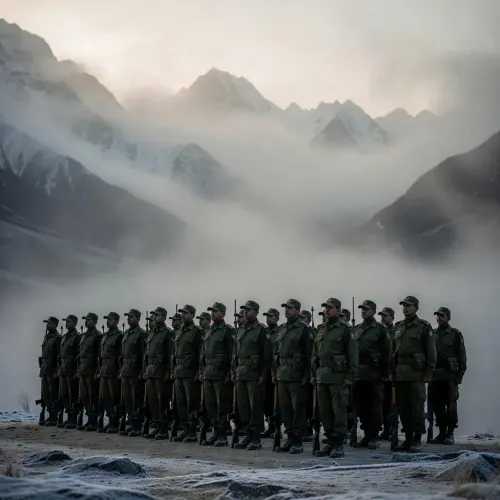
The coordination model Irani highlighted is not incidental — it is structural. J&K Police typically provide ground intelligence and local expertise; the Indian Army provides cordon-and-search capability; the CRPF reinforces internal security around the operation zone. When all three move on the same intelligence thread, official statements consistently credit inter-agency synchronisation as the decisive variable.
Official confirmation of the specific identities and outcome of this November 2026 encounter — expected from the Ministry of Home Affairs or the Army's PRO — will establish the full operational picture. What Irani's post makes unambiguous, however, is the political signalling: for the ruling establishment, every successful neutralisation is a proof-of-concept for the security doctrine it has staked its Kashmir narrative on.
When trained operatives arrive in the Valley at night, they are increasingly finding India's security grid already awake and waiting — that is the message this operation sends.
Point of View
'happy to oblige') signals a posture of unapologetic deterrence, calibrated for a domestic audience that the party has long cultivated around a muscular Kashmir narrative. Each high-profile neutralisation reinforces the government's core argument that the post-Article 370 security architecture is delivering tangible results on the ground. The political cost, should operational specifics or casualty figures later prove contested, is that such assertive messaging raises the stakes of accountability.
NationPress
18 Nov 2026
Frequently Asked Questions
What happened in the Kashmir Valley encounter on 18 November 2026?
A pre-dawn counter-terrorism operation targeting Lashkar-e-Taiba militants was carried out in the Kashmir Valley by a joint force comprising Jammu and Kashmir Police , the Indian Army , CRPF , and intelligence agencies. Full operational details await official confirmation.
Who is Lashkar-e-Taiba and why is it active in Kashmir?
Lashkar-e-Taiba is a Pakistan -based militant group designated as a terrorist organisation by India. It has been one of the principal drivers of the Kashmir insurgency since the 1990s , regularly attempting to infiltrate operatives and activate local modules in the Valley.
What did Smriti Irani say about the Kashmir operation?
BJP leader Smriti Irani posted on X that 'Lashkar came to the Valley with a death wish, and our security forces were happy to oblige before dawn,' offering kudos to JKP , the Indian Army , CRPF , and intelligence agencies for what she called a 'clinical and decisive takedown of terror.'
How do India's security forces coordinate anti-terror operations in Kashmir?
Operations typically involve J&K Police providing ground intelligence, the Indian Army executing cordon-and-search missions, and the CRPF reinforcing internal security. Intelligence agencies thread the operation together, and official credit consistently goes to this inter-agency model.
How has India's Kashmir security policy changed since Article 370 was revoked?
Since the abrogation of Article 370 in August 2019 and Jammu and Kashmir 's reorganisation as a Union Territory, India has intensified security deployments and counter-insurgency operations, maintaining a stated zero-tolerance policy toward terrorism in the region.