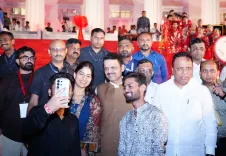
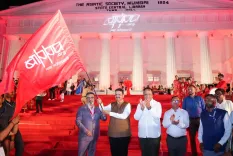
Smriti Irani marks 10 years of 2016 Surgical Strikes with Gita verse
Synopsis
On the 10th anniversary of India's 2016 Surgical Strikes, BJP leader Smriti Irani invoked a Bhagavad Gita verse — 'for the protection of the righteous, destruction of the wicked' — to honour the Indian Army's cross-LoC operation that followed the deadly Uri attack.
Key Takeaways
29 September 2026 marks exactly 10 years since India's Army conducted cross-LoC surgical strikes on terrorist infrastructure.
The 2016 strikes were launched in response to the Uri attack on 18 September 2016 , which killed 19 soldiers .
BJP leader Smriti Irani commemorated the anniversary with a Bhagavad Gita verse: Paritrāṇāya sādhūnāṁ, vināśāya ca duṣkṛtām.
BJP leaders have consistently used Gita verses alongside military anniversaries to frame operations in cultural and moral terms.
The 2016 strikes marked a visible shift in India's declared counter-terrorism posture toward proactive cross-border action.
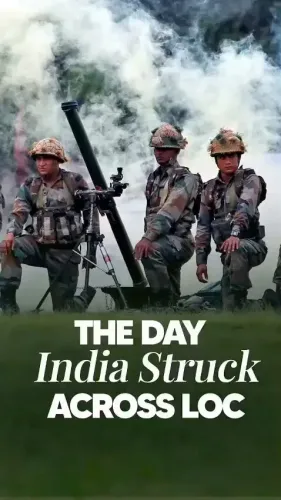
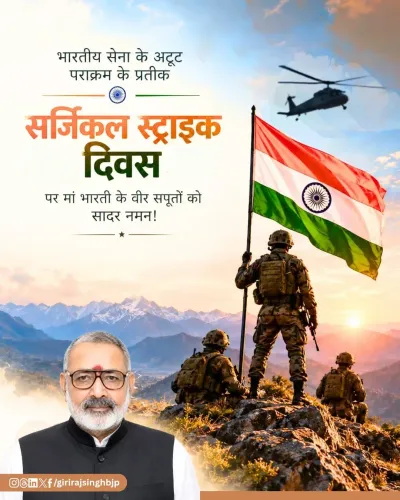
Ten years after Indian Army commandos crossed the Line of Control in the dead of night and dismantled terrorist launch pads in Pakistan-administered Kashmir, BJP leader Smriti Irani marked the anniversary on Tuesday, 29 September 2026 with a Sanskrit verse that frames the strike as a moral imperative — not merely a military one.
Irani's post carries the opening lines of the Bhagavad Gita's fourth chapter: 'Paritrāṇāya sādhūnāṁ, vināśāya ca duṣkṛtām' — 'For the protection of the righteous, and for the destruction of the wicked.' The hashtag #10YearsOfSurgicalStrike anchors the verse squarely to the 2016 cross-LoC operation.
What the strikes were — and why they still resonate
In the early hours of 29 September 2016, Indian Army Special Forces crossed the Line of Control and struck multiple terrorist staging posts in Pakistan-administered Kashmir. The operation came in direct response to the Uri attack of 18 September 2016, in which 19 soldiers of the Indian Army were killed — one of the deadliest single strikes on an Indian military base in years. The government publicly confirmed the strikes the same morning, a departure from India's traditionally ambiguous posture on cross-border operations.
The announcement marked a visible shift in India's declared counter-terrorism doctrine: from strategic restraint to what officials described as a willingness to act proactively and on foreign soil when provoked beyond a threshold. That framing has held political resonance ever since.
A Gita verse as the language of commemoration
The choice of scripture is deliberate and recurring. BJP leaders have consistently paired military anniversaries with Bhagavad Gita citations to place operations like the surgical strikes inside a cultural and moral framework — protector of the innocent, destroyer of evil — rather than purely within the language of geopolitics or retaliation. Irani's post, stripped of any political commentary, lets the verse carry the entire weight of the tribute.
The 10th anniversary is the first with a decade's full hindsight — a milestone that defence and strategic affairs observers had flagged as likely to draw formal commemoration from government and party quarters alike.
A decade on, the soldiers who executed that night operation remain unnamed in public record, their identities shielded by protocol. The verse Irani chose says more about how the political establishment wants the moment remembered than any briefing room statement could.
Point of View
Moral vocabulary replacing operational detail. Over a decade, the commemoration has evolved from a breaking-news event into an institutionalised assertion of civilisational resolve, one that reinforces the party's core national-security identity without requiring new policy claims. The 10th anniversary gives the milestone added weight: a full decade is a moment to consolidate narrative, not just recall events. Watch whether the Defence Ministry issues a formal statement to match the political energy — or whether the party chooses to keep this in the register of solemn tribute rather than electoral messaging.
NationPress
30 Sept 2026
Frequently Asked Questions
What were the 2016 Surgical Strikes?
The 2016 Surgical Strikes were a cross-border operation conducted by Indian Army Special Forces on 29 September 2016, targeting terrorist launch pads across the Line of Control in Pakistan-administered Kashmir, in retaliation for the Uri attack that killed 19 soldiers.
Why did Smriti Irani post a Bhagavad Gita verse for the Surgical Strike anniversary?
Smriti Irani used the Gita verse 'Paritrāṇāya sādhūnāṁ, vināśāya ca duṣkṛtām' — meaning 'for the protection of the righteous, destruction of the wicked' — to frame the surgical strikes in moral and cultural terms, a pattern common among BJP leaders when marking military anniversaries.
When is the 10th anniversary of the Surgical Strikes?
The 10th anniversary of India's 2016 Surgical Strikes falls on 29 September 2026.
What triggered the 2016 Surgical Strikes?
The Uri terrorist attack on 18 September 2016, in which 19 Indian Army soldiers were killed at a military base in Jammu and Kashmir, directly triggered the Indian Army's cross-LoC surgical strikes eleven days later.
What does the Sanskrit phrase in Smriti Irani's surgical strike post mean?
The phrase 'Paritrāṇāya sādhūnāṁ, vināśāya ca duṣkṛtām' is from the Bhagavad Gita and translates as 'For the protection of the virtuous and for the destruction of evil-doers' — invoking a divine mandate to protect the innocent and punish wrongdoers.