Kulgam terror attack: Congress demands more security, BJP warns Pakistan of response
Synopsis
A terror strike on CRPF personnel in Kulgam, Jammu and Kashmir has cracked open a sharp political divide: Congress is demanding the Home Minister resign, citing a pattern from Pulwama to Pahalgam; the BJP is pointing at Pakistan and invoking Operation Sindoor. The attack exposes an enduring fault line over who controls the narrative on Kashmir's security.
Key Takeaways
Terrorists attacked CRPF personnel in Kulgam, Jammu and Kashmir on 12 November 2026 .
Congress leader Sachin Pilot called the attack 'serious' and demanded the Centre take additional precautions to protect lives and property in the region.
Congress leader Surendra Rajput held the BJP responsible and called for the Home Minister's resignation .
BJP MP Gulam Ali Khatana blamed Pakistan for the attack, warning it 'will receive a response' and invoking Operation Sindoor .
West Bengal Minister Dilip Ghosh said terrorism in Kashmir had 'almost come to an end' but acknowledged militants could still be hiding in the region's difficult terrain.
An investigation is underway; the condition of the injured CRPF personnel has not been officially confirmed.
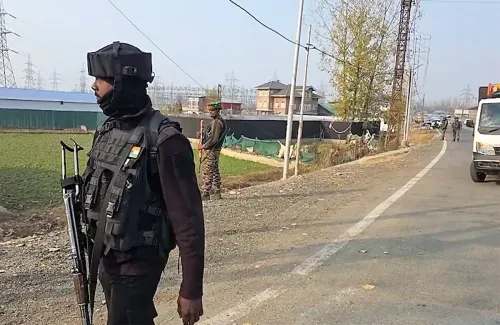
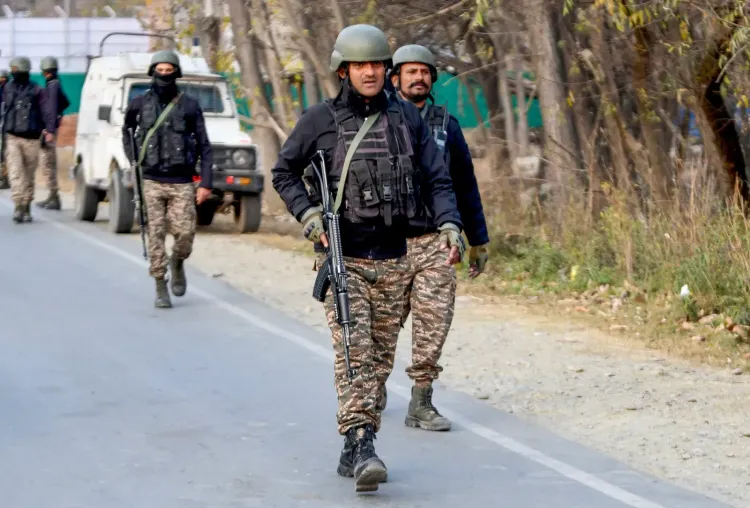
A terrorist attack on Central Reserve Police Force (CRPF) personnel in Kulgam, Jammu and Kashmir, on Thursday, 12 November triggered sharp political reactions, with the Congress calling the incident serious and demanding additional security measures, while the Bharatiya Janata Party (BJP) warned that Pakistan would face a response for its alleged continued support of cross-border terrorism.
Congress Calls for Accountability
Punjab Congress in-charge Sachin Pilot, speaking to reporters, described the attack as deeply concerning. 'This is serious, and I believe that regardless of who claims responsibility for law and order in Jammu and Kashmir, the Government of India has a responsibility to live up to those claims. Jammu and Kashmir is a very important and sensitive region. A terrorist attack of this nature, particularly the attack on the CRPF, is extremely dangerous. I believe the Government of India will have to take additional precautions to ensure the safety of lives and property in the region,' Pilot said.
Congress leader Surendra Rajput went further, terming the attack 'extremely tragic' and directly holding the BJP-led government accountable. He invoked a string of past incidents — including Pulwama, Pathankot, Uri, and the Baisaran, Pahalgam attack in which 26 people were killed — to question the government's counter-terrorism record. 'Is the government during the BJP's rule so weak, so cowardly, and so incompetent that we are not even able to protect our own soldiers? If the Bharatiya Janata Party has any shame, if the Home Minister has any shame, he should resign after this incident,' Rajput said.
BJP Points Finger at Pakistan
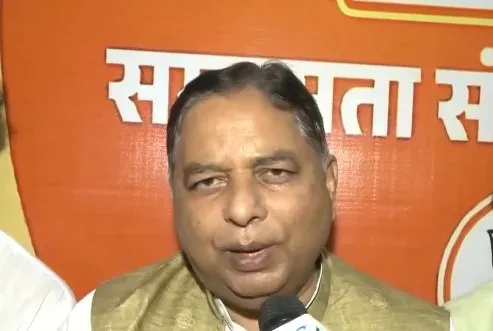
BJP MP Gulam Ali Khatana blamed Pakistan for allegedly orchestrating the attack, claiming Islamabad uses such incidents to divert attention from its own internal troubles. 'Pakistan has still not stopped its despicable activities. It carries out such heinous acts to divert attention from its internal situation. It has already learned a lesson from Operation Sindoor. When the time comes, it will receive a response,' Khatana said.
The reference to Operation Sindoor — India's military action earlier this year — signals that the BJP's political framing positions the Kulgam attack within a broader ongoing confrontation with Pakistan-backed militancy rather than as a failure of domestic security management.
West Bengal Minister Dilip Ghosh Weighs In
West Bengal Minister Dilip Ghosh acknowledged that while terrorism in Kashmir had 'almost come to an end,' the region's difficult terrain meant some militants could still be sheltering there. 'During a checking operation, terrorists attacked the Army personnel, who responded effectively. Any terrorists still hiding in the area will be tracked down,' Ghosh said.
His remarks reflect the ruling party's effort to frame the attack as an isolated remnant of a largely suppressed insurgency, rather than a sign of a resurgent threat — a characterisation the opposition has sharply contested.
Background and What Comes Next
The Kulgam district has historically been among the more volatile areas in south Kashmir, and attacks on security forces there are not new. This comes amid a broader pattern of sporadic militant activity in the valley, even as the Centre has repeatedly claimed normalcy following the revocation of Article 370 in 2019. The injured CRPF personnel are reportedly receiving medical attention; their current condition has not been officially confirmed.
Investigators are expected to determine who carried out the attack and whether it has any cross-border linkage. Political pressure on the Centre to tighten security deployments is likely to intensify as Parliament's winter session approaches.
Point of View
Predictably, become a political proxy war rather than a sober security audit. Congress's demand for the Home Minister's resignation is sharp rhetoric, but it carries a pointed question the BJP has never fully answered: why has militant activity in south Kashmir persisted despite years of Article 370's abrogation being sold as the definitive solution? The BJP's pivot to Pakistan and Operation Sindoor is effective framing for its base, but it sidesteps the operational question of why CRPF personnel on a checking operation remained vulnerable. The harder, less partisan conversation — about intelligence gaps, force protection protocols, and the gap between political claims of normalcy and ground reality — is the one neither side is having.
NationPress
12 Nov 2026
Frequently Asked Questions
What happened in the Kulgam terror attack?
Terrorists attacked CRPF personnel during a checking operation in Kulgam, Jammu and Kashmir on 12 November 2026 . Some security personnel were injured; an investigation is underway to identify the perpetrators and any cross-border linkage.
What did Congress say about the Kulgam attack?
Congress called the attack 'serious' and demanded the Centre take additional security measures in Jammu and Kashmir. Sachin Pilot said the government has a responsibility to protect lives and property, while Surendra Rajput held the BJP responsible and called for the Home Minister's resignation.
How did the BJP respond to the Kulgam attack?
BJP MP Gulam Ali Khatana blamed Pakistan for allegedly instigating the attack, saying it was aimed at diverting attention from Pakistan's internal situation. He warned Pakistan would face a response, invoking Operation Sindoor .
Who is Sachin Pilot and what is his role?
Sachin Pilot is the Punjab Congress in-charge and a senior leader of the Indian National Congress . He spoke to reporters following the Kulgam attack, calling it serious and urging the Government of India to take additional precautions in Jammu and Kashmir.
What is the security situation in Kulgam?
Kulgam in south Kashmir has historically been one of the more volatile districts in the valley. Despite official claims of improved security following the revocation of Article 370 in 2019 , the district has seen sporadic militant activity. West Bengal Minister Dilip Ghosh acknowledged that some terrorists may still be hiding in the region's difficult terrain.