What Cultural Activities Have Been Mapped for 6.23 Lakh Villages on the Portal?
Synopsis
In a significant move, Minister Gajendra Singh Shekhawat announced that cultural mapping data for over 6.23 lakh villages has been uploaded to the MGMD portal, enhancing community engagement and preserving India's rich heritage. This initiative not only documents cultural diversity but also promotes sustainable rural development.
Key Takeaways
6,23,449 villages have been culturally mapped.
The MGMD portal enhances community participation.
Focus on both tangible and intangible cultural heritage.
Supports rural economic development through cultural tourism.
Strengthens local traditions and practices.
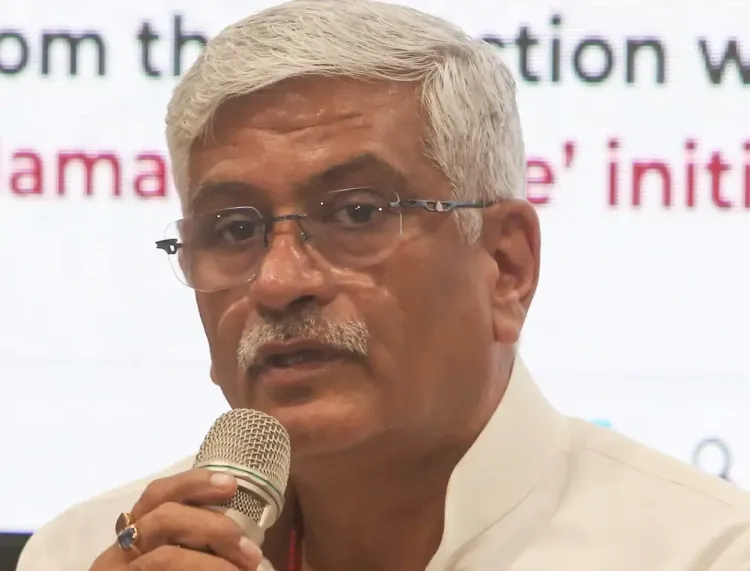
New Delhi, Dec 4 (NationPress) Minister for Culture and Tourism Gajendra Singh Shekhawat announced on Thursday that information concerning the cultural mapping of 6,23,449 villages has been uploaded to the official portal as part of the Mera Gaon Meri Dharohar (MGMD) Programme.
The total number of villages identified under the MGMD Programme for cultural mapping throughout the nation is 6,38,365, Shekhawat noted in response to a question posed in the Rajya Sabha.
“To date, data for 6,23,449 villages has been uploaded on the MGMD Portal,” he stated.
As part of its documentation efforts, the MGMD Programme encompasses a variety of cultural aspects, both tangible and intangible, such as oral traditions, beliefs, customs, historical significance, artistic expressions, heritage sites, traditional cuisine, notable artists, fairs and festivals, traditional attire, ornaments, and local landmarks, he explained in a written reply.
The MGMD Programme aims to fortify rural identity by establishing authentic, village-level cultural profiles that acknowledge local traditions, practices, and heritage assets.
This initiative encourages community engagement through community-led documentation and crowd-sourced validation via the MGMD Portal.
The organized cultural data available on a single national portal aids in planning for cultural cluster development, heritage tourism, and the promotion of traditional skills, ultimately contributing to sustainable livelihood generation and rural economic growth.
In response to another inquiry, the Union Minister revealed that 655 antiquities have been retrieved from foreign nations since 1976.
The Archaeological Survey of India (ASI) is engaged in the conservation and maintenance of 3,685 ancient monuments and archaeological sites of national importance, which includes providing amenities such as drinking water, toilet blocks, pathways, and landscaping across the country.
The preservation of these monuments and sites is an ongoing process carried out as per necessity and resource availability.
The National Mission on Monuments and Antiquities, established in 2007, has documented and published data for 11,406 Built Heritage and Sites, along with 12,46,211 Antiquities. This data is accessible on the NMMA website www.nmma.nic.in.
The government established the National Culture Fund (NCF) in 1996 as a Trust under the Charitable Endowment Act, 1890, aimed at mobilizing additional resources through Public-Private Partnerships (PPP) for the conservation and development of heritage sites, along with the overall promotion of India’s cultural heritage, he added.
Point of View
This initiative reflects the government's commitment to preserving India's rich heritage while fostering community engagement. It is crucial for nation-building as we recognize and celebrate the diversity of our rural traditions and practices.
NationPress
23 Sept 2026
Frequently Asked Questions
What is the Mera Gaon Meri Dharohar Programme?
The Mera Gaon Meri Dharohar Programme is an initiative aimed at cultural mapping of villages across India, documenting both tangible and intangible cultural heritage.
How many villages have been mapped under this initiative?
As of now, cultural mapping data for 6,23,449 villages has been uploaded to the MGMD portal.
What types of cultural elements are included in the mapping?
The mapping includes a variety of cultural aspects such as oral traditions, customs, historical significance, art forms, heritage sites, and local festivals.
How does this programme benefit rural communities?
The programme promotes community participation and helps in building a strong rural identity, which can lead to sustainable economic development through cultural tourism.
What is the role of the Archaeological Survey of India in this initiative?
The Archaeological Survey of India is responsible for the conservation and maintenance of heritage sites and monuments, contributing to the overall cultural mapping effort.