Is Decentralised Renewable Energy the Key to Reducing Subsidies and Power Losses?
Click to start listening
Synopsis
At the World Economic Forum 2026, IREDA's CMD Pradip Kumar Das emphasized the transformative potential of decentralised renewable energy in reducing government subsidies and enhancing power affordability. His insights showcase India's leading role and innovative solutions for sustainable energy access, particularly in rural areas. Discover how this approach can guide emerging economies.
Key Takeaways
- Decentralised renewable energy can significantly lower subsidies.
- It reduces Aggregate Technical and Commercial losses in power distribution.
- IREDA plays a pivotal role in financing renewable energy projects.
- India's experience can guide other nations in transitioning to renewable energy.
- Rural areas stand to benefit immensely from affordable energy solutions.
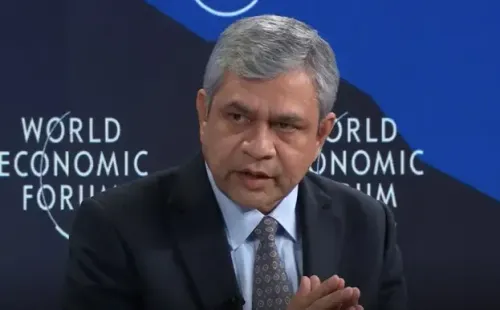
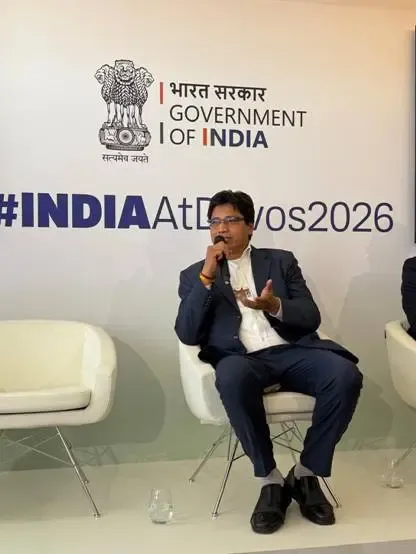
Davos, Jan 21 (NationPress) Decentralised renewable energy can play a crucial role in significantly lowering government subsidies, reducing Aggregate Technical and Commercial (AT&C) losses, and enhancing the affordability of power, stated Pradip Kumar Das, the Chairman and Managing Director of the Indian Renewable Energy Development Agency Limited (IREDA), on Wednesday.
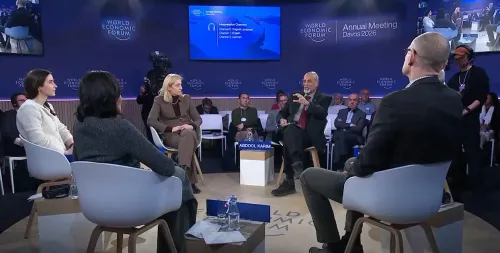
Das addressed a panel discussion entitled 'Scaling Solar Where It Matters: India’s Lessons on Rooftop, Agriculture and Decentralised Energy for the Global South' during the World Economic Forum Annual Meeting 2026.
The discussion centered around how India's experience with distributed solar power can provide actionable solutions for developing nations.
During his address, Das emphasized that decentralised renewable energy enhances system efficiency and decreases reliance on subsidies while reducing losses in power distribution.
"This integration directly contributes to lowering overall costs and ensuring more affordable electricity for consumers, particularly in rural and agricultural sectors," he remarked.
Earlier that day, Union Minister for New and Renewable Energy, Pralhad Joshi, delivered a keynote speech emphasizing India's leadership in promoting solar energy for inclusive and sustainable growth.
He highlighted how India's policy framework and institutional support have facilitated the scaling of clean energy solutions across various sectors.
Moreover, he addressed concerns regarding the risk perception associated with emerging renewable energy sectors.
Das stated that with appropriate project design and solid risk management, these areas can be effectively de-risked.
He cited IREDA’s track record, noting that the agency has only recorded a cumulative write-off of Rs 149 crore over more than 38 years of operation, despite financing projects worth approximately Rs 1.81 lakh crore.
In discussing IREDA’s role in promoting rooftop and agricultural solar power, Shri Das mentioned that the agency finances 70 to 80 percent of project costs under the Rooftop Solar and PM-KUSUM schemes using aggregator models. This method has accelerated clean energy access in rural India.
Das expressed gratitude to Union Minister Pralhad Joshi for allowing IREDA to present India's renewable energy journey on a global stage.
"India’s success has been made possible due to a well-developed and mature renewable energy ecosystem," he stated.
He also noted that India's institutional framework and policy experience could serve as a valuable reference for other nations aiming to transition towards renewable energy.
"The forum served as a significant opportunity to highlight IREDA’s contribution to India's clean energy transition," he added.
Point of View
I recognize the critical importance of decentralised renewable energy. The insights shared by Pradip Kumar Das at the World Economic Forum highlight India's potential leadership in this domain. This approach not only addresses subsidy reduction and power loss but also underscores the need for sustainable solutions that can inspire emerging economies worldwide.
NationPress
21/01/2026
Frequently Asked Questions
What are the benefits of decentralised renewable energy?
Decentralised renewable energy can reduce government subsidies, lower power distribution losses, and enhance affordability, especially for rural communities.
How does IREDA contribute to renewable energy projects?
IREDA finances a significant portion of renewable energy projects, including rooftop and agricultural solar power, facilitating greater access to clean energy.
What role does India play in the global renewable energy landscape?
India serves as a model for emerging economies, demonstrating effective policies and frameworks for scaling renewable energy solutions.