DoT's FRI blocks ₹5,000 crore in cyber fraud in 15 months
Synopsis
India's DoT has quietly built one of its most effective consumer-protection tools in years — the Financial Fraud Risk Indicator blocked over ₹5,000 crore in suspected cyber fraud in just 15 months, with the pace accelerating sharply: more than ₹2,000 crore stopped in four months alone. The shift from chasing stolen money to stopping it at source could redefine how India fights digital financial crime.
Key Takeaways
The DoT's Financial Fraud Risk Indicator (FRI) prevented suspected cyber fraud losses of over ₹5,043.73 crore within 15 months of its launch on 22 May 2025 .
Cumulative savings surged from ₹139.16 crore in August 2025 to ₹5,043.73 crore by August 2026 .
More than ₹2,000 crore in suspected losses were blocked in just four months from April 2026 .
The FRI operates via the Digital Intelligence Platform (DIP) , classifying mobile numbers as medium , high , or very high risk in real time.
Risk intelligence is shared with banks , payment providers , insurers , securities intermediaries , and pension entities .
The model marks a shift from reactive fraud recovery to preventive interception at the point of payment initiation.
The Department of Telecommunications (DoT) on Tuesday, 8 September 2026, announced that its Financial Fraud Risk Indicator (FRI) has helped prevent suspected cyber fraud losses exceeding ₹5,000 crore within just 15 months of its launch on 22 May 2025. The milestone underscores a significant shift in how India's telecom and financial ecosystem is approaching digital financial crime.
Scale of Savings
According to the DoT, cumulative savings attributed to the FRI climbed sharply from ₹139.16 crore in August 2025 to ₹5,043.73 crore by August 2026 — a near 36-fold increase in a single year. Notably, more than ₹2,000 crore in suspected losses were prevented in just the four months from April 2026 alone, according to the Ministry of Communications, indicating a steep acceleration in the system's reach and effectiveness.
How the FRI Works
The FRI is a real-time risk-assessment framework that enables financial institutions to evaluate whether a mobile number is potentially linked to cybercrime or financial fraud before a transaction is completed. It operates through the DoT's Digital Intelligence Platform (DIP), which classifies mobile numbers into three risk tiers — medium, high, and very high — based on the probability of their involvement in fraudulent activity.
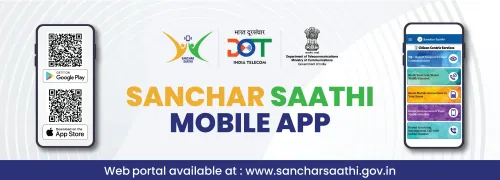
The risk signals are drawn from multiple intelligence sources, including citizen reports filed via the Sanchar Saathi platform, data from the Indian Cybercrime Coordination Centre's National Cybercrime Reporting Portal, and inputs shared by telecom operators, banks, financial institutions, and other sector-specific parameters.
Who Uses the Intelligence
The DIP securely shares its risk assessments with a wide range of regulated entities — including banks, payment service providers, insurers, securities intermediaries, and pension-sector entities. These institutions can embed the FRI signals into customer onboarding flows, transaction monitoring systems, and fraud detection engines, enabling them to flag or block potentially fraudulent transfers at the point of initiation.
The DoT stated that an FRI check can be completed in a fraction of a second when a payment is initiated — a critical advantage given that fraud proceeds typically move through multiple mule accounts within minutes of a successful deception.
A Shift from Reactive to Preventive Fraud Management
The DoT described the FRI model as a structural departure from conventional, reactive fraud management. Traditionally, law enforcement and financial institutions have had to trace, freeze, and recover funds after a fraud has already occurred — a process the department acknowledged is both time-consuming and frequently unsuccessful. The FRI, by contrast, aims to stop money from leaving a victim's account in the first place.
This comes amid a broader national push to combat the rising tide of cyber fraud in India, where digital payment volumes have grown exponentially but consumer awareness and institutional safeguards have struggled to keep pace. With over ₹2,000 crore blocked in just four months, the government's preventive architecture appears to be gaining meaningful traction — though independent verification of the figures has not been reported.
Point of View
000 crore figure is striking, but the more consequential detail is the acceleration — over ₹2,000 crore blocked in just four months, suggesting the FRI is reaching critical mass in institutional adoption. The real test, however, is independent auditability: the DoT's own data drives the savings claim, and there is no third-party verification reported. India's cyber fraud problem is also growing faster than most official metrics capture, which means a preventive tool that works at scale is urgently needed — but its credibility depends on transparent, auditable outcomes, not just ministry-issued tallies.
NationPress
24 Oct 2026
Frequently Asked Questions
What is the DoT's Financial Fraud Risk Indicator (FRI)?
The Financial Fraud Risk Indicator is a real-time risk-assessment framework developed by the Department of Telecommunications to help financial institutions determine whether a mobile number is potentially linked to cybercrime or fraud. It classifies numbers as medium, high, or very high risk through the DoT's Digital Intelligence Platform, enabling banks and payment providers to flag suspicious transactions before money is transferred.
How much cyber fraud has the FRI prevented so far?
According to the DoT, the FRI has helped prevent suspected cyber fraud losses of over ₹5,043.73 crore since its launch on 22 May 2025 through August 2026 — a period of 15 months. Of this, more than ₹2,000 crore was prevented in the four months from April 2026 alone.
Where does the FRI get its fraud intelligence from?
The FRI draws data from multiple sources, including citizen reports on the Sanchar Saathi platform, the Indian Cybercrime Coordination Centre's National Cybercrime Reporting Portal, and inputs from telecom operators, banks, and financial institutions. This combined intelligence is processed through the Digital Intelligence Platform to assign risk classifications to mobile numbers.
Which institutions can access FRI risk signals?
The DoT's Digital Intelligence Platform securely shares FRI risk assessments with banks, payment service providers, insurers, securities intermediaries, and pension-sector entities. These institutions can integrate the signals into customer onboarding, transaction monitoring, and fraud detection workflows.
Why is a preventive model better than recovering fraud money after the fact?
Once fraud proceeds leave a victim's account, they typically move rapidly through multiple mule accounts, making recovery a race against time that often fails. The FRI can complete a risk check in a fraction of a second at the point of payment initiation, stopping the transfer before it occurs and eliminating the need for the lengthy and uncertain process of tracing and freezing funds.