Did Foreign Currency Deposits in South Korea Increase for the First Time in Three Months?
Click to start listening
Synopsis
In November, South Korea's foreign currency deposits saw their first increase in three months, rising to $103.55 billion. This growth was spurred by corporate payments and strategic fund placements, signaling potential recovery in the financial landscape amidst fluctuating stock market activity. Discover the factors influencing this change and its implications.
Key Takeaways
- November saw a rise in foreign currency deposits in South Korea for the first time in three months.
- Outstanding deposits reached $103.55 billion, up $1.71 billion from October.
- Corporate foreign currency deposits increased significantly, signaling potential economic recovery.
- Investors are responding cautiously to stock market fluctuations.
- Understanding these trends is crucial for forecasting economic stability.
Seoul, Dec 30 (NationPress) Foreign currency deposits in South Korea have experienced a rise for the first time in three months during November, according to data released by the central bank on Tuesday.
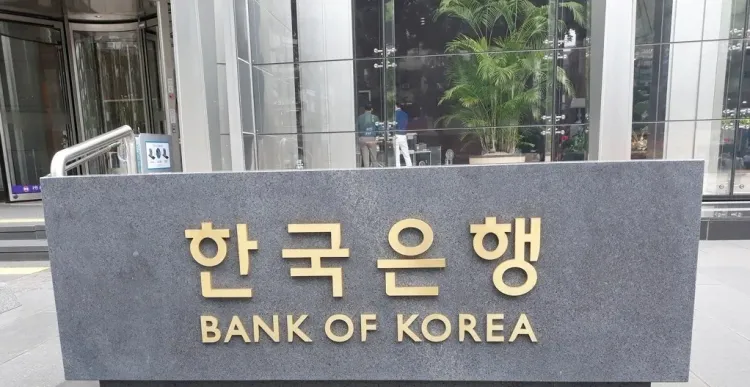
The total of outstanding foreign currency-denominated deposits held by residents reached US$103.55 billion at the end of November, reflecting an increase of $1.71 billion from the previous month, as reported by the Bank of Korea (BOK) and covered by Yonhap news agency.
This figure had peaked in August, reaching a 31-month high, but saw a decline in the subsequent two months. This downturn was primarily attributed to heightened corporate repayments of foreign-currency borrowings and overseas investments made by the national pension fund.
The term 'residents' includes South Korean nationals, foreigners who have resided in the country for over six months, and foreign enterprises. It is important to note that the data excludes interbank deposits.
A BOK official stated, "The increase in November was driven by companies receiving payments for current transactions and parking funds that would later be converted for the repayment of foreign-currency borrowings, among other factors."
Corporate foreign currency deposits surged by $1.67 billion month-on-month to $88.43 billion, while individual deposits saw a modest increase of $40 million, totaling $15.11 billion.
In terms of currency, deposits denominated in U.S. dollars rose by $1.96 billion to $87.59 billion, whereas deposits in Japanese yen declined by $500 million to $8.13 billion.
Additionally, euro deposits increased by $390 million to $5.4 billion, while Chinese yuan deposits fell by $100 million to $1.14 billion, according to the data.
Meanwhile, South Korean stocks exhibited a slight downturn late on Tuesday morning, despite gains in major tech stocks, as investors opted to take profits from recent increases in the final trading session of the year.
The benchmark Korea Composite Stock Price Index (KOSPI) decreased by 5.92 points, or 0.14 percent, to 4,214.64 as of 11:20 a.m.
The index opened lower, following overnight losses on Wall Street, and remained within a narrow range.
Net selling by foreign and institutional investors counteracted strong purchasing from retail investors.
The market had previously risen for two consecutive sessions due to impressive gains in large-cap semiconductor shares, approaching its all-time high of 4,221.87 set on November 3.
Point of View
It's crucial to recognize the subtle shifts in the financial landscape. The increase in foreign currency deposits suggests a cautious optimism among businesses, reflecting adaptations to global economic challenges. However, the fluctuations in the stock market indicate ongoing uncertainty. Our commitment is to provide in-depth analysis and timely updates, ensuring our readers stay informed.
NationPress
10/01/2026
Frequently Asked Questions
What are foreign currency deposits?
Foreign currency deposits are accounts held in currencies other than the local currency, allowing residents to save or transact in different currencies.
Why did foreign currency deposits rise in November?
The rise was attributed to companies receiving payments for transactions and reallocating funds for repaying foreign currency borrowings.
What currencies saw changes in deposits?
U.S. dollar deposits increased, while Japanese yen deposits fell. Euro deposits also grew, while Chinese yuan deposits saw a decline.
How do foreign currency deposit trends affect the economy?
Trends in foreign currency deposits can indicate economic stability or volatility, influencing investment decisions and monetary policy.
What impact does the stock market have on foreign currency deposits?
Fluctuations in the stock market can affect investor confidence and spending, influencing how much money is held in foreign currency accounts.