How is India’s energy planning validated in real-world conditions?
Synopsis
Discover how India's energy planning is proving effective in real-world conditions. Union Minister Hardeep Singh Puri highlights significant advancements in natural gas infrastructure, demonstrating that the country's preparations are outpacing demand. Explore the ambitious goals set for India’s energy future.
Key Takeaways
Natural gas pipeline length has nearly doubled since 2014.
1.58 crore households now benefit from piped natural gas.
Plans for 18,336 CNG stations by 2030 are underway.
India aims to become the third-largest economy globally.
New initiatives are strengthening energy infrastructure across the country.
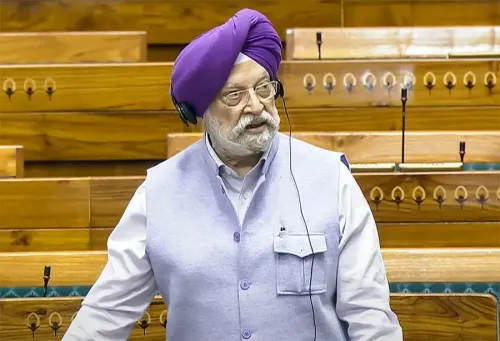
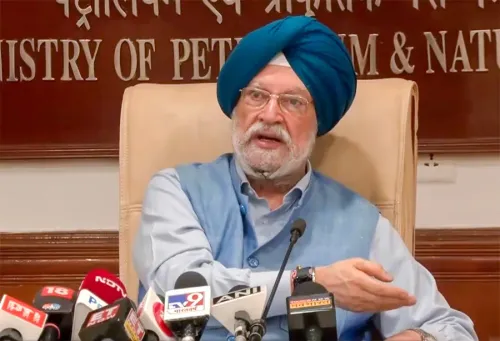
New Delhi, Jan 10 (NationPress) Union Minister for Petroleum and Natural Gas Hardeep Singh Puri stated on Saturday that India’s energy strategy is undergoing rigorous testing and validation in actual conditions, as the country's infrastructure and services expand swiftly.
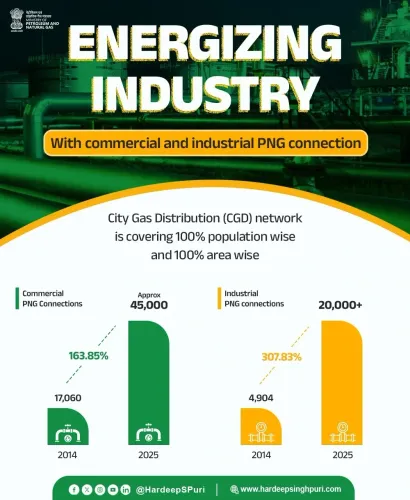
In a post on the social media platform X, Puri highlighted that the length of India’s natural gas pipeline has almost doubled from 15,000 km in 2014 to 25,429 km currently, with plans for an additional 33,475 km, indicating that "preparation is ahead of demand."
The minister remarked that "energy planning is evaluated daily under real-world scenarios," noting that 1.58 crore kitchens now benefit from piped natural gas without needing to schedule refills, serving as proof that "planning is effective."
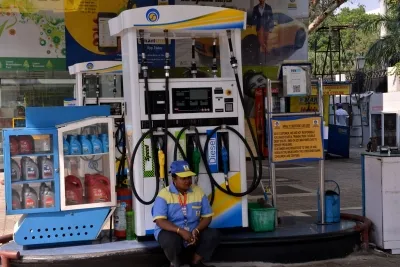
According to him, when vehicles utilize cleaner fuel at 8,428 CNG stations, with a target to reach 18,336 by 2030, it demonstrates that plans are solidly established.
Puri emphasized that India’s energy frameworks are designed to be prepared before demand surges and stated that under the guidance of Prime Minister Narendra Modi, effective planning is reflected in the smoothness of daily life.
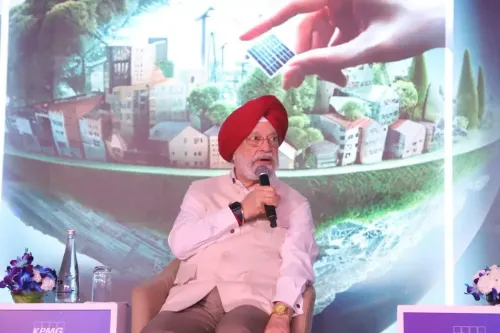
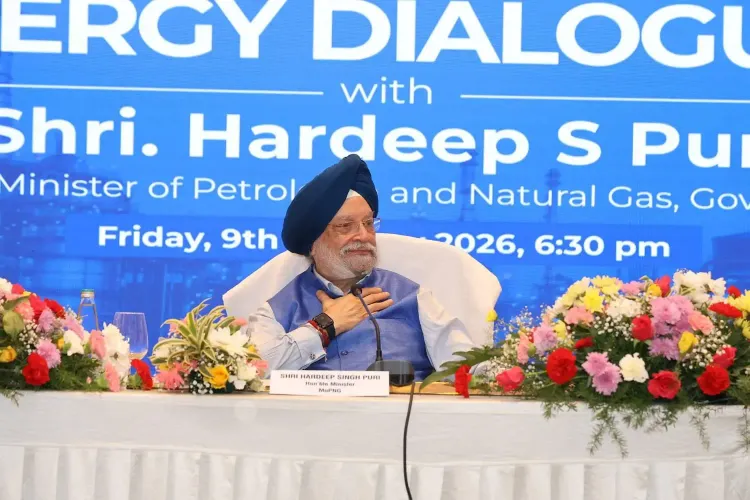
In a separate post, Puri mentioned his engagement with professionals across various sectors during the 'Energy Dialogues' held in Chennai.
During this event, the minister addressed India’s significant advancements in biofuels blending, CBG, urea imports, aviation fuels, natural gas infrastructure, and the exploration of vital minerals.
Puri asserted that India is on track to become the third-largest economy globally, representing over 35% of the anticipated rise in global energy demand in the next twenty years.
"We are currently engaged in groundbreaking initiatives aimed at bolstering and expanding our energy production and infrastructure across the entire value chain, especially by increasing our refining capacity, which is already the fourth largest worldwide," he added.
The government has implemented various measures to improve the availability of natural gas for power generation, including the expansion of the National Gas Grid to connect domestic gas sources and Liquefied Natural Gas (LNG) terminals to power plants.
Additionally, it has introduced a unified tariff, established LNG terminals, and permitted domestic gas producers, who have been granted pricing and marketing autonomy, to sell domestic gas up to 500 million standard cubic meters or 10% of annual production from their contract area, whichever is greater, annually through authorized gas exchanges.
Point of View
It is essential to highlight how India's energy strategy is not merely a theoretical exercise but a practical implementation that is proving its worth daily. The measures taken by the government show a commitment to sustainable energy growth, ensuring that India is well-equipped to meet future demands.
NationPress
29 Sept 2026
Frequently Asked Questions
What advancements have been made in India's natural gas infrastructure?
India's natural gas pipeline length has nearly doubled from 15,000 km in 2014 to 25,429 km today, with plans to expand further.
How are natural gas provisions improving for households?
Currently, 1.58 crore kitchens receive piped natural gas, eliminating the need for refill bookings.
What is India's goal for CNG stations?
India aims to increase the number of CNG stations from 8,428 to 18,336 by 2030.
What role does natural gas play in India's energy strategy?
Natural gas is critical for power generation and is supported by the expansion of the National Gas Grid and LNG terminals.
How is the government enhancing natural gas availability?
Measures include a unified tariff structure, LNG terminal establishment, and allowing gas producers to sell a portion of their production via exchanges.