How is the Government Strengthening Labs and Surveillance to Fight Influenza?
Synopsis
In a recent development, the Indian government has underscored its commitment to integrating surveillance and enhancing laboratory capabilities to combat influenza. This initiative stems from a collaborative effort between the NCDC and WHO during a two-day Chintan Shivir. Key discussions focused on preparedness for the upcoming influenza season, emphasizing a coordinated response across sectors.
Key Takeaways
Government commitment to enhance influenza preparedness.
Collaboration with WHO for improved surveillance.
Development of a structured checklist for preparedness.
Focus on inter-sectoral cooperation .
Participation from diverse stakeholders in health and research.
New Delhi, Dec 23 (NationPress) The government has reiterated its dedication to enhancing surveillance and bolstering laboratory capabilities to effectively tackle influenza, as stated by the Health Ministry on Tuesday.
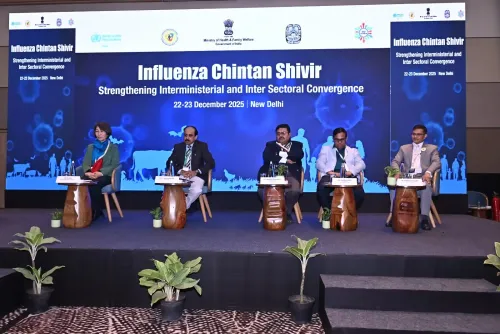
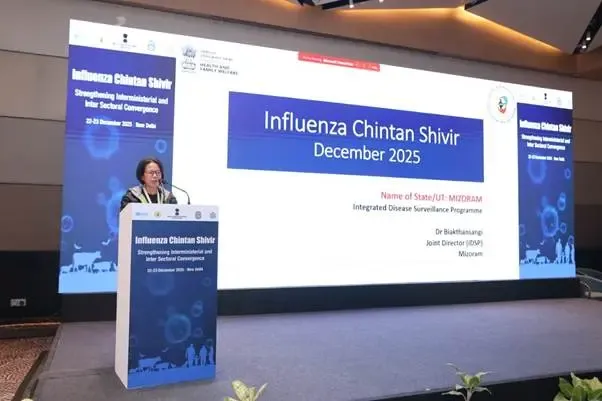
The National Centre for Disease Control (NCDC), in partnership with the World Health Organization (WHO), conducted a two-day influenza Chintan Shivir from December 22-23 in New Delhi.
This event served as a structured forum for discussions aimed at improving preparedness and response strategies in anticipation of the forthcoming influenza season.
“The discussions emphasized that effective influenza preparedness should be underpinned by robust inter-sectoral collaboration, with a focus on enhancing surveillance, laboratory capacity, and clinical readiness for the prompt detection and management of seasonal and zoonotic influenza outbreaks,” the Ministry stated.
A significant result of the Chintan Shivir was the creation of a detailed influenza preparedness checklist designed to assist the center, states, and localities in their planning efforts.
This checklist encompasses four critical domains: surveillance, early warning systems and risk assessment; laboratory enhancement; hospital readiness and clinical response; and One Health coordination along with risk communication and community engagement (RCCE).
The discussions reaffirmed India’s resolve to implement coordinated national efforts to prevent, identify, and respond efficiently to influenza and other respiratory viral threats.
“The Chintan Shivir concluded with a consensus to adopt a whole-of-Government and One Health strategy to address both seasonal and zoonotic influenza. Ministries committed to strengthening integrated surveillance across human, animal, and wildlife sectors; boosting laboratory and genomic capabilities; ensuring timely data sharing; and aligning sectoral action plans with the national pandemic preparedness framework,” the Ministry commented.
The Chintan Shivir brought together about 100 distinguished representatives from various ministries, including health, animal husbandry, agriculture, and environment, alongside leading research institutions, state governments, and international partners, further promoting the One Health and whole-of-Government approach.
Point of View
This initiative by the Indian government signifies a proactive approach to tackling influenza with a comprehensive strategy. The integration of multiple sectors highlights the importance of collaboration in public health, ensuring that the nation is prepared for future challenges.
NationPress
28 Sept 2026
Frequently Asked Questions
What is the purpose of the Chintan Shivir?
The Chintan Shivir aims to strengthen preparedness and response mechanisms for the upcoming influenza season through structured discussions among various sectors.
How does the government plan to enhance influenza preparedness?
The government plans to enhance preparedness through improved surveillance, laboratory capacity, and clinical readiness for prompt detection and response to influenza outbreaks.
Who participated in the Chintan Shivir?
The Chintan Shivir saw participation from around 100 representatives from various ministries, research institutions, state governments, and international partners.
What are the key areas of focus identified in the preparedness checklist?
The checklist focuses on surveillance, laboratory strengthening, hospital preparedness, and One Health coordination, including community engagement.
What is the significance of a One Health approach?
A One Health approach integrates efforts across human, animal, and environmental health sectors, ensuring a coordinated response to health threats.