Can Gut Bacteria Aid Weight Loss and Improve Metabolic Health?
Synopsis
Discover how US researchers uncovered a gut bacterium, Turicibacter, which may play a key role in weight loss and metabolic health improvement. This groundbreaking study could pave the way for innovative treatments that combat obesity and enhance overall wellbeing.
Key Takeaways
Turicibacter may support weight loss.
Research conducted on mice shows promising results.
Link between gut bacteria and metabolic health was established.
High ceramide levels are associated with metabolic disorders.
Future studies may focus on human applications.
New Delhi, Dec 20 (NationPress) Researchers in the United States have discovered a gut bacterium that may facilitate weight loss and enhance metabolic health.
This finding emerges amidst various weight-loss injections and medications that have demonstrated effectiveness in helping individuals shed pounds.
In experiments conducted on mice, the research team from the University of Utah identified a distinct type of gut bacterium known as Turicibacter, which has the potential to enhance metabolic health and mitigate weight gain.
Individuals suffering from obesity typically possess lower levels of Turicibacter, implying that this microbe could also support healthy weight maintenance in humans. The findings could pave the way for innovative methods to manage weight by modifying gut bacteria, as noted by the researchers in their publication in Cell Metabolism.
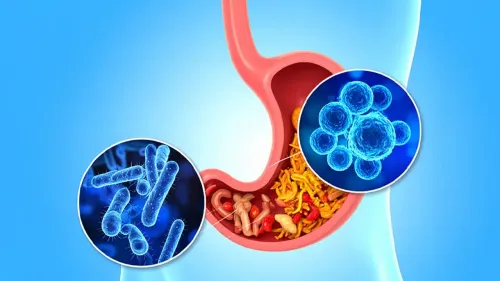
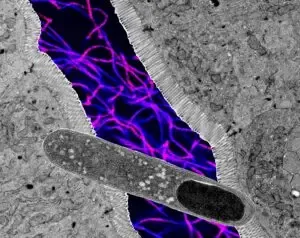
Turicibacter, which appears rod-shaped, was shown to independently lower blood sugar, reduce fat levels in the bloodstream, and decrease weight gain in mice subjected to a high-fat diet.
However, the benefits of Turicibacter are likely not exclusive; numerous gut bacteria may play a role in metabolic health. Moreover, results derived from animal models may not necessarily translate to humans.
“While we have seen reduced weight gain in mice, I cannot confirm if this translates to humans,” stated Round.
Nonetheless, the researchers remain optimistic that Turicibacter could serve as a foundation for developing therapies aimed at promoting healthy metabolism and preventing excessive weight gain.
The research indicates that Turicibacter may enhance metabolic health by influencing the host's production of a fatty molecule known as ceramides.
Ceramide levels spike with high-fat diets, and elevated ceramide levels are linked to various metabolic disorders, including type 2 diabetes and heart disease. Remarkably, the fats produced by Turicibacter can maintain low ceramide levels, even among mice consuming a high-fat diet.
“Through further exploration of specific microbes, we could potentially convert microbes into medicinal treatments and identify bacteria that can create a consortium of different strains for individuals suffering from various diseases,” remarked Kendra Klag, the study's lead author.
Point of View
I find this research particularly intriguing, as it highlights the intersection of microbiome science and metabolic health. The implications of manipulating gut bacteria for weight management could be transformative, though we must approach these findings with caution until further human studies validate the results. This research exemplifies the evolving landscape of health science and the potential for innovative treatments in the fight against obesity.
NationPress
29 Sept 2026
Frequently Asked Questions
What is Turicibacter?
Turicibacter is a type of gut bacterium identified by researchers that may aid in weight loss and improve metabolic health.
How was the research conducted?
The study involved experiments on mice to evaluate the effects of Turicibacter on weight gain and metabolic health.
Can Turicibacter help humans?
While the findings are promising, further research is needed to determine if Turicibacter can provide similar benefits in humans.
What are the potential implications of this research?
The research could lead to new treatments for obesity and metabolic disorders by modifying gut bacteria.