H-1B visa fee hike: Nasscom says engaged with stakeholders on $103,265 rule
Synopsis
The US Department of Homeland Security's proposed $103,265 H-1B fee — on top of all existing charges — could be the most disruptive shift to skilled-worker visa economics in decades. Nasscom is pushing back, pointing to $1.1 billion in US STEM investment and a steady decline in H-1B dependency by Indian IT firms. The public comment window is open, and the outcome will shape how Indian tech talent enters America.
Key Takeaways
Nasscom confirmed it is actively engaged with stakeholders on the proposed $103,265 H-1B fee hike by the US Department of Homeland Security .
The fee would apply to every cap-subject H-1B petition, including those under the advanced degree exemption, and is estimated to raise $8.8 billion annually .
The annual H-1B cap is 65,000 visas, with an additional 20,000 for US master's degree holders.
Indian IT firms have invested more than $1.1 billion in US STEM education, impacting 2.9 million students and upskilling 255,000 employees .
Nasscom noted that H-1B usage by Indian tech companies has declined significantly over the past 5 years as local hiring expanded.
The proposed rule is open for public comment for 30 days before finalisation.
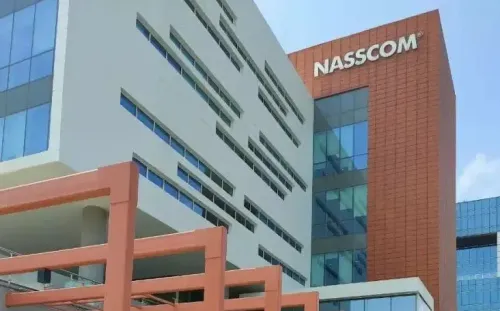
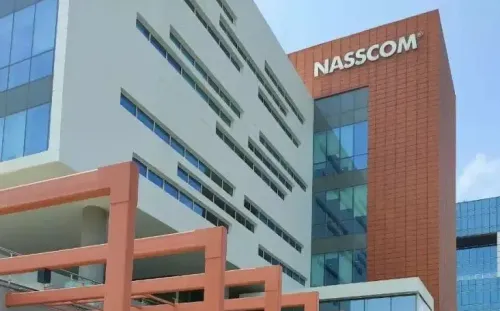
Nasscom, the apex body of India's IT industry, on Tuesday said the proposed $103,265 H-1B visa fee hike in the United States must be evaluated against the programme's foundational purpose — providing employers temporary access to skilled workers in areas where domestic supply falls short. The industry body confirmed it remains actively engaged with all key stakeholders on the matter.
What the Proposed Rule Entails
The US Department of Homeland Security (DHS) has put forward a regulation that would impose an additional $103,265 fee on employers filing cap-subject H-1B petitions. The fee would apply to every cap-subject filing, including petitions for workers eligible under the advanced degree exemption, and would be payable at the time of petition submission — on top of all existing applicable fees.
DHS estimates the levy would generate approximately $8.8 billion annually, based on a projected 85,000 cap-subject petitions each year. The funds would be directed toward recovering federal costs of operating the legal immigration system, covering adjudications, fraud detection, national security screening, and technology modernisation.
The Trump Administration's Rationale
The Donald Trump administration has framed the fee as a measure to both recover immigration-system costs and incentivise employers to hire and train American workers rather than rely on foreign labour. The proposal is currently open for public comment for 30 days.
The annual H-1B cap stands at 65,000 visas, with an additional 20,000 reserved for foreign nationals holding a master's degree or higher from a US institution.
Nasscom's Position and Industry Investment
Nasscom acknowledged the programme's long-standing role in addressing short-term skill gaps, while pointing to a significant shift in hiring patterns. 'It is also important to recognise that, over the past 5 years, the number of H-1B employees of Indian technology companies operating has reduced significantly, as companies have steadily expanded local hiring,' the industry body said in a statement.
The body further noted that the Indian IT industry has collectively invested more than $1.1 billion in strengthening the STEM pipeline in the US, partnering with more than 130 universities and colleges, reaching 2.9 million students, and upskilling more than 255,000 employees.
What Happens Next
With the public comment window open, industry groups, employers, and legal advocates are expected to file responses before the rule is finalised. A fee of this magnitude — more than ten times the current base filing cost — could materially alter hiring calculus for Indian IT firms with US operations. Nasscom's active stakeholder engagement signals the industry intends to formally contest or shape the final rule before it takes effect.
Point of View
265 per-petition fee is not a marginal adjustment — it is a structural barrier designed to make H-1B hiring economically painful. Nasscom's invocation of $1.1 billion in US STEM investment is the industry's strongest counter-argument, but it may not be sufficient in a political climate where foreign labour is a lightning rod. What the debate obscures is that Indian IT's H-1B dependency has already been declining — the fee targets a pipeline that is shrinking on its own. The real risk is that a blunt fee instrument punishes legitimate skill-gap hiring while doing little to accelerate domestic STEM supply, which remains the underlying structural problem no visa rule can fix.
NationPress
25 Aug 2026
Frequently Asked Questions
What is the proposed $103,265 H-1B visa fee?
It is an additional fee proposed by the US Department of Homeland Security on employers filing cap-subject H-1B petitions. The fee is payable at the time of petition submission, on top of all existing applicable fees, and is intended to recover immigration-system costs and encourage domestic hiring.
How much revenue would the new H-1B fee generate?
DHS estimates the fee would raise approximately $8.8 billion annually, based on a projected 85,000 cap-subject H-1B petitions each year. The funds would cover adjudications, fraud detection, national security screening, and government system modernisation.
What is Nasscom's stance on the H-1B fee hike?
Nasscom has said the fee must be viewed in the context of the H-1B programme's original purpose of addressing temporary skill shortages. The body says it is actively engaged with all key stakeholders and has highlighted the Indian IT industry's $1.1 billion investment in US STEM education as evidence of its domestic contribution.
How has Indian IT's H-1B usage changed in recent years?
According to Nasscom, the number of H-1B employees at Indian technology companies operating in the US has reduced significantly over the past five years, as firms have steadily expanded local hiring. The industry has also upskilled more than 255,000 employees and partnered with over 130 US universities.
What is the H-1B visa cap and who does it cover?
The annual H-1B cap is set at 65,000 visas, with an additional 20,000 available to foreign nationals who hold a master's degree or higher from a US institution. The proposed fee would apply to all cap-subject petitions, including those under the advanced degree exemption.