Will South Korea's Economy Grow in the 1% Range?
Click to start listening
Synopsis
A recent survey indicates over half of economists predict South Korea's economic growth will remain in the 1 percent range. This article delves into expert projections, the impact of AI on productivity, and global investment banks' views on the economy's current state.
Key Takeaways
- Over 50% of economists expect 1% growth for South Korea.
- 36% anticipate growth could reach 2% by 2027.
- Economic growth forecast for 2023 is 1.8%, below government expectations.
- AI implementation is seen as a means to enhance productivity.
- Investment banks warn of a K-shaped economic recovery.
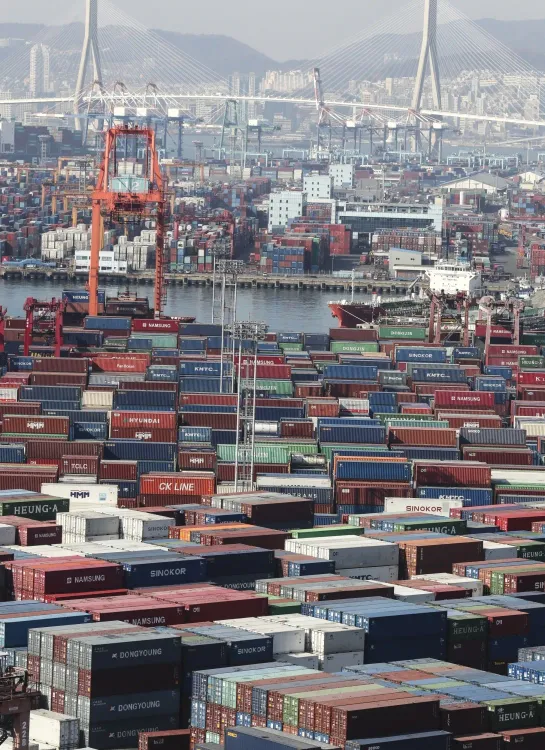
Seoul, Jan 25 (NationPress) A recent local survey reveals that over 50% of financial experts anticipate that South Korea's economy will maintain a growth rate within the 1 percent range for the foreseeable future. The study, commissioned by the Korea Enterprises Federation (KEF) and carried out by Southernpost Inc., indicated that 54 percent of 100 economists surveyed believe the nation's growth will hover around this threshold this year, as reported by Yonhap news agency.
Additionally, 36 percent expect Asia's fourth-largest economy to reach a 2 percent growth rate starting in 2027, fueled by a gradual uptick in consumption and demand. Meanwhile, 6 percent suggested that growth could dip below 1 percent.
On average, the economists project a 1.8 percent growth for 2023, slightly trailing behind the government's 2 percent forecast and the International Monetary Fund's (IMF) 1.9 percent estimate.
Last year, South Korea's economy grew by 1 percent, a decrease from the 2 percent growth recorded the prior year.
In terms of exchange rates, respondents foresee the wonder-dollar rate fluctuating between 1,403 won and 1,516 won this year.
Almost 60 percent of those surveyed believe that the results of U.S.-South Korea tariff negotiations will adversely affect exports to the United States and hinder domestic corporate investments.
When discussing the increasing implementation of artificial intelligence (AI) in workplaces, 92 percent stated that AI expansion would alleviate labor shortages and enhance productivity, particularly in the manufacturing sector.
Furthermore, nearly 90 percent urged the government to enforce robust measures to curb the overseas leakage of semiconductors and other essential technologies, including imposing strict penalties for violations.
Meanwhile, prominent global investment banks have revised their growth forecasts for South Korea, attributing it to a strong semiconductor upcycle, though they caution that the economy exhibits signs of an uneven “K-shaped recovery”, as noted in a report by the international finance center.
According to the Korea Center for International Finance (KCIF), major foreign institutions have raised their median growth forecast for 2026 to 2.0 percent in January, up from 1.8 percent in early November.
Point of View
I believe it is critical to assess South Korea's economic predictions with a balanced lens. While the survey indicates a cautious outlook, it also highlights potential growth avenues, particularly in AI and technology sectors. We must remain optimistic about the future while addressing the challenges posed by global market dynamics.
NationPress
25/01/2026
Frequently Asked Questions
What percentage of economists predict 1% growth for South Korea?
Over 54% of economists surveyed believe South Korea will maintain a growth rate in the 1 percent range.
What is the projected economic growth for South Korea in 2023?
The average forecast for South Korea's economic growth in 2023 is 1.8 percent.
How do tariffs affect South Korean exports?
Nearly 60% of economists predict that U.S.-South Korea tariff negotiations could negatively impact exports to the United States.